English
 Arabic
 French
 Spanish
 Portuguese
 Deutsch
 Turkish
 Dutch
Dutch
 Italiano
 Russian
 Romaian
 Portuguese (Brazil)
 Greek
Greek
(Beyond the Pages of) Brought to Life by Slap Shot by Chelsea Curto
Dance |
2026-06-25 06:33:44
 Advertise With Us
 About Us
 Terms And Conditions
 Datenschutzbestimmungen
Alle anzeigen
Datenschutzbestimmungen
Alle anzeigen

Upgrade auf Pro
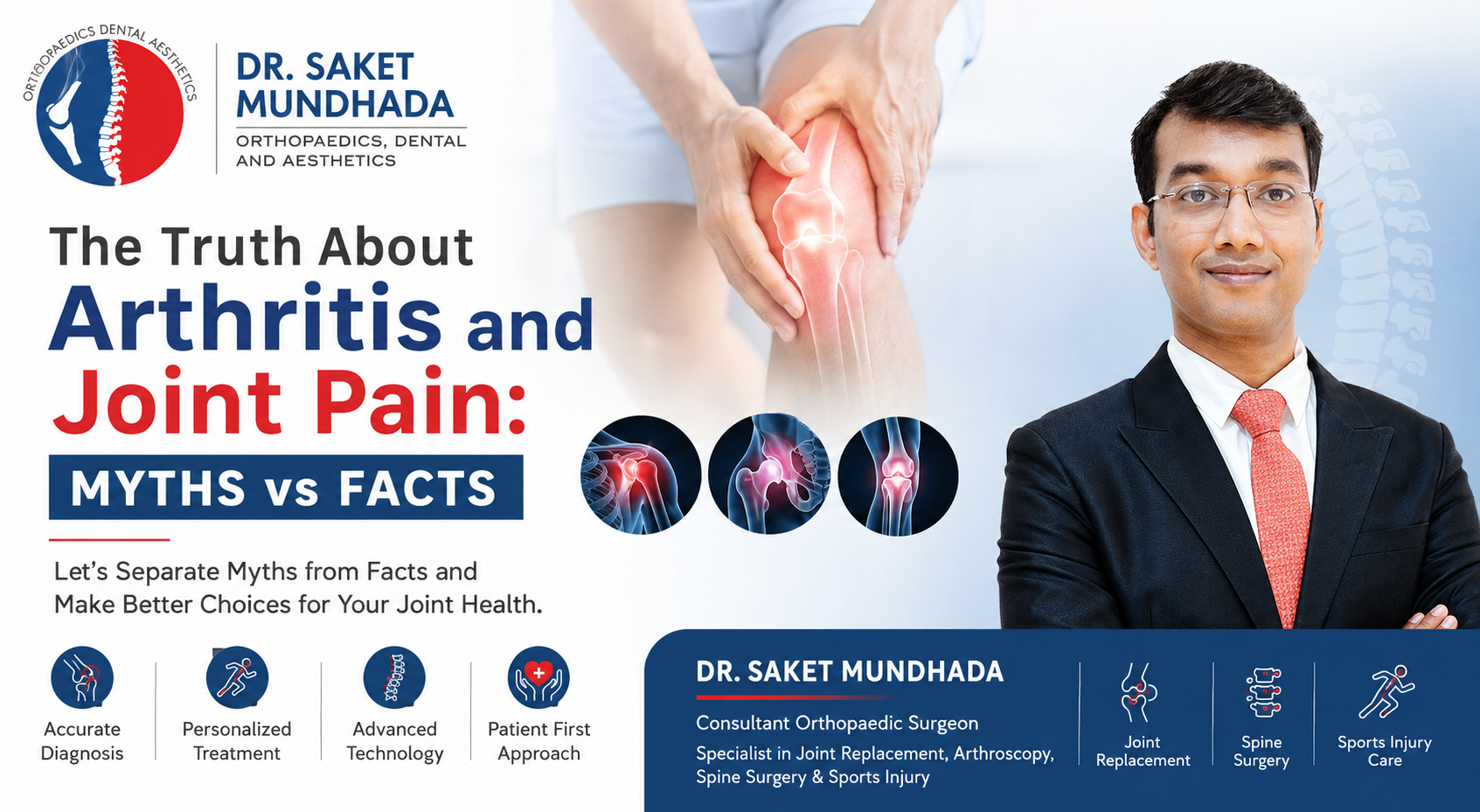
When joint pain starts affecting your daily routine, getting advice from a best orthopaedic surgeon Nagpur can help you understand what is actually happening inside your joints. Arthritis and joint pain are often surrounded by assumptions—some people consider them an unavoidable part of ageing, while others believe that exercise or surgery will automatically make the problem worse. The reality is much more nuanced.
Arthritis is not a single disease. There are many different forms of arthritis, and osteoarthritis is one of the most common. Depending on the condition, symptoms may include pain, stiffness, swelling, reduced movement, or difficulty performing everyday activities.
Understanding the difference between common myths and medical facts can help you make better decisions about your joint health.
Arthritis refers to conditions that affect the joints—the places where two or more bones meet. Different types can affect the body in different ways.
Osteoarthritis, for example, involves changes in the cartilage and other structures within a joint over time. It commonly affects weight-bearing joints such as the knees and hips, although the hands, shoulders, and other joints can also be involved. Pain and stiffness may become more noticeable after inactivity or during certain movements.
But having joint pain does not automatically mean that you have arthritis. Joint discomfort can have many possible causes, including injuries, overuse, muscle problems, ligament injuries, and other medical conditions.
That is why identifying the actual cause is an important first step.
Arthritis becomes more common with increasing age, but younger adults can also experience joint problems. Previous injuries, repetitive stress, certain diseases, genetics, body weight, and other factors can contribute to joint problems.
For example, an old sports injury may affect a joint years after the original incident. A person who regularly participates in running, football, cricket, gym workouts, or other activities may also experience joint pain for reasons unrelated to ageing.
So, if you are young and experiencing persistent pain, simply assuming that it will disappear on its own may not be the best approach.
Pain around the knee, hip, shoulder, ankle, or elbow does not necessarily indicate arthritis.
A person may develop discomfort because of:
This is why a proper clinical assessment matters. Depending on the symptoms, a doctor may evaluate movement, strength, stability, pain location, and medical history and may recommend imaging when appropriate.
Many people stop exercising completely after experiencing joint pain because they are afraid that movement will damage their joints further.
However, avoiding all physical activity is not necessarily the answer.
Appropriately selected exercise can help maintain mobility, improve muscle strength, and support physical function. For people with arthritis, physical activity is considered an important part of managing symptoms and maintaining function.
The key is choosing an activity that matches your condition.
Walking, cycling, swimming, strengthening exercises, mobility work, and supervised physiotherapy may be appropriate for some people. But exercises that significantly increase pain should not simply be pushed through without professional guidance.
A painful joint can make you want to stay still. Unfortunately, prolonged inactivity may contribute to weakness and reduced mobility.
Instead of completely stopping movement, the goal is generally to find a safe level of activity that your joint can tolerate.
For someone with knee arthritis, for instance, strengthening the muscles around the knee may help support everyday movement. For another person, low-impact activities may be more comfortable than high-impact exercise.
The right plan depends on the individual rather than a one-size-fits-all rule.
Living with pain for months or years should not automatically be considered normal.
Arthritis can affect mobility, physical activity, and quality of life. Persistent symptoms may also gradually change the way a person walks, climbs stairs, exercises, works, or performs household activities.
Treatment does not always mean surgery. Depending on the condition and its severity, management may involve activity modification, exercise, physiotherapy, weight management when appropriate, medications, injections, or other treatments.
The important point is to understand the underlying problem before deciding what treatment is appropriate.
Hearing the words "knee replacement" can be frightening. Many people assume that receiving an arthritis diagnosis automatically means they need surgery.
That is not necessarily the case.
Treatment decisions depend on factors such as the severity of joint damage, pain levels, functional limitations, previous treatment, overall health, and how much the condition is affecting daily life.
Non-surgical approaches may be considered when appropriate. If severe joint damage is causing significant pain and limiting everyday activities despite appropriate conservative treatment, joint replacement may become one of the options to discuss with an orthopaedic specialist.
The decision should be individualized rather than based solely on an X-ray or someone else's experience.
An X-ray can provide valuable information about changes within a joint, but treatment decisions should not be based on an image alone.
Two people can have similar-looking changes on an X-ray but experience very different levels of pain and limitation.
A proper assessment considers the patient's symptoms, physical examination, daily activities, functional limitations, medical history, and imaging findings together.
This is one reason why discussing your symptoms with an orthopaedic professional can be more useful than trying to interpret an X-ray independently.
An injury does not guarantee that a person will develop arthritis, but certain joint injuries can affect the joint over the long term.
This is particularly relevant for people who participate in sports. Injuries involving structures such as ligaments, cartilage, or the meniscus can sometimes have lasting effects on joint mechanics.
If you experience a sports-related injury, getting the correct diagnosis and following an appropriate rehabilitation plan can be important for returning to activity safely.
A Sports Injury Specialist Nagpur can help assess sports-related problems and guide appropriate management and rehabilitation depending on the injury.
For active people, being told to "never play sports again" can be discouraging.
In many situations, rehabilitation focuses on restoring strength, flexibility, balance, coordination, and movement control so that a person can gradually return to appropriate activities.
The timing and method of return depend on the specific injury.
Trying to return to intense activity too quickly can create additional problems, while avoiding movement indefinitely may result in weakness and loss of conditioning. A structured rehabilitation approach can help strike a safer balance.
Rest, appropriate activity modification, ice or heat, and gentle movement may provide temporary comfort in certain situations.
However, persistent or worsening pain should not be repeatedly treated at home without understanding why it is happening.
For example, pain following an injury may require evaluation for a ligament, tendon, cartilage, or bone problem. Similarly, ongoing stiffness and swelling may need investigation for an underlying joint condition.
Home measures can be part of symptom management, but they should not replace professional assessment when symptoms continue.
Clicking, popping, or cracking sounds can occur in normal joints for several reasons. Hearing a sound does not automatically mean that the joint is becoming damaged.
However, if joint noises are accompanied by persistent pain, swelling, locking, instability, or reduced movement, they deserve attention.
The symptom that accompanies the sound is often more important than the sound itself.
The knees and hips carry a substantial amount of the body's load during everyday activities. Maintaining a healthy body weight can therefore be an important part of protecting mobility and managing symptoms.
Healthy weight management may also make physical activity easier, which can support strength and overall fitness.
Importantly, weight should be considered as one factor among many—not as the explanation for every person's joint pain.
Not every episode of joint discomfort requires immediate specialist care. However, persistent or significant symptoms should not be ignored.
Consider getting an evaluation if you experience:
Early assessment can help identify the cause and provide a clearer treatment plan.
An orthopaedic evaluation typically begins with understanding the patient's symptoms.
A doctor may want to know:
A physical examination may then be performed to assess movement, strength, tenderness, alignment, and joint stability.
Imaging such as X-rays may be useful for evaluating structural changes. In selected situations, additional imaging such as MRI, CT, or ultrasound may also be considered depending on the suspected problem.
In many situations, yes.
The appropriate approach depends on the type and severity of arthritis and the individual's symptoms. Management may include:
Strengthening and mobility exercises can help maintain physical function and support movement.
Changing or temporarily reducing activities that aggravate symptoms may allow the joint to recover or reduce discomfort.
For people carrying excess body weight, achieving a healthier weight may reduce stress on weight-bearing joints.
Depending on the condition, a doctor may recommend appropriate medicines for pain or inflammation.
Certain patients may be candidates for specific injection-based or other non-surgical treatments.
When joint damage becomes advanced and symptoms significantly affect quality of life despite appropriate non-surgical treatment, surgery may be discussed.
There is no universal treatment that works for everyone. The best plan is the one that fits the person's diagnosis, lifestyle, symptoms, and goals.
Perhaps the biggest misconception is that every person with joint pain follows the same journey.
They don't.
One person may have temporary pain after excessive activity. Another may have a ligament injury. Someone else may have osteoarthritis. Another individual may have an inflammatory form of arthritis.
That is why self-diagnosis can be misleading.
Instead of asking, "What treatment does everyone else take for arthritis?" it is more useful to ask, "What is causing my joint pain, and what treatment is appropriate for my condition?"
Understanding the cause is the first step toward making an informed decision.
Arthritis and joint pain can affect how you walk, exercise, work, sleep, and enjoy everyday life—but believing every common myth can make the situation more confusing.
Arthritis is not simply "old age," exercise is not automatically harmful, and surgery is not always the first answer. At the same time, persistent pain should not be ignored or treated indefinitely with home remedies without understanding its cause.
If joint pain is affecting your routine, an appropriate orthopaedic evaluation can help determine what is happening and which treatment options may be suitable.