English
 Arabic
 French
 Spanish
 Portuguese
 Deutsch
 Turkish
 Dutch
Dutch
 Italiano
 Russian
 Romaian
 Portuguese (Brazil)
 Greek
Greek
Menstrual Disorders: Causes, Symptoms, Types, and Effective Treatment
Health |
2026-07-02 09:25:50
 Advertise With Us
 About Us
 Terms And Conditions
 Политика конфиденциальности
Смотреть все
Политика конфиденциальности
Смотреть все

Обновить до Про
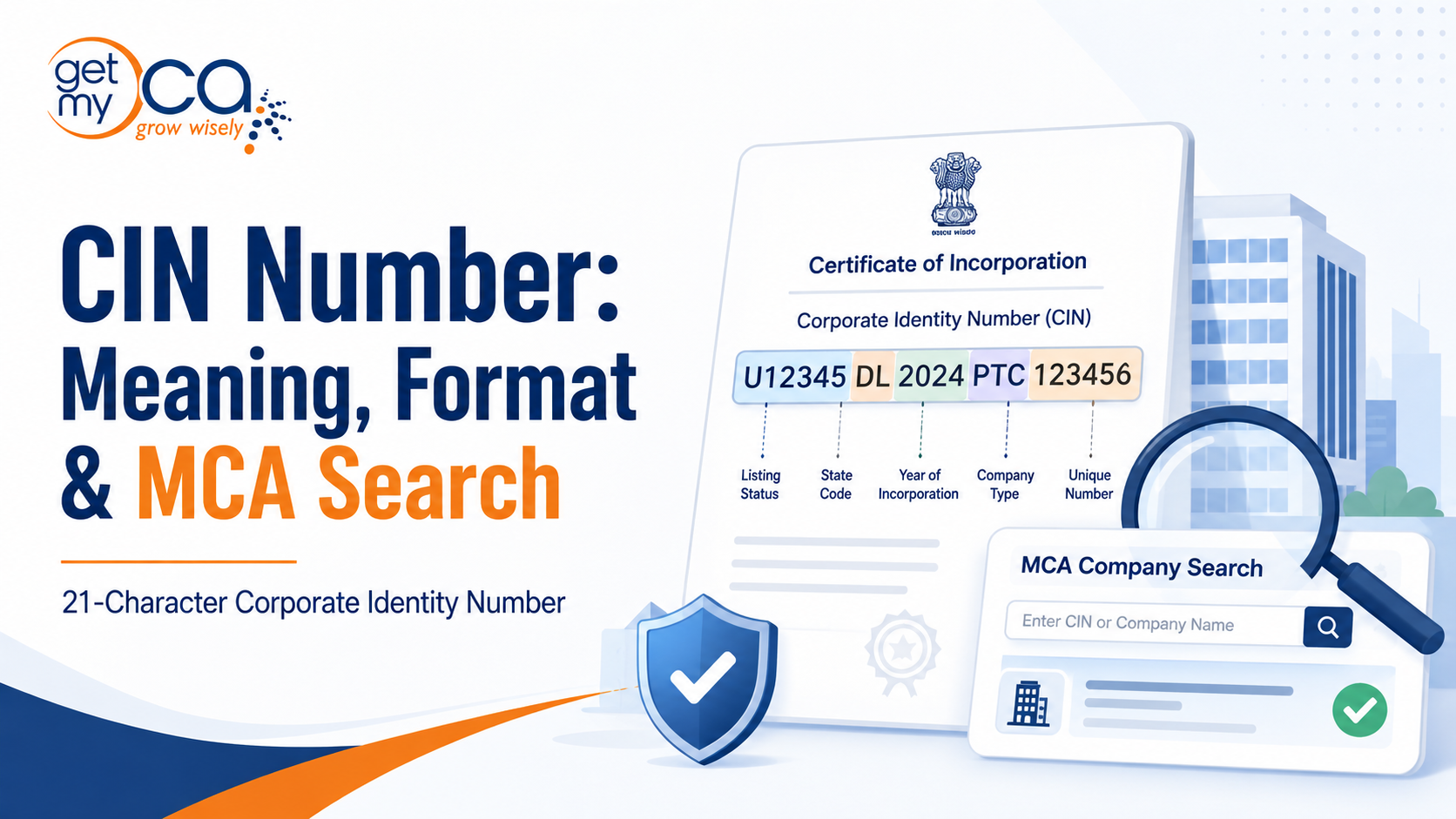
Every registered company in India has certain identification details that help businesses, investors and other stakeholders verify its legal existence. One such important identifier is the Corporate Identity Number, commonly known as CIN.
A CIN is a unique 21-character alphanumeric number allotted to companies registered under Indian company law. Understanding the CIN number meaning and format can make it easier to identify basic information about a company and verify its details through official records.
The CIN is not simply a random registration number. Different sections of the 21-character code represent specific information about the company.
A typical CIN may indicate:
Because several company details are reflected within the CIN, it can be useful while checking corporate records and documentation.
A company's CIN is generally mentioned on its Certificate of Incorporation. It can also appear on various official business documents such as company letterheads, notices and other corporate communications.
Company information can also be checked using the Ministry of Corporate Affairs' company master-data facility. Searching the exact legal name of a company helps reduce the possibility of confusing it with another entity having a similar name.
A valid CIN confirms that a corporate entity has been incorporated and has an identity in MCA records. However, CIN verification alone should not be considered a complete business due-diligence process.
Depending on the purpose of verification, businesses may also need to review:
These checks become particularly important before entering into significant commercial agreements.
Corporate identification and tax compliance operate separately. A company's CIN relates primarily to its corporate identity, while matters relating to GST, taxation and input tax credit are governed through different registrations and compliance procedures.
For example, manufacturers purchasing expensive plant and equipment may separately need to understand GST refund on machinery purchase and how machinery-related input tax credit is treated under applicable GST provisions.
Therefore, businesses should avoid assuming that one registration number or compliance record provides complete information about every regulatory aspect of a company.
A CIN should also not be confused with identifiers such as PAN, GSTIN, DIN or LLPIN.
CIN identifies a company registered under company law, while DIN relates to individual directors. GSTIN is used for GST registration and compliance, whereas LLPs are normally allotted an LLPIN instead of a CIN.
Understanding these differences helps businesses use the correct identification number while checking registrations or preparing documentation.
The Corporate Identity Number is an important part of a company's legal identity in India. Its 21-character structure contains useful information about the company's registration and classification.
Checking the CIN together with MCA master data, company status and other relevant registrations can provide a clearer picture of an organisation before important business transactions are carried out.