English
 Arabic
 French
 Spanish
 Portuguese
 Deutsch
 Turkish
 Dutch
Dutch
 Italiano
 Russian
 Romaian
 Portuguese (Brazil)
 Greek
Greek
Preventive Care Tips from a Trusted Vet in Woodlands
Other |
2026-06-29 17:37:20
 Advertise With Us
 About Us
 Terms And Conditions
 Политика конфиденциальности
Смотреть все
Политика конфиденциальности
Смотреть все

Обновить до Про
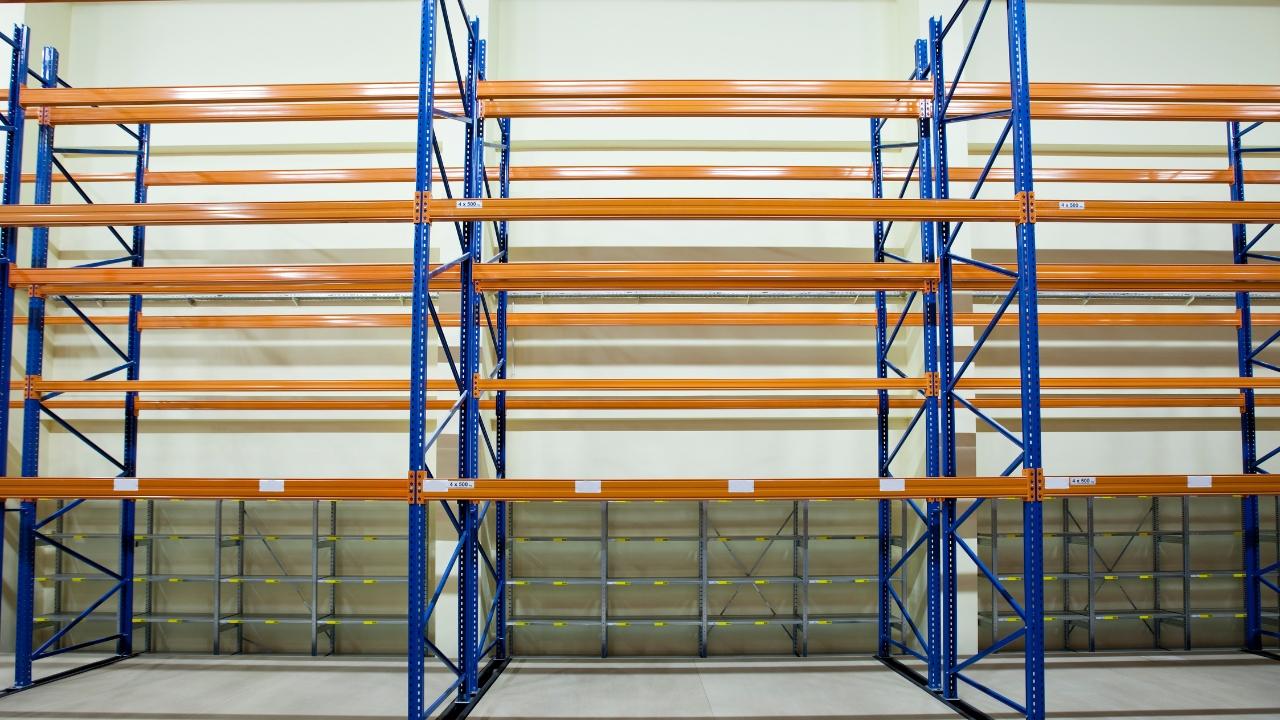
Deep Pallet Racking can help businesses increase storage density, while selective pallet racking focuses on direct access to individual pallets. Choosing between the two depends on inventory volume, product variety, warehouse layout, and handling requirements. Master Racks Limited can be considered when evaluating professional warehouse racking solutions.
Warehouse storage is not a one-size-fits-all solution.
Every business has different products, inventory levels, warehouse dimensions, and operational priorities. A storage system that works well for a large distribution center may not be suitable for a warehouse handling hundreds of different products.
Two commonly considered solutions are deep storage configurations and selective pallet racking.
Both can provide organized pallet storage, but they approach warehouse space and accessibility differently.
Deep Pallet Racking is designed to store pallets deeper within a storage lane rather than providing individual front-facing access to every pallet.
Depending on the configuration, multiple pallets can be positioned behind one another.
This approach can increase storage density and make better use of available warehouse space.
However, deeper storage may reduce direct access to individual pallets. This makes it particularly important to consider inventory turnover and product accessibility before choosing the system.
Selective pallet racking is designed to provide direct access to individual pallet positions.
Each pallet can generally be reached from the warehouse aisle without first moving other pallets.
This makes selective racking a popular option for businesses that handle many different products and need frequent access to individual inventory items.
The most important difference is the balance between storage density and accessibility.
Deep storage generally prioritizes the amount of inventory that can be stored within a given warehouse footprint.
Selective storage generally prioritizes direct access to individual pallets.
This means neither system is automatically better.
The right choice depends on what matters most to the business.
Storage density is often the first factor businesses consider.
A deep configuration can store multiple pallets within a single storage lane.
Because fewer individual access aisles may be required, more of the warehouse footprint can potentially be dedicated to inventory.
This can be particularly useful for businesses storing large quantities of similar products.
Selective racking typically requires access aisles between rows.
As a result, more warehouse floor area may be allocated to access.
However, that additional aisle space provides a major operational benefit: direct access to individual pallets.
For businesses focused primarily on maximizing pallet capacity, deep storage may provide an advantage.
For businesses where accessibility is more important than maximum density, selective racking may be more appropriate.
Accessibility is one of the biggest differences between the two approaches.
Selective systems are particularly useful when warehouse employees need to retrieve individual pallets frequently.
For example, a warehouse with many different SKUs may need to access different products throughout the day.
Direct access can make these operations more straightforward.
In deeper configurations, pallets stored behind other pallets may not have the same level of direct access.
This means businesses should consider how frequently products are retrieved.
If a product is rarely accessed, reduced direct accessibility may not be a major concern.
If a product is picked several times a day, it may be more important to position it in an easily accessible location.
The number and variety of products stored in a warehouse can strongly influence the decision.
Selective storage can be suitable for warehouses with:
Many different SKUs
Frequent product changes
High product variety
Regular individual-pallet access
Mixed inventory
Different customer orders
Because individual pallet locations can be accessed directly, selective racking offers significant flexibility.
Deep storage can be more suitable for warehouses with:
Large quantities of similar products
Fewer product varieties
Bulk inventory
Longer storage periods
High storage-density requirements
The system becomes especially attractive when businesses frequently store several pallets of the same product.
Inventory turnover should be carefully considered.
A warehouse that frequently receives and dispatches products may have different requirements from a facility where products remain in storage for longer periods.
Fast-moving products usually benefit from easy accessibility.
If employees frequently need to retrieve individual pallets, selective racking may provide a practical advantage.
Products that remain in storage for longer periods may be suitable for deeper storage.
The reduced accessibility may be less important when pallets are not frequently retrieved.
Businesses should also consider whether they need a particular stock-rotation method.
Products with expiration dates or strict rotation requirements may require storage configurations that support appropriate inventory movement.
Available warehouse space is another major factor.
Businesses with limited floor space may look for ways to increase pallet capacity without expanding the facility.
A deep configuration can potentially reduce the amount of space dedicated to access aisles.
This may allow more inventory to be stored within the existing warehouse footprint.
Selective systems may use more floor space for aisles, but that space provides valuable accessibility.
For businesses where picking efficiency is more important than maximum storage density, the additional aisle space may be worthwhile.
The storage system must work with the warehouse's material-handling equipment.
Forklift type, reach capability, lifting height, turning requirements, and operator visibility can all influence the design.
Some deep-storage configurations may require specialized handling approaches.
The forklift must be capable of safely accessing pallets positioned deeper within the system.
Selective racking generally provides more straightforward aisle access, but the aisle dimensions must still accommodate the equipment used.
Businesses should assess the actual equipment before finalizing a rack layout.
The rack system and handling equipment should be planned together.
A storage system should not be evaluated separately from the rest of the warehouse.
The complete flow of goods should be considered.
A typical warehouse may include:
Receiving → Inspection → Storage → Picking → Packing → Dispatch
Deep storage can work well when large quantities of similar inventory move through designated storage zones.
The layout should provide suitable forklift access while maximizing storage positions.
Selective racking can support warehouses where products are frequently picked from different locations.
The aisles provide direct access to individual storage positions.
Safety is important for both deep and selective storage systems.
Racks support substantial loads and are often located in areas where forklifts and employees operate continuously.
The rack configuration must be appropriate for the intended pallet weights.
Businesses should understand and respect the applicable load requirements.
Damaged pallets should not be placed into elevated storage where they could create instability.
Warehouse managers should regularly inspect for:
Bent frames
Damaged beams
Loose components
Impact damage
Unstable loads
Improper pallet placement
Any significant damage should be assessed appropriately.
The quality of the design and installation can have a major effect on warehouse performance.
A professional assessment should consider:
Warehouse dimensions
Ceiling height
Product characteristics
Pallet sizes
Load requirements
Forklift specifications
Aisle requirements
Inventory turnover
Future expansion
A system may appear suitable based on storage capacity alone.
However, poor planning can result in difficult forklift movement, inefficient picking, inaccessible products, or underused warehouse space.
Professional planning helps connect the storage system with the wider operation.
There are several reasons businesses may choose Deep Pallet Racking.
Multiple pallets can be stored deeper within storage lanes.
Reducing access requirements can potentially create more room for inventory.
Large quantities of similar products can be stored efficiently.
Additional storage positions may help businesses manage increasing inventory within an existing facility.
However, these benefits should be evaluated against accessibility requirements.
Selective systems offer a different set of benefits.
Individual pallets can generally be accessed without moving other pallets.
The system can work well with warehouses handling many different products.
Storage positions are clearly defined and accessible from the aisle.
Businesses that retrieve individual pallets regularly may find selective storage practical.
There is no universal answer.
A small warehouse with many different products may benefit from selective racking.
Another small business storing large quantities of a few products may benefit from higher-density storage.
The size of the business is less important than the inventory profile and operational requirements.
Large warehouses may use either system or a combination of different configurations.
A distribution center might use selective racking for fast-moving and varied inventory while using high-density storage for bulk products.
This hybrid approach can help businesses optimize different areas according to their specific requirements.
Yes, a warehouse does not necessarily have to choose only one storage approach.
Different storage zones can be designed for different product categories.
A warehouse could use:
Selective racking for fast-moving products
Deep storage for bulk inventory
Specialized racks for oversized products
Floor staging for temporary inventory
This approach can provide a more balanced warehouse environment.
Businesses often want to compare systems based on initial investment.
However, the better approach is to consider the complete operational value.
Important factors include:
Storage capacity
Accessibility
Picking efficiency
Warehouse utilization
Handling requirements
Maintenance
Future expansion
Safety
A system that appears attractive initially may not provide the best operational result if it does not match the warehouse's needs.
Businesses can follow a simple evaluation process.
Identify:
Number of SKUs
Pallet quantities
Product weight
Product dimensions
Turnover rate
Rotation requirements
Consider:
Floor area
Ceiling height
Columns
Doors
Loading areas
Existing equipment
Determine forklift reach, lifting height, turning requirements, and operating limitations.
Ask whether your main priority is:
Higher density or easier access?
This question can help narrow the options.
Inventory requirements can change.
The chosen system should be evaluated against expected business growth and future warehouse needs.
Before choosing a system, consider the following:
How many pallets do we need to store?
How many different SKUs do we have?
How often is each product accessed?
Do we need direct access to every pallet?
How important is inventory rotation?
What forklifts are available?
How much vertical space is available?
How much storage density do we actually need?
Could inventory volumes increase?
Can the warehouse accommodate future expansion?
These questions can make the selection process more structured.
Businesses evaluating warehouse storage solutions may consider Master Racks Limited when looking for professional racking support.
Every warehouse has unique requirements.
A business with high SKU variety may benefit from selective racking, while a facility storing large quantities of similar products may benefit from a deeper storage configuration.
A professional provider can help evaluate warehouse dimensions, inventory characteristics, handling equipment, load requirements, workflow, and future growth.
The goal should be to develop a storage system that supports the entire warehouse operation.
Whichever system a business chooses, regular inspection and maintenance remain important.
Warehouse managers should establish procedures for:
Rack inspections
Damage reporting
Pallet checks
Load monitoring
Employee training
Aisle management
Maintenance
Employees should also be instructed not to make unauthorized modifications to storage structures.
Consider a deeper storage configuration when:
Storage density is a major priority
Large quantities of similar products are stored
Products remain in storage for relatively long periods
Direct access to every pallet is not essential
The warehouse can accommodate the required handling equipment
Deep Pallet Racking can be especially valuable when maximizing storage capacity is more important than immediate access to every pallet.
Selective storage may be preferable when:
Many SKUs are stored
Individual pallets are accessed frequently
Inventory changes regularly
Direct access is essential
Picking flexibility is a priority
Products have varied turnover rates
The system provides a practical balance between storage organization and accessibility.
|
Factor |
Deep Storage |
Selective Storage |
|
Storage density |
High |
Moderate |
|
Direct pallet access |
Limited depending on configuration |
High |
|
Suitable for bulk inventory |
Excellent |
Good |
|
Suitable for many SKUs |
Less suitable |
Excellent |
|
Aisle requirements |
Potentially lower |
Generally higher |
|
Accessibility |
Lower |
Higher |
|
Inventory flexibility |
Moderate |
High |
|
Best priority |
Storage density |
Accessibility |
This comparison highlights why businesses should choose based on operational needs rather than simply selecting the system with the highest storage capacity.
Deep Pallet Racking and selective pallet racking both offer valuable benefits, but they serve different warehouse strategies. Deep storage is generally more appropriate when businesses prioritize high storage density and handle large quantities of similar products. Selective racking is often better for businesses that need frequent, direct access to a wide range of inventory.
The right choice depends on product characteristics, inventory turnover, warehouse dimensions, forklift requirements, storage density, accessibility, and future growth. Master Racks Limited can be considered when evaluating professional warehouse racking solutions.
For many businesses, the best approach may not be choosing one system exclusively. A combination of storage configurations can create a more flexible warehouse by matching each product category with the most appropriate storage method.