Introduction
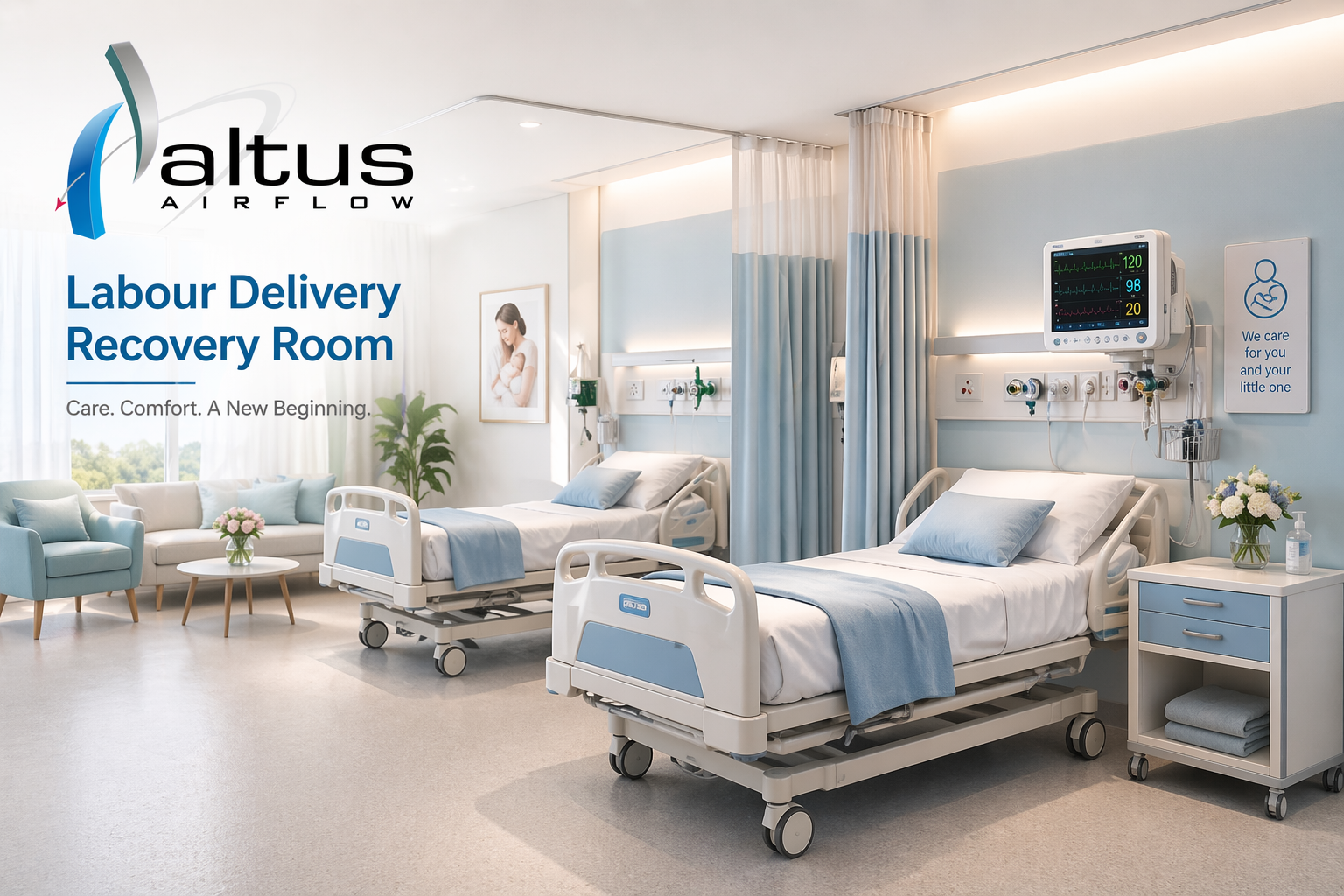
A Labour Delivery Recovery Room is designed to provide close observation and supportive care for mothers and newborns following labour, delivery, or related procedures. The equipment required depends on the hospital's services, patient capacity, and clinical protocols. A properly equipped recovery area should support maternal monitoring, pain management, respiratory care, emergency response, and newborn observation where applicable. Appropriate equipment placement and dependable infrastructure help healthcare professionals provide organized care during the immediate recovery period.
Adjustable Patient Beds
Adjustable beds are an important component of a maternal recovery area.
They allow healthcare professionals to position patients appropriately during observation, assessment, and treatment. Adequate clearance around each bed also provides space for medical equipment and staff movement.
Multi-Parameter Patient Monitors
Patient monitors are used to observe important maternal vital signs.
Depending on clinical requirements, monitors can measure heart rate, blood pressure, oxygen saturation, respiratory rate, and temperature.
Continuous or intermittent monitoring helps healthcare professionals identify changes that require attention.
Fetal Monitoring Equipment
When continued fetal observation is clinically indicated, suitable fetal monitoring equipment may be available.
Cardiotocography and other fetal monitoring technologies can help healthcare professionals assess fetal heart rate and uterine activity according to clinical protocols.
Oxygen Supply Equipment
Oxygen equipment may be required when a mother or newborn needs supplemental oxygen.
Recovery rooms can include oxygen outlets, flow meters, regulators, masks, nasal cannulas, and other oxygen delivery accessories.
These facilities provide convenient access to oxygen when clinically necessary.
Suction Equipment
Suction equipment supports airway management and the removal of secretions or fluids.
Portable suction units or wall-mounted vacuum outlets can be incorporated into the recovery area, depending on the hospital's infrastructure.
Easy access to suction equipment is particularly important during emergencies.
Medical Gas Systems
Medical gas infrastructure supports several clinical requirements.
The room may include oxygen, medical air, vacuum outlets, terminal units, pressure regulators, and medical gas alarm systems.
Reliable medical gas infrastructure allows healthcare professionals to access essential services without relying entirely on portable cylinders or devices.
Infusion Pumps
Infusion pumps provide controlled delivery of fluids and prescribed medications.
They can be positioned close to patient beds and connected to appropriate electrical outlets.
Controlled infusion helps healthcare professionals administer treatment according to clinical instructions.
Syringe Pumps
Syringe pumps allow medications or fluids to be delivered at carefully controlled rates.
Depending on patient requirements and hospital protocols, these devices may be used during the recovery period.
Emergency Crash Cart
A crash cart should be readily accessible in areas where patients may require emergency intervention.
It can contain essential resuscitation supplies, emergency medications, airway equipment, and other emergency resources.
Strategic placement allows trained healthcare professionals to access emergency resources quickly.
Defibrillator
A defibrillator is an important emergency device for responding to certain life-threatening cardiac conditions.
It should be located where authorized clinical staff can access it rapidly during an emergency.
Airway Management Equipment
Airway management equipment can include resuscitation bags, airway devices, masks, and related accessories.
These resources help healthcare professionals provide respiratory support when required.
Newborn Resuscitation Equipment
Where newborn recovery and immediate post-delivery care are included, appropriate neonatal resuscitation equipment may be required.
Depending on clinical protocols, this can include a radiant warmer, neonatal resuscitation device, suction equipment, oxygen supply, and newborn monitoring equipment.
Neonatal Monitoring Equipment
If newborn observation is part of the recovery area, suitable monitoring devices may be available.
These can include pulse oximeters, temperature monitoring equipment, and other neonatal monitoring technologies according to clinical needs.
Blood Pressure Equipment
Automated and manual blood pressure devices can be used to monitor maternal blood pressure.
Regular observation can help healthcare professionals identify changes and determine whether further assessment is needed.
ECG Equipment
ECG equipment may be used when cardiac assessment is clinically indicated.
It provides information about the electrical activity and rhythm of the heart and can support clinical evaluation.
Temperature Monitoring
Temperature monitoring equipment helps healthcare professionals observe maternal and newborn temperature when required.
Appropriate thermometers and monitoring devices can be kept readily accessible in the recovery area.
Nurse Call Systems
Patients may need assistance during the recovery period.
Nurse call systems allow patients to request help and provide healthcare professionals with a convenient method of responding to patient needs.
Communication Equipment
Communication systems such as intercom facilities can support coordination between the recovery room, nursing stations, delivery areas, and other departments.
Effective communication helps healthcare teams coordinate care efficiently.
Medical-Grade Electrical Infrastructure
Medical equipment requires reliable electrical connections.
The recovery area can include medical-grade electrical outlets, grounding protection, emergency lighting, UPS systems, and backup power connections.
These facilities help critical equipment remain available during electrical interruptions.
Storage Facilities
Adequate storage is required for medical supplies, medications, protective equipment, disposable items, and emergency resources.
Organized cabinets and storage areas help keep the patient-care environment clean and reduce unnecessary clutter.
Infection Control Equipment and Facilities
Maternal and newborn recovery areas require appropriate infection control measures.
Hand hygiene stations, easy-to-clean surfaces, suitable ventilation, waste management facilities, and appropriate protective equipment support hygienic clinical operations.
Patient Comfort Equipment
Comfort is also important during maternal recovery.
Adjustable beds, privacy curtains, suitable lighting, temperature control, and appropriate seating can help create a supportive environment for mothers.
Conclusion
A well-equipped labour and delivery recovery area combines maternal monitoring, newborn support where required, respiratory equipment, emergency resources, medical gases, medication-delivery systems, communication facilities, infection control, and reliable electrical infrastructure. The exact equipment should be selected according to the hospital's clinical protocols, patient requirements, available services, and applicable healthcare standards. Proper planning and placement help healthcare professionals provide organized care during the recovery period.
FAQs
1. What equipment is needed in a Labour Delivery Recovery Room?
A Labour Delivery Recovery Room may require adjustable patient beds, multi-parameter monitors, fetal monitoring equipment, oxygen and suction systems, infusion pumps, emergency crash carts, defibrillators, airway equipment, newborn resuscitation equipment, communication systems, and medical gas infrastructure.
2. Is fetal monitoring equipment required in a recovery room?
It may be provided when continued fetal observation is clinically indicated and according to the hospital's maternity care protocols.
3. What emergency equipment should be accessible?
Emergency resources may include crash carts, defibrillators, airway management equipment, suction systems, resuscitation devices, and emergency medications.
4. Why are medical gas systems important?
Medical gas systems provide convenient access to oxygen, medical air, and vacuum services needed for respiratory support and clinical procedures.
5. What equipment may be needed for newborn care?
Where newborn care is included, equipment may include radiant warmers, neonatal resuscitation devices, suction systems, oxygen equipment, and appropriate newborn monitoring devices.
Read Our Previous Blog----------->How does a Post Operative Recovery Room support recovery?
 English
 Arabic
 French
 Spanish
 Portuguese
 Deutsch
 Turkish
 Dutch
Dutch
 Italiano
 Russian
 Romaian
 Portuguese (Brazil)
 Greek
Greek
 Advertise With Us
 About Us
 Terms And Conditions
 Политика конфиденциальности
Смотреть все
Политика конфиденциальности
Смотреть все