 English
 Arabic
 French
 Spanish
 Portuguese
 Deutsch
 Turkish
 Dutch
Dutch
 Italiano
 Russian
 Romaian
 Portuguese (Brazil)
 Greek
Greek
Video Editing Netherlands: The Ultimate Guide to Creating High-Impact Videos for Business Growth
Other |
2026-08-04 05:48:59
 Advertise With Us
 About Us
 Terms And Conditions
 Πολιτική Ιδιωτικότητας
δες τα όλα
Πολιτική Ιδιωτικότητας
δες τα όλα

Upgrade to Pro
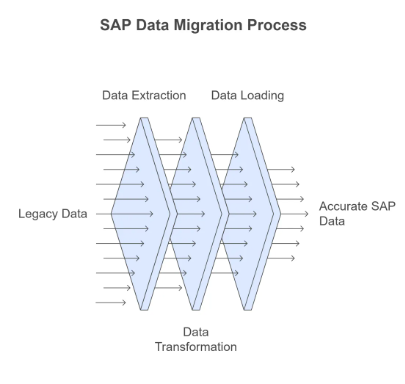
A practical, step-by-step approach to migrating candidate data from a legacy ATS into SAP SuccessFactors without data loss involves five stages: auditing and profiling the legacy data, selecting a parsing-based migration tool rather than a generic file transfer, running a validated pilot against real records, executing the full migration with duplicate resolution built in, and confirming completeness through a post-migration validation report before decommissioning the old system. HR operations teams that follow this sequence consistently avoid the data quality problems that plague rushed, undocumented migrations.
For Canadian HR operations teams tasked with executing this kind of project, the temptation is often to skip straight to stage three, assuming the legacy data is roughly in good shape and a pilot will simply confirm that. This assumption is worth resisting. Stage one, auditing and profiling the legacy data, typically reveals more issues than teams expect, including duplicate records accumulated over years of repeat applicants, incomplete fields where a legacy system only stored partial employment history, and formatting inconsistencies across different eras of the ATS's own software updates. Understanding the scope of these issues before migration begins allows the project team to set realistic expectations and choose a migration tool actually capable of correcting them, rather than discovering the scope of the problem mid-project.
Stage two, selecting the right migration approach, is where the practical guidance diverges most sharply based on what the audit revealed. If the legacy data is heavily unstructured, meaning resumes and notes stored as free text or attached documents rather than structured fields, a generic bulk file transfer will not adequately convert that content into SuccessFactors' expected schema. What is needed instead is a parsing-based tool built to interpret recruiting documents using natural language processing tuned for resume content, extracting structured fields such as work history, education, certifications, and skills, and mapping them directly and consistently to SuccessFactors' data model.
Stage three, the pilot, is the step most often rushed or skipped under project timeline pressure, and it is consistently the step that prevents the most costly downstream problems when done properly. A pilot should use a representative sample of real legacy records, not a clean demonstration dataset, and the resulting SuccessFactors profiles should be reviewed field by field by the recruiters who will use the system daily, not solely by IT staff evaluating technical success criteria. This step typically surfaces specific issues, such as how the tool handles bilingual French and English resumes common in the Canadian labour market, or how it categorizes region-specific credentials, that a generic vendor demonstration would never reveal.
Stage four, full execution with duplicate resolution, is where automated tools distinguish themselves most clearly from manual or semi-manual approaches. Detecting duplicate candidates across a large legacy dataset requires comparing every record against every other record for similarity across multiple fields, a task that scales poorly with manual review but is well suited to automated processing. Data Migration for SAP SuccessFactors is built around exactly this kind of AI-driven enrichment, applying consistent parsing and duplicate detection logic across the full candidate pool to deliver what amounts to a zero-loss transfer rather than a partial or degraded copy of the legacy system's data.
Stage five, post-migration validation, is the step that turns "we think the migration went well" into "we can prove the migration went well." A proper validation report should document how many records were processed, how many were flagged for manual review due to ambiguous or incomplete source data, and how duplicates were identified and resolved. Without this documentation, HR operations teams have no reliable basis for deciding when it is safe to fully decommission the legacy ATS, and organizations that skip this step often end up running two systems in parallel far longer than necessary, out of understandable caution rather than confirmed readiness.
One more practical note worth including in this guide: the five stages above are not strictly sequential in every organisation's case. Larger candidate pools, or those spanning multiple regional legacy systems, sometimes benefit from running the audit and pilot stages in parallel across separate data segments, provided the validation criteria applied to each segment remain consistent. What should never be compressed, regardless of how the stages are sequenced, is the validation stage at the end, since it is the only point in the project where the organisation gets documented confirmation, rather than assumption, that the migration met its zero-loss objective.
Security and privacy considerations run through all five stages rather than sitting in a single step, particularly given obligations under PIPEDA around the handling of personal information during a system transition. Canadian organizations should confirm at the outset that any migration vendor operates under recognized security frameworks, such as ISO 27001:2022 and SOC 2 Type II, and follows a policy of not retaining candidate data beyond what is strictly necessary to complete the parsing and transfer process.
Beyond the migration project itself, RChilli for SAP SuccessFactors extends the same structured parsing capability into everyday recruiting operations after go-live, which is worth factoring into the tool selection stage, since a solution that only performs the migration and offers nothing afterward requires a separate investment later to maintain the data quality the migration established. Compliance-focused teams evaluating vendors as part of this practical guide should also review RChilli's Data Security & Compliance documentation directly, which lays out the specific certifications and data handling practices relevant to a Canadian organization's due diligence requirements before signing off on a migration partner.
A few additional practical details are worth building into the project plan from the start, since they are easy to overlook until a team is already mid-project. First, decide early who owns final sign-off on the validation report, because ambiguity here often leads to the legacy system being kept alive indefinitely while different stakeholders each wait for someone else to confirm readiness. Assign a single accountable owner, typically the HR operations lead most familiar with day-to-day recruiter workflows, and give that person explicit authority to approve decommissioning once the validation criteria are met.
Second, budget realistic time for the pilot stage specifically, rather than compressing it to fit around other project deadlines. A pilot that is rushed to two or three days rather than the one to two weeks it typically needs to properly review results with recruiting stakeholders tends to produce false confidence rather than genuine validation, since issues that would surface with more careful review get missed under time pressure. It is far better to extend the pilot stage modestly than to discover a systemic parsing issue after the full migration has already run.
Third, plan for a transition period where both systems remain accessible, even after the migration is technically complete and validated, so that recruiters have a fallback reference if a specific candidate record needs to be manually cross-checked during the early weeks of using the new system. This transition period should have a defined end date tied to the validation report's sign-off, not an open-ended timeline, since indefinite dual-system operation defeats much of the efficiency gain the migration was meant to deliver in the first place.
Fourth, communicate the migration timeline and expected changes clearly to the recruiting team well before go-live, including what to do if they notice something that looks wrong in the new system. Recruiters who understand that a validation process is actively monitoring for issues are more likely to report anomalies constructively rather than simply losing confidence in the platform silently, which makes the whole project easier to manage in its first few weeks of live operation.
Following this five-stage sequence takes longer than a rushed weekend file transfer, but Canadian HR operations teams who have run both kinds of projects consistently describe the structured approach as faster overall, once the time spent on post-migration cleanup from a rushed approach is properly counted. A migration done once, correctly, is considerably less work over its full lifecycle than a migration done twice.
