English
 Arabic
 French
 Spanish
 Portuguese
 Deutsch
 Turkish
 Dutch
Dutch
 Italiano
 Russian
 Romaian
 Portuguese (Brazil)
 Greek
Greek
3D Metrology Market Forecast 2033: Growth Opportunities and Emerging Innovations
Networking |
2026-08-05 06:52:06
 Advertise With Us
 About Us
 Terms And Conditions
 Política de Privacidade
Ver Todos
Política de Privacidade
Ver Todos

Atualize para o Pro
Organizations communicate in many ways. Some messages need to travel in a booklet, publication, brochure, annual report, or other printed piece. Others belong inside the workplace or event venue, where signs, graphics, and displays become part of the physical experience. Heritage Signs & Displays began as a printing business in 1977, and commercial printing remains an important part of our history and capabilities. Custom signs, interior graphics, workplace branding, and event environment solutions became a defining company focus beginning in 2009.
Understanding the difference between these services helps organizations choose the right approach for what they are trying to accomplish. Sometimes the need is entirely print based. Sometimes it involves transforming a physical space. And sometimes one organization needs both. Here are five questions that help explain how commercial printing, custom signs, and broader visual branding solutions can serve different communication needs.
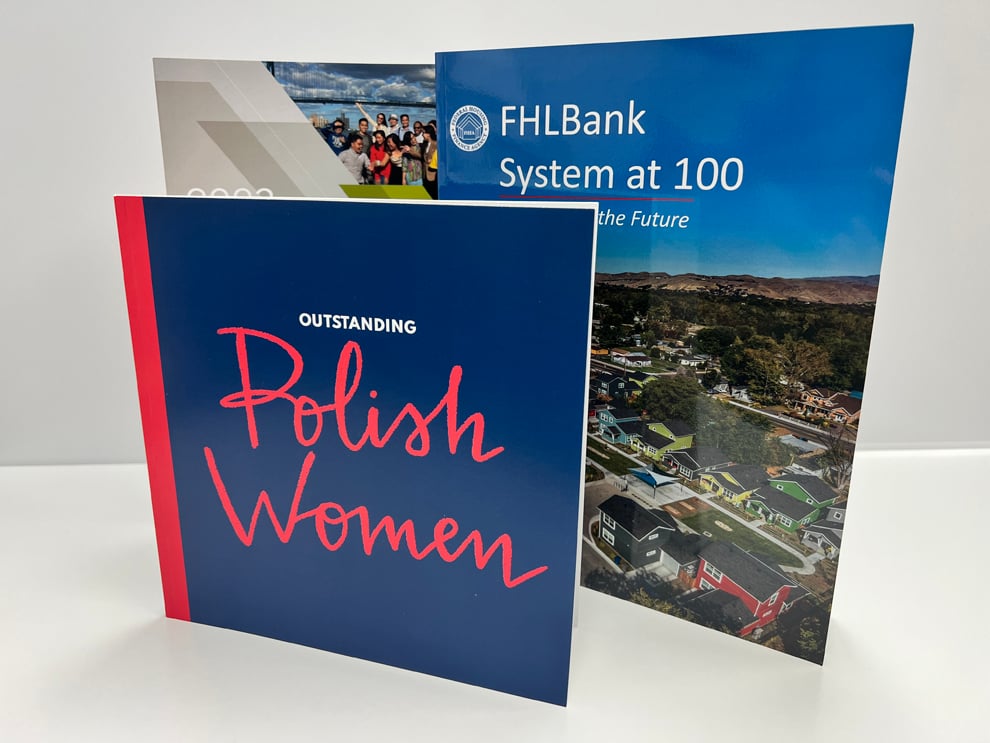
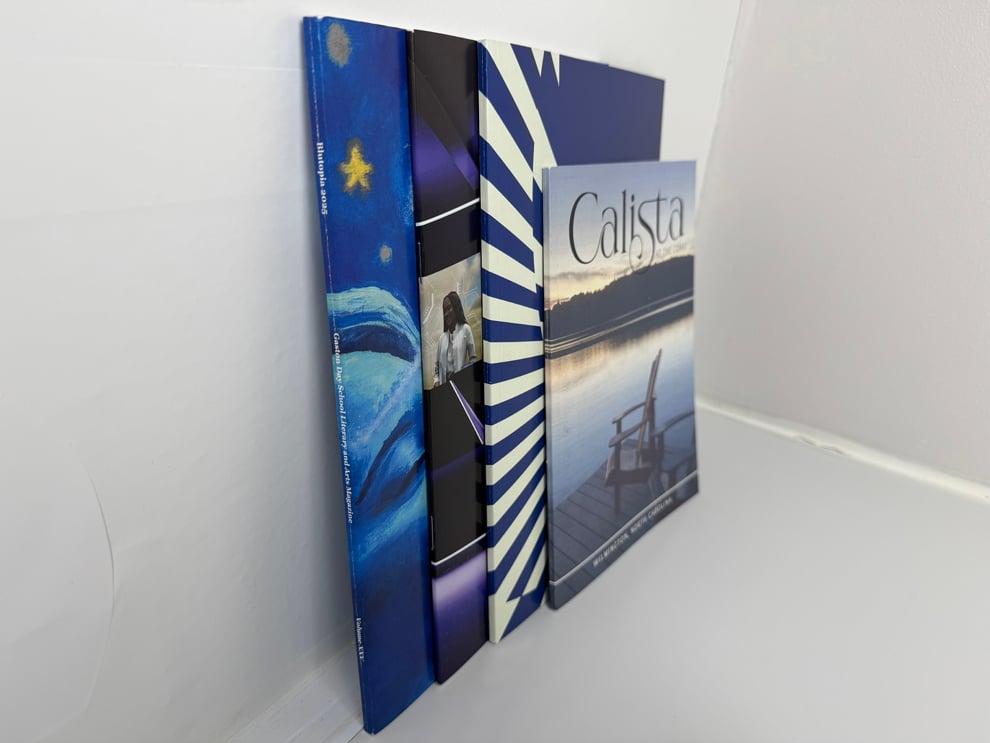
Commercial printing supports organizations that need professionally produced communication materials in quantity. Depending on the project, those materials can include magazines, newsletters, annual reports, booklets, catalogs, brochures, self-published books, direct-mail pieces, and related publications and marketing materials.
Commercial printing and workplace branding involve different project requirements. A publication may require file preparation, proofing, paper selection, printing, binding, finishing, mailing, and delivery without requiring a site survey or professional installation. A workplace signs and graphics project may involve client discovery, field measurements, environmental graphic design, material selection, production, fabrication, scheduling, and professional installation. Understanding those differences allows the project to follow the service model that best fits the desired result.
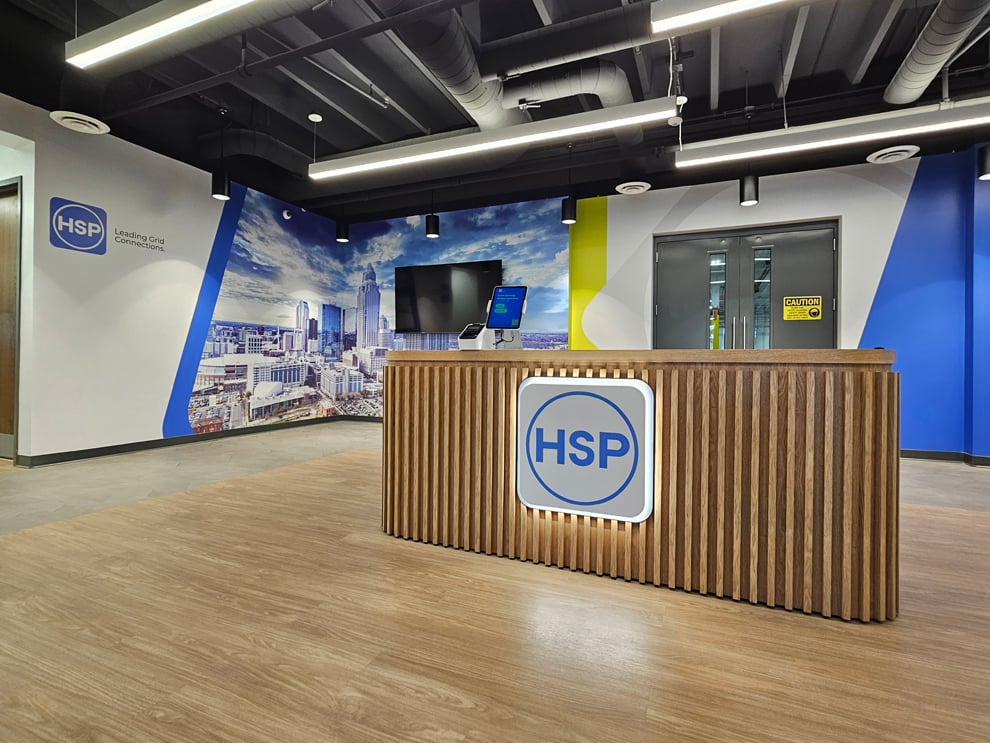
A custom sign is developed around the specific communication need, space, brand, audience, dimensions, materials, appearance, and installation requirements of an organization rather than being selected as a generic product from a shelf. Inside workplace interiors, custom signs may include dimensional lettering, lobby signs, acrylic signs, standoff mounted signs, backlit signs, wayfinding elements, recognition displays, wall graphics, window graphics, and other fabricated visual features.
Customization involves more than selecting a logo and a color. Decisions about scale, material, depth, mounting, lighting, surrounding architecture, viewing distance, message hierarchy, and the relationship between several signs and graphics can all influence the final result. For larger projects, considering those elements together can create a more cohesive workplace experience than treating each sign as an unrelated purchase.
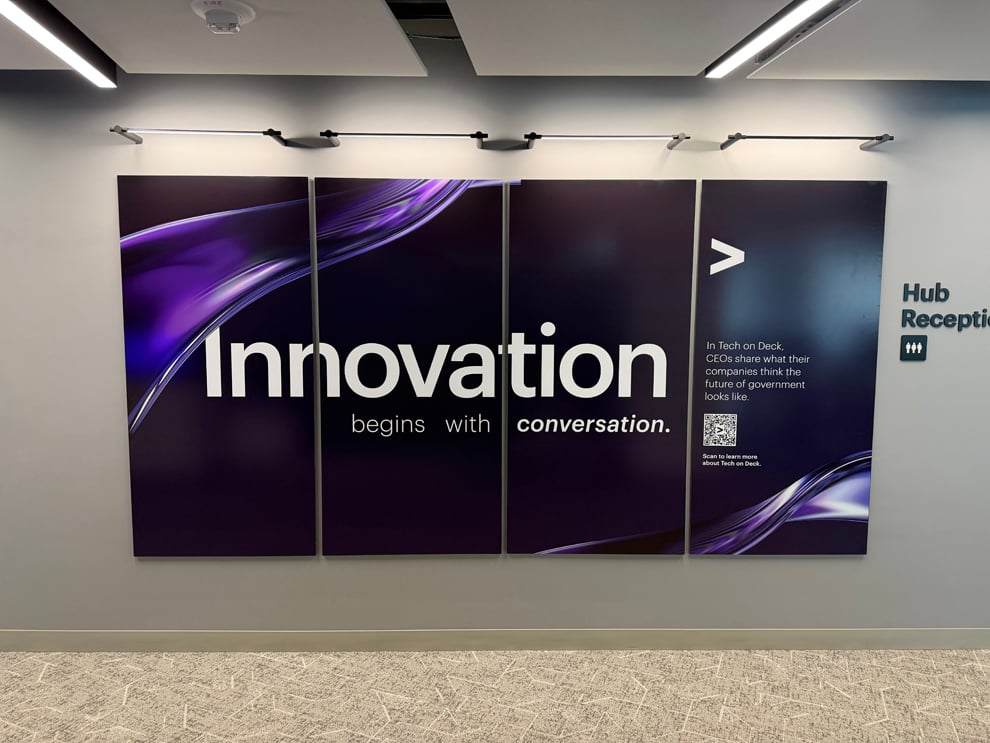
Signs and graphics help organizations make important information visible. A lobby sign establishes identity. A wall display can communicate organizational history. A mission statement or core values display can reinforce culture. Donor recognition displays can honor generosity and support. Wayfinding helps visitors move through the workplace. Privacy graphics can make glass offices and conference rooms more functional while supporting branding.
Large wall graphics can connect several visual elements across an entire interior. Dimensional lettering or mounted panels can introduce depth. Photography and archival imagery can help tell an organization’s story. For organizations with multiple locations, a coordinated signs and graphics program can also help maintain consistent brand standards while adapting individual installations to the dimensions, architecture, and operating conditions of each workplace.
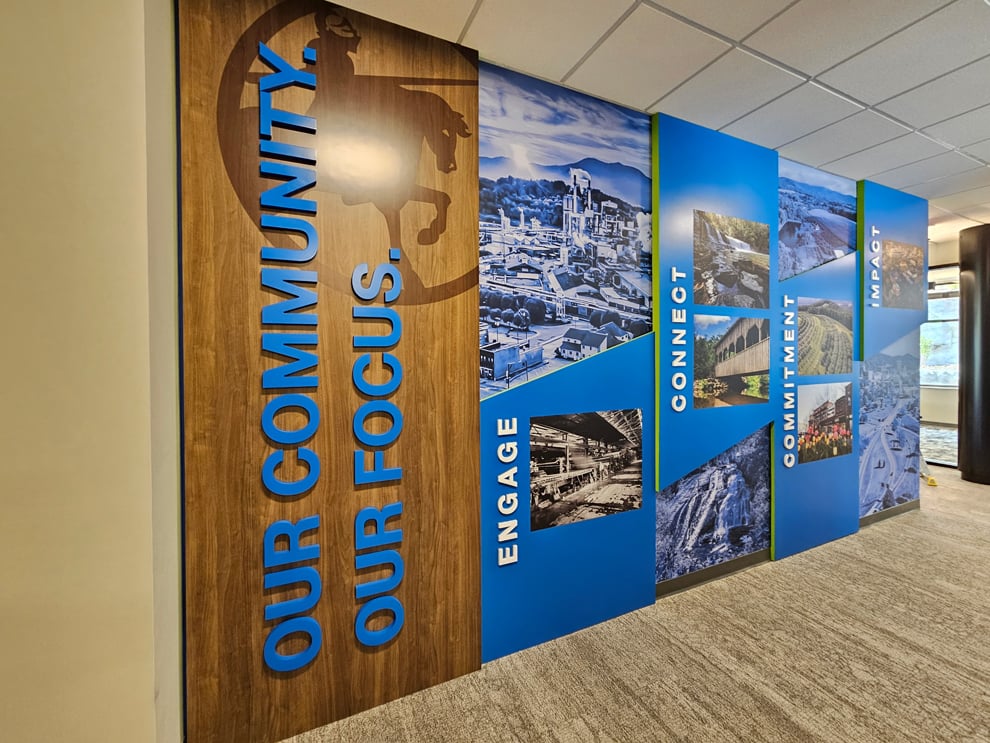
Material selection depends on what the sign needs to communicate, how it will be mounted, where it will be installed, the desired appearance, and the expected service life. Common materials and components may include acrylic, PVC, wood, foam-based display materials, adhesive vinyl, printed graphics, dimensional letters, lighting components, architectural mounting hardware, and aluminum composite material (ACM).
ACM is particularly useful for printable or cut sign panels that need the professional appearance associated with a metal surface while remaining substantially lighter than a comparable solid-metal panel. Heritage may also source actual metal hardware, fasteners, standoffs, and other manufactured components when they are appropriate to the project. The best material is determined by the application. Appearance, durability, weight, fabrication method, mounting, surrounding surfaces, viewing distance, maintenance, and installation conditions can all influence the recommendation.
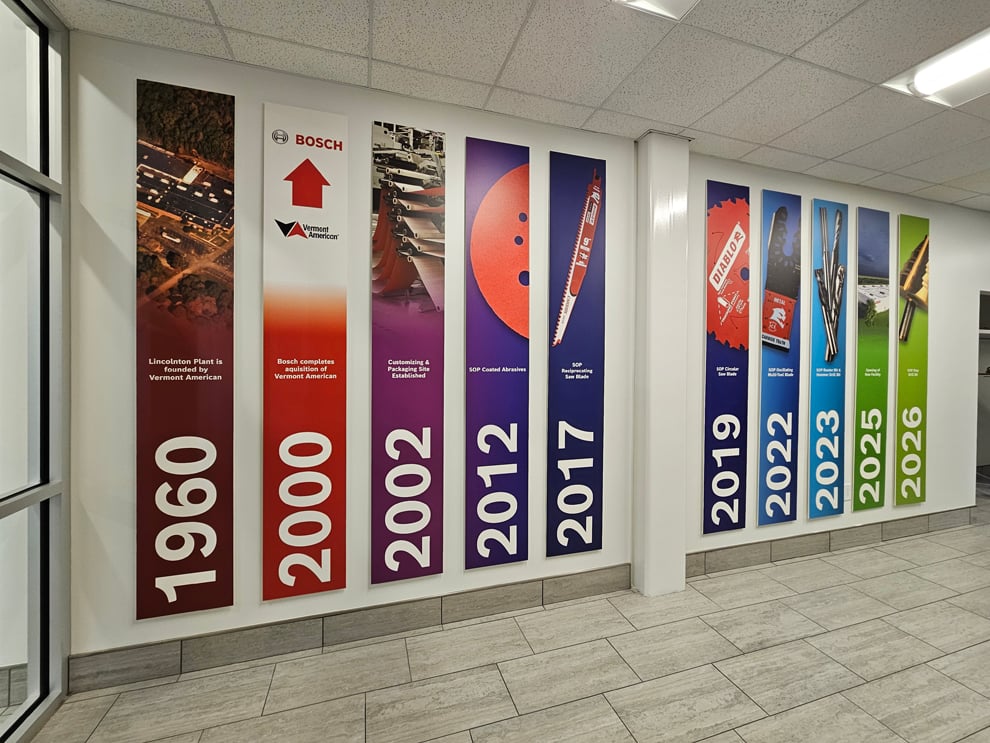
Heritage specializes in custom signs, graphics, and displays for workplace interiors and event environments. These projects often involve environmental graphic design, project management, production, fabrication, and professional installation connected through one coordinated process. One assigned project manager helps keep client communication, brand standards, site conditions, production requirements, schedules, and installation planning aligned.
Heritage does not produce or install monument signs, pylons, channel letters, conventional exterior sign programs, or fleet graphics. Appropriate non-illuminated exterior signs, dimensional lettering, sign panels, window graphics, or wall graphics may sometimes support a broader Heritage-managed interior signs, graphics, and displays project when the specific product, materials, site conditions, and intended use make the application appropriate. This focus allows Heritage to concentrate its people and resources on the workplace and event projects where environmental graphic design, production, fabrication, and professional installation create meaningful value.
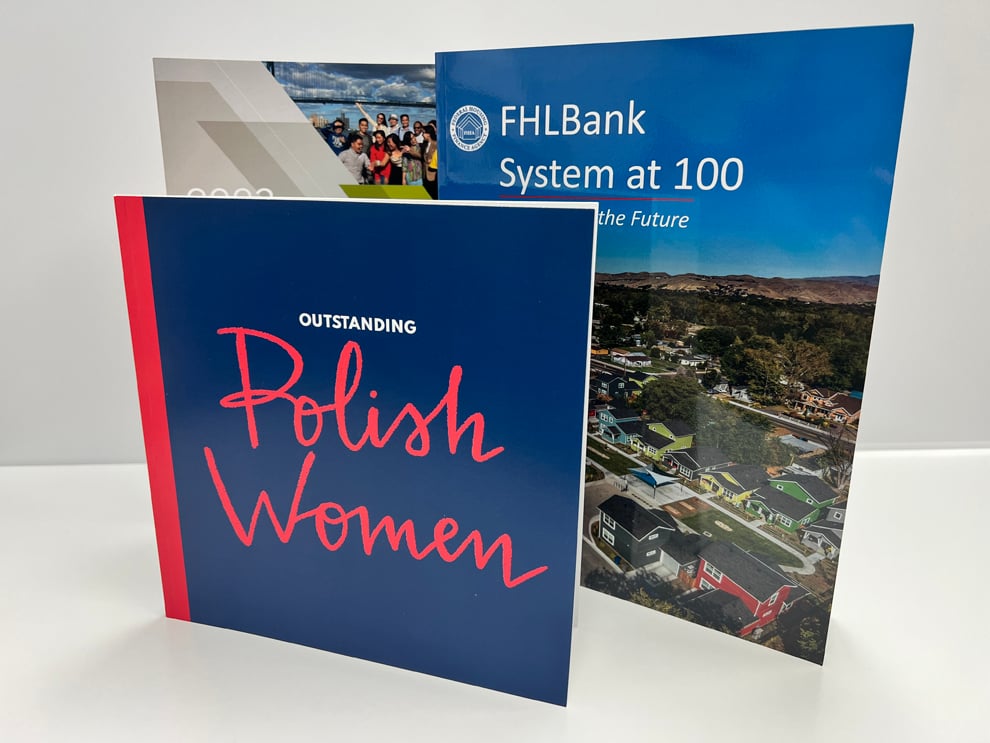
Commercial printing and custom signs are not competing solutions. They address different communication needs. An association may need an annual report for members while also branding its headquarters. A university might produce an event program while creating sponsor displays and directional graphics for a conference. A nonprofit could publish a donor report while developing a recognition wall inside its facility. A corporation may need publications for employees while also refreshing the signs and graphics throughout several regional offices.
When organizations understand which communication belongs on paper and which belongs in the physical space, each medium can do what it does best. Heritage Signs & Displays supports organizations throughout Washington, DC, Northern Virginia, Maryland, and the broader Mid-Atlantic with commercial printing as well as custom signs, graphics, displays, workplace branding, and event environment solutions.
As a veteran-owned and family-led company founded in 1977, we are grateful to continue helping organizations communicate their ideas in both printed and physical forms. If you have an upcoming project, Get Started Now and share what you are trying to accomplish. Our team can help determine the appropriate next step.
Original Source: https://heritageprinting.com/blog/top-5-commercial-printing-and-custom-signs-faqs/