English
 Arabic
 French
 Spanish
 Portuguese
 Deutsch
 Turkish
 Dutch
Dutch
 Italiano
 Russian
 Romaian
 Portuguese (Brazil)
 Greek
Greek
Sustainable Farming Practices Creating New Demand for Seaweed-Based Crop Solutions
Networking |
2026-06-11 10:20:08
 Advertise With Us
 About Us
 Terms And Conditions
 سياسة الخصوصية
عرض كل النتائج
سياسة الخصوصية
عرض كل النتائج

ترقية الحساب
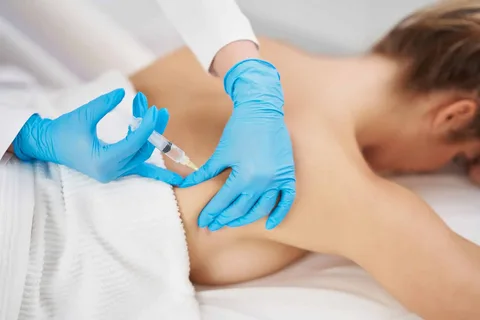
Fat melting injection in Jeddah is an option that some people consider when they want to improve localized areas of unwanted fat without choosing a surgical procedure. Changes in body composition can be influenced by many factors, and certain fat deposits may remain even when an individual maintains a balanced diet and regular exercise routine. Injectable fat reduction is designed to focus on selected areas rather than provide overall weight loss.
Before considering treatment, it is important to understand how injectable fat reduction works, who may benefit from it, what the treatment experience can involve, and what limitations should be considered. A professional assessment is essential because not every type of localized fullness is caused by excess fat, and not every injectable product is appropriate for every area.
Fat is a normal component of the human body and plays several important biological roles. However, its distribution differs significantly among individuals.
Genetics, age, hormones, lifestyle, and body composition influence where fat is stored. Even after weight reduction, some people continue to notice fullness in specific areas.
Common concerns can involve facial or body contours. The issue may be relatively small but still affect how an individual perceives their overall proportions.
Targeted cosmetic procedures are intended to address such localized concerns rather than replace comprehensive weight management.
The term fat melting injection is commonly used in cosmetic discussions to describe injectable treatments intended to reduce localized fat.
It is important to recognize that the term does not represent one universal formulation.
Some treatments use deoxycholic acid. When appropriately administered into targeted fatty tissue, this substance can disrupt fat-cell membranes. The body subsequently processes the affected cells over time.
Other injectable products may contain different ingredients and may have different evidence and recommended applications.
Anyone considering fat melting injection in Jeddah should therefore ask exactly what product is being used and what its active ingredient is.
One potential reason to consider an injectable treatment is that it can target a relatively small area without traditional surgical fat removal.
Liposuction physically removes fat through surgery, while certain injectable treatments work within the targeted fatty tissue.
For selected patients, this minimally invasive approach may be attractive.
However, the procedure still involves injections into tissue and should be performed by an appropriately qualified healthcare professional.
The area beneath the chin is a well-known concern for localized fat reduction.
Submental fullness can make the lower face appear heavier and can reduce the definition of the jawline.
Certain deoxycholic-acid-based treatments have an established application for submental fat.
The anatomy of this region requires particular care because important nerves and other structures are located nearby.
Patients should make sure the proposed product is appropriate for the intended area and that the treatment is being performed using an appropriate technique.
Patients may also ask about localized fat in areas such as the abdomen, thighs, upper arms, or flanks.
Whether injectable treatment is appropriate depends on the exact formulation and its intended use.
A product should not be assumed to be safe or effective for an area simply because it is marketed as a fat-dissolving injection.
Professional assessment is necessary to determine whether injectable treatment is suitable.
Potential candidates may include people who:
Have relatively stable body weight
Have a localized deposit of subcutaneous fat
Want modest contour improvement
Understand the gradual nature of results
Have realistic expectations
The condition of the skin also matters.
If an area has significant laxity, reducing the underlying fat may not produce a tighter appearance.
A consultation can help distinguish between excess fat and other causes of unwanted fullness.
A detailed consultation is one of the most important stages before treatment.
The practitioner may assess the area visually and physically and discuss the individual's desired outcome.
Medical history, medications, allergies, and previous aesthetic procedures should also be considered.
The consultation should explain:
The exact product
Treatment method
Expected results
Possible side effects
Potential complications
Recovery
Number of sessions
Alternative options
This information helps patients make an informed choice.
Preparation varies according to the product and treatment location.
Patients should provide accurate medical information and follow any instructions provided by the healthcare professional.
They should also consider the possibility of swelling and bruising.
If someone has an upcoming event, they should discuss the likely recovery period before scheduling the procedure.
The treatment area is prepared before the procedure.
The practitioner identifies appropriate injection points based on the location and distribution of the targeted fat.
The product is then administered into the relevant tissue.
Multiple injections may be required.
Temporary sensations such as stinging, burning, pressure, or tenderness can occur.
The duration of the procedure depends on the treatment area and protocol.
Patients may experience temporary reactions following fat reduction injections.
These can include swelling, bruising, redness, tenderness, pain, numbness, and firmness.
The degree of discomfort varies between individuals.
Patients should follow their specific aftercare instructions and avoid trying to manipulate or accelerate the treatment area without professional guidance.
The immediate appearance should not be used to judge the final cosmetic outcome.
Results usually develop gradually.
The body needs time to process treated fat cells.
In addition, swelling may temporarily obscure the improvement.
As the area settles, the contour can become easier to evaluate.
The final result depends on several variables, including:
Amount of localized fat
Treatment area
Product used
Injection technique
Skin elasticity
Individual response
Number of treatment sessions
Some individuals may require more than one session.
People considering fat melting injection in Jeddah should understand that the procedure is intended for localized contouring.
It is not a general weight-loss procedure.
The objective is usually to reduce fullness in a specific area rather than create a dramatic change in overall body size.
Results vary among individuals, and complete removal of localized fat should not be guaranteed.
A responsible consultation should establish a realistic goal before treatment begins.
Cosmetic fat reduction should not replace healthy lifestyle habits.
Balanced nutrition and regular physical activity remain important for maintaining healthy body composition.
Individuals who need significant weight reduction should pursue appropriate weight-management strategies.
Injectable contouring is generally more relevant to people who have a stable weight but remain concerned about a specific localized deposit.
For appropriate patients, injectable fat reduction may provide several potential advantages.
It can focus on a small treatment area and may avoid the surgical incisions associated with liposuction.
The gradual nature of improvement can also allow the change to appear relatively subtle.
Nevertheless, every procedure has limitations, and patients should consider potential side effects and complications before deciding.
Safety depends on appropriate patient selection, correct product use, injection technique, and practitioner expertise.
Patients should know exactly what substance is being injected.
Treatment in anatomically sensitive areas requires particular care.
Incorrect injection placement can result in complications, which is why professional administration is essential.
Patients should avoid unknown products, unverified providers, and self-injection.
Before receiving treatment, patients can ask:
What product will be used?
The name and active ingredient should be clearly explained.
Where is it intended to be used?
Patients should understand whether their chosen treatment area is appropriate.
What results should I expect?
The practitioner should provide realistic information.
How many sessions might I need?
Treatment requirements vary.
What side effects can occur?
Temporary reactions should be explained beforehand.
What complications are possible?
Patients deserve clear information about risks.
What alternatives are available?
Other treatments may sometimes be more appropriate.
After treatment, maintaining a stable body weight can help support the overall cosmetic result.
Healthy nutrition and physical activity can contribute to long-term body composition.
Although treated fat cells may be reduced, remaining fat cells can still enlarge when significant weight gain occurs.
Therefore, healthy habits remain important even after cosmetic contouring.
Fat melting injection in Jeddah may be considered by individuals who want targeted reduction of localized fat through a minimally invasive procedure. It can be suitable for selected patients who have relatively stable weight and a specific area of concern.
However, the term “fat melting injection” can refer to different products, and their ingredients and applications are not necessarily the same.
Patients should seek a professional assessment, understand the exact treatment being proposed, and establish realistic expectations before proceeding.
A careful approach can help individuals evaluate whether injectable fat reduction is suitable for their goals or whether another contouring option may provide a better solution. The priority should always be informed decision-making, appropriate treatment, and patient safety.