English
 Arabic
 French
 Spanish
 Portuguese
 Deutsch
 Turkish
 Dutch
Dutch
 Italiano
 Russian
 Romaian
 Portuguese (Brazil)
 Greek
Greek
Trending Read In These Gilded, Ghostly Hearts by Gwendolyn Kiste
Shopping |
2026-07-02 03:40:12
 Advertise With Us
 About Us
 Terms And Conditions
 Política de privacidade
Ver todos
Política de privacidade
Ver todos

Atualizar para Plus
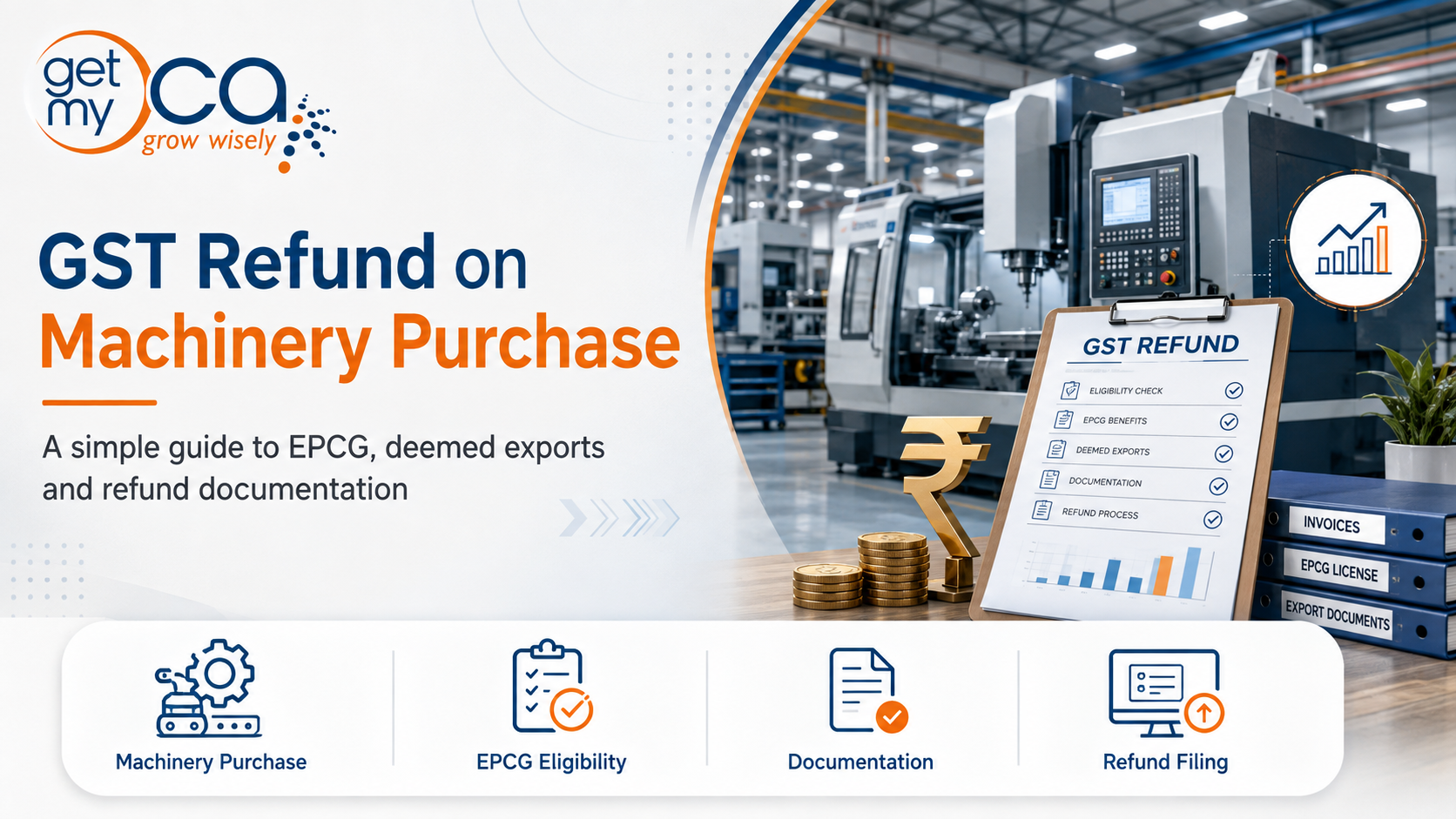
Purchasing new machinery can require a large amount of investment. Along with the cost of the machine, a business may also pay a significant amount of GST.
This often creates one question: Can GST paid on machinery be received back as a refund?
A normal machinery purchase does not automatically qualify for a cash GST refund. However, an eligible exporter purchasing capital goods from an Indian manufacturer against a valid EPCG Authorisation may qualify for a deemed-export GST refund, subject to applicable conditions.
No. GST paid simply because a business purchased machinery is not automatically refundable in cash.
For a normal machinery purchase, eligible GST may generally be treated as Input Tax Credit according to GST provisions.
A separate refund route may be available when machinery is purchased from an Indian manufacturer against a valid EPCG Authorisation and the transaction qualifies as a deemed export.
Businesses should therefore understand the GST Refund Process before assuming that the tax paid on machinery can be refunded.
EPCG stands for Export Promotion Capital Goods Scheme.
The scheme allows eligible exporters to procure capital goods while meeting prescribed export obligations. An EPCG Authorisation holder can also purchase eligible machinery from an Indian manufacturer through an Invalidation Letter or Advance Release Order (ARO).
This domestic purchase route can be important when considering a GST refund on machinery.
Under an eligible EPCG transaction, an Indian manufacturer supplies the machinery and issues a proper GST invoice.
Depending on how the transaction is structured, the eligible supplier or recipient can apply for the deemed-export refund.
The same GST amount cannot be claimed by both parties. Therefore, the buyer and machinery supplier should decide who will claim the refund before the final invoice is issued.
An EPCG deemed export refund is different from an inverted duty structure refund or a normal export ITC refund.
Before placing the final purchase order, businesses should check:
The machinery description appearing in the quotation, EPCG Authorisation, purchase order and final GST invoice should remain consistent.
Some commonly relevant documents include:
Keeping these documents properly organised can make the refund application easier to prepare.
The eligible supplier or recipient generally files the refund application electronically through Form GST RFD-01 under the deemed-export refund category.
The application requires invoice-wise information along with applicable supporting documents. The page also notes that Statement 5B is used for deemed-export refund claims.
Before filing, businesses should verify that the machinery invoice has been correctly reported in GST returns and that the same tax amount has not already been claimed by the other party.
Businesses should avoid:
Proper planning before completing the purchase can reduce many of these issues.
GST paid on machinery does not automatically become a cash refund.
A refund may become relevant where an eligible exporter purchases qualifying machinery from an Indian manufacturer against a valid EPCG Authorisation and the transaction satisfies deemed-export requirements.
Businesses should review EPCG eligibility, GST treatment, purchase documents and refund conditions before completing the machinery transaction.