English
 Arabic
 French
 Spanish
 Portuguese
 Deutsch
 Turkish
 Dutch
Dutch
 Italiano
 Russian
 Romaian
 Portuguese (Brazil)
 Greek
Greek
FYP Worthy Crown of Crimson and Crows (Deluxe Edition) by Tessa Hale
Shopping |
2026-06-26 04:01:08
 Advertise With Us
 About Us
 Terms And Conditions
 سياسة الخصوصية
عرض كل النتائج
سياسة الخصوصية
عرض كل النتائج

ترقية الحساب
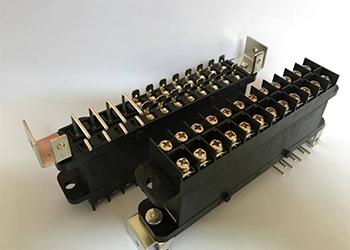
Tamil Nadu runs on power, literally. From the transformer yards of Sriperumbudur to the textile mills of Coimbatore and the heavy industrial belts of Chennai, Hosur, and Tiruchirappalli, thousands of switchgear panels depend on one small, often-overlooked component to keep current transformer (CT) circuits safe during servicing: the auto shunt connector.
This guide fills that gap. We'll cover what an auto shunt connector actually does, the electrical and mechanical specifications that matter, how to evaluate manufacturers based in or serving Tamil Nadu, common mistakes buyers make.
An auto shunt connector, also called a CT shorting connector or CT shunt block, is a specialized terminal device used in switchgear and metering panels to automatically short-circuit the secondary winding of a current transformer (CT) the moment a test plug or meter is withdrawn from its socket.
This matters because of a basic law of transformer physics: a CT's secondary circuit must never be left open while current is flowing through the primary. An open CT secondary can generate dangerously high voltage spikes, enough to damage insulation, destroy connected instruments, or injure personnel. In older installations, technicians handled this manually with screw-type shorting blocks and jumper wires, a process that is slow, error-prone, and requires the panel to be de-energized or handled with extreme care.
An auto shunt connector removes that risk. Its internal spring-loaded contact mechanism shorts the CT secondary automatically the instant the mating plug is disconnected, no manual jumpering, no risk of forgetting a step, and no need to shut down the circuit for routine meter testing, calibration, or replacement.
Given the state's concentration of power infrastructure and manufacturing, auto shunt connectors show up in:
Understanding the mechanism helps you specify the right connector instead of just comparing prices.
This "make-before-break, break-before-make" sequencing is the single most important design feature of a genuine auto shunt connector, and it's what separates it from a basic terminal block with a manual jumper.
When comparing suppliers, don't just look at price, compare these parameters, which directly affect safety margins and service life.
| Parameter | Typical Industry Standard | Why It Matters |
|---|---|---|
| Contact current rating | 25 A continuous | Determines the maximum CT secondary current the connector can carry without overheating |
| Initial contact resistance | ≤ 0.004 Ω | Lower resistance means less measurement error and less heat generation at the contact point |
| Insulation resistance | ≥ 5 GΩ | Indicates how well the connector resists leakage current under normal conditions |
| Voltage proof (dielectric withstand) | 2000 V RMS minimum | Confirms the connector can survive transient overvoltage without insulation breakdown |
| Working voltage | 250 V AC | The continuous operating voltage the connector is rated for |
| Mechanical life | 100+ mating cycles minimum | Relevant for panels where meters are frequently swapped for calibration or testing |
| Operating temperature range | −55°C to +105°C | Important for outdoor substations and panels near heat-generating equipment |
| Contact material | Silver-plated copper alloy | Silver plating reduces contact resistance and resists oxidation over years of service |
| Insulator material | Glass-filled Nylon 66, UL 94V-0 rated | Fire-retardant rating is essential for panels installed in enclosed switchrooms |
| Wire compatibility | 2.5 mm² and 4 mm² | Should match the gauge used in your CT wiring standard |
| Pole configuration | Up to 12 CT contacts, mixed power/signal | Flexibility to combine multiple CT circuits in a single connector housing |
Practical tip: If a supplier's datasheet is missing the insulation resistance or dielectric withstand voltage figures, ask for them directly before ordering. These two numbers are the clearest indicators of build quality and are often the first specs to be quietly downgraded in cheaper, non-branded alternatives.
Many buyers are still deciding between a conventional shorting block (with manual jumpers) and an auto shunt connector. Here's a side-by-side comparison to help you decide based on your panel's operating requirements.
| Feature | Traditional CT Shorting Block | Auto Shunt Connector |
|---|---|---|
| Shorting method | Manual, technician inserts jumper screws | Automatic, spring-loaded, happens on plug withdrawal |
| Risk of human error | Higher (forgetting to short before disconnecting) | Minimal, mechanism is built into the connector |
| Speed of servicing | Slower, requires careful sequential steps | Faster, single plug/unplug action |
| Panel downtime for meter swap | Often requires more caution/shutdown | Can typically be done live, with proper procedure |
| Space in panel | Bulkier, more wiring visible | Compact, modular, cleaner panel layout |
| Best suited for | Legacy panels, budget-constrained retrofits | New panel builds, metering-heavy installations, OEM panels |
| Typical cost | Lower upfront cost | Slightly higher upfront, lower long-term risk cost |
Neither option is universally "better", the right choice depends on panel age, retrofit constraints, and how frequently meters or relays need to be pulled for testing. For new switchgear builds and panels with frequent metering access, auto shunt connectors are the industry-preferred choice precisely because they remove the manual step where mistakes happen.
Tamil Nadu's electrical manufacturing ecosystem, anchored by clusters in Chennai, Coimbatore, and the Pune-Chennai supply corridor, gives buyers several sourcing options. Use these criteria to shortlist confidently:
Ask whether the company manufactures the connector in-house or resells an imported/third-party product. In-house manufacturers can typically offer faster customization (contact count, wire gauge, housing color-coding) and more transparent lead times.
Request test certificates for the insulator (UL 94V-0 flame rating) and contact plating (silver purity, thickness). These aren't just paperwork, they directly affect fire safety compliance in your panel design and its eligibility for third-party panel certification (e.g., Type Test Certificates for LT switchgear).
A single sample connector performing well means little if the next batch of 500 pieces has inconsistent contact resistance. Ask what quality checks (100% continuity testing, sampling-based dielectric testing, etc.) are performed before dispatch.
Not every panel uses the same CT wiring standard. Confirm the manufacturer can supply connectors compatible with your specific wire gauge (commonly 2.5 mm² or 4 mm² in Indian panel-building practice) and your required number of poles.
For OEM panel builders working to production schedules, a manufacturer who can advise on connector selection for your specific CT configuration, and commit to realistic delivery timelines, is often more valuable than the lowest quoted price.
A manufacturer that has supplied connectors into substation switchgear, industrial MCCs, and renewable energy metering panels will generally understand edge-case requirements (like extended temperature range for outdoor installations) better than one focused on a single segment.
An auto shunt connector is a small component with an outsized responsibility: it protects your CT circuit, your instruments, and your maintenance personnel every time a meter is pulled for servicing. For panel builders and industrial buyers across Tamil Nadu, the decision isn't just about finding a supplier, it's about verifying contact material quality, insulation ratings, mechanical life, and batch-to-batch consistency before it becomes a line item in a safety-critical panel.
When evaluating manufacturers, ask for test certificates, confirm your exact wire gauge and pole configuration needs, and don't treat this as a commodity purchase, the few extra minutes spent verifying specifications upfront can save significant downtime and risk later.