English
 Arabic
 French
 Spanish
 Portuguese
 Deutsch
 Turkish
 Dutch
Dutch
 Italiano
 Russian
 Romaian
 Portuguese (Brazil)
 Greek
Greek
LIMO Near PHL – Luxury Airport Transportation Made Easy
Other |
2026-04-22 15:47:16
 Advertise With Us
 About Us
 Terms And Conditions
 سياسة الخصوصية
عرض كل النتائج
سياسة الخصوصية
عرض كل النتائج

ترقية الحساب
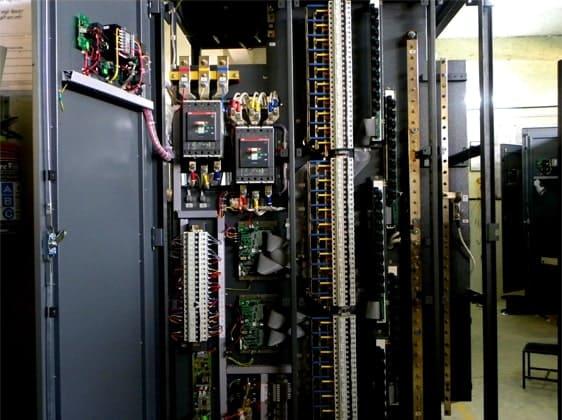
If you have ever had a technician wire a three-phase motor, watch it run backward, and then scramble to figure out why a brand-new pump destroyed itself in under a minute, you already understand the problem this article solves. A phase sequence corrector is a small piece of equipment that prevents a very large and very common mistake: connecting three-phase power in the wrong rotational order.
This guide breaks down exactly how these devices work, where they belong in your electrical system, what they cost you if you skip them, and how to choose one that actually fits your load. It's written for people who specify, install, or maintain electrical panels, not for search engines.
A phase sequence corrector (also called an automatic phase sequence corrector, APSC, phase rotation corrector, or phase sequence relay) is a protective device that monitors the order in which three-phase AC voltage arrives at a load, typically R-Y-B (Red-Yellow-Blue) or L1-L2-L3, and automatically forces the output to always follow the correct sequence, regardless of what sequence arrives at the input.
In plain terms: three-phase power has a "direction." When the three phases reach a motor in the correct order, the motor shaft spins the way it's supposed to. Swap any two of the three input wires, and the magnetic field inside the motor reverses, the shaft now spins the opposite way. A phase sequence corrector sits between the incoming supply and the load, checks the sequence electronically, and, if it detects a reversal, swaps two of the phases internally before the power ever reaches your equipment.
This is different from a simple phase failure relay, which only detects that a phase is missing. A phase sequence corrector detects that the phases are present but arriving in the wrong order, and it corrects the fault automatically rather than just tripping and waiting for a human to fix the wiring.
Three-phase power consists of three sinusoidal voltage waveforms, each offset by 120 electrical degrees. The order in which these waveforms reach their peaks, R then Y then B, for example, determines the direction of the rotating magnetic field inside any three-phase induction motor.
Swap any two of the three phase wires at any point in the circuit, at the incoming supply, a distribution panel, a generator changeover, or even a plug, and you reverse the sequence. The motor doesn't know or care that a mistake was made; it simply obeys the field and spins backward.
For a fan, that might just mean poor airflow. For a submersible pump, a compressor, a conveyor, or a centrifuge, it can mean immediate mechanical damage.
Modern automatic phase sequence correctors are built around a microcontroller-based phase sensing circuit paired with a set of contactors or relays. The working sequence is consistent across most designs:
The entire correction cycle typically happens in milliseconds to a few seconds, fast enough that connected equipment either never starts in the wrong direction or is protected before any real damage occurs.
Understanding the failure mode helps justify why this device sits on so many specifications. Common real-world causes of phase sequence reversal include:
None of these are rare events, which is exactly why relying on "careful wiring" as your only safeguard is a weak strategy for anything running unattended.
| Risk | What Happens | Typical Cost Impact |
|---|---|---|
| Reverse motor rotation | Pumps run dry or backward, fans reverse airflow, compressors run in reverse | Bearing failure, seal damage, often within seconds to minutes |
| Mechanical damage to driven equipment | Conveyors run backward and jam or spill product, centrifuges over-torque | Downtime + repair/replacement of driven machinery |
| Submersible pump damage | Reverse rotation causes the pump to run without proper flow, overheating windings | Full pump replacement, often the single most expensive single-incident loss |
| Compressor and refrigeration failure | Reverse rotation can rupture valves or damage the compressor internally within seconds | Compressor replacement, refrigerant loss, cold-chain/product loss |
| Data centre and UPS instability | UPS systems and precision cooling units may trip offline or refuse to start | Unplanned downtime, SLA breaches |
| Personnel and process safety | Reversed conveyors, cranes, or lifts operating opposite to operator expectation | Safety incidents, near-misses |
| Warranty voidance | Many OEMs void motor and compressor warranties for reverse-rotation damage | Full replacement cost, no OEM support |
The pattern across every row is the same: the damage happens fast, and it happens before a human has time to notice and shut the equipment down. That's the core argument for automatic correction over manual sequence checking.
It's easy to confuse a phase sequence corrector with adjacent protection devices. Here's how they actually differ:
| Device | What It Detects | What It Does | Best Used For |
|---|---|---|---|
| Phase Sequence Corrector (APSC) | Wrong rotational order of R-Y-B phases | Automatically swaps two phases to correct the sequence at the output | Any load where reverse rotation causes damage |
| Phase Failure Relay | A missing or lost phase | Trips the circuit (does not correct anything) | Motors that must never run single-phased |
| Voltage Unbalance Relay | Unequal voltage magnitude across phases | Trips the circuit when imbalance exceeds a set threshold | Sensitive motors, compressors |
| Phase Sequence Indicator/Meter | Wrong rotational order (detection only) | Displays or signals the sequence, no automatic correction | Manual commissioning checks, testing |
| Automatic Source Changeover (ASCO/ATS) | Loss of primary power source | Switches load between mains and generator | Backup power continuity |
| Automatic Power Factor Correction (APFC) Panel | Poor power factor from reactive loads | Switches capacitor banks in/out to correct power factor | Reducing reactive power penalties, improving efficiency |
The key distinction worth remembering: a phase sequence indicator only tells you there's a problem; a phase sequence corrector actually fixes it in real time, without tripping the load offline.
Phase sequence correctors are specified wherever reverse rotation carries real consequences. The most common applications include:
Data centres and IT infrastructure Used at UPS input/output and PDU stages to guarantee correct rotation into cooling systems and backup power paths, where a reversal could take down a critical load.
Submersible and borewell pumps One of the highest-risk applications, reverse rotation in a submersible pump can destroy the unit almost immediately, and pulling a submerged pump for replacement is expensive and slow.
HVAC and chiller compressors Scroll and screw compressors are highly sensitive to rotation direction; running backward even briefly can cause internal damage.
Diesel generator (DG) changeover systems Ensures the phase sequence delivered by a backup generator always matches what connected equipment expects, regardless of how the genset was wired or last serviced.
Manufacturing and process industries Protects motor-driven conveyors, mixers, extruders, and centrifuges where reverse operation can jam, spill, or damage the process line.
Water and wastewater treatment plants Protects large pump sets and blowers that run continuously and are costly to access for repair.
Commercial and residential elevators/lifts Prevents incorrect direction of travel at commissioning or after power restoration, a safety-critical application.
Cold storage and refrigeration warehouses Protects compressor banks where downtime risks product loss in addition to equipment damage.
When specifying or purchasing a unit, match it to your system on these parameters:
Phase sequence reversal is one of the simplest wiring mistakes to make and one of the most expensive to ignore. A phase sequence corrector doesn't just warn you about the problem, it fixes it automatically, in real time, before your motors, pumps, or compressors ever spin in the wrong direction. For any facility running critical three-phase rotating equipment, especially where generators, maintenance switching, or unattended operation are part of the picture, it's a small, low-maintenance investment that protects against one of the most avoidable and costly failure modes in industrial electrical systems.