English
 Arabic
 French
 Spanish
 Portuguese
 Deutsch
 Turkish
 Dutch
Dutch
 Italiano
 Russian
 Romaian
 Portuguese (Brazil)
 Greek
Greek
Tank Level Monitoring System Market USD 1.07 Billion in 2025 Anticipated Industrial Expansion
Other |
2026-07-01 08:57:22
 Advertise With Us
 About Us
 Terms And Conditions
 Πολιτική Ιδιωτικότητας
δες τα όλα
Πολιτική Ιδιωτικότητας
δες τα όλα

Upgrade to Pro
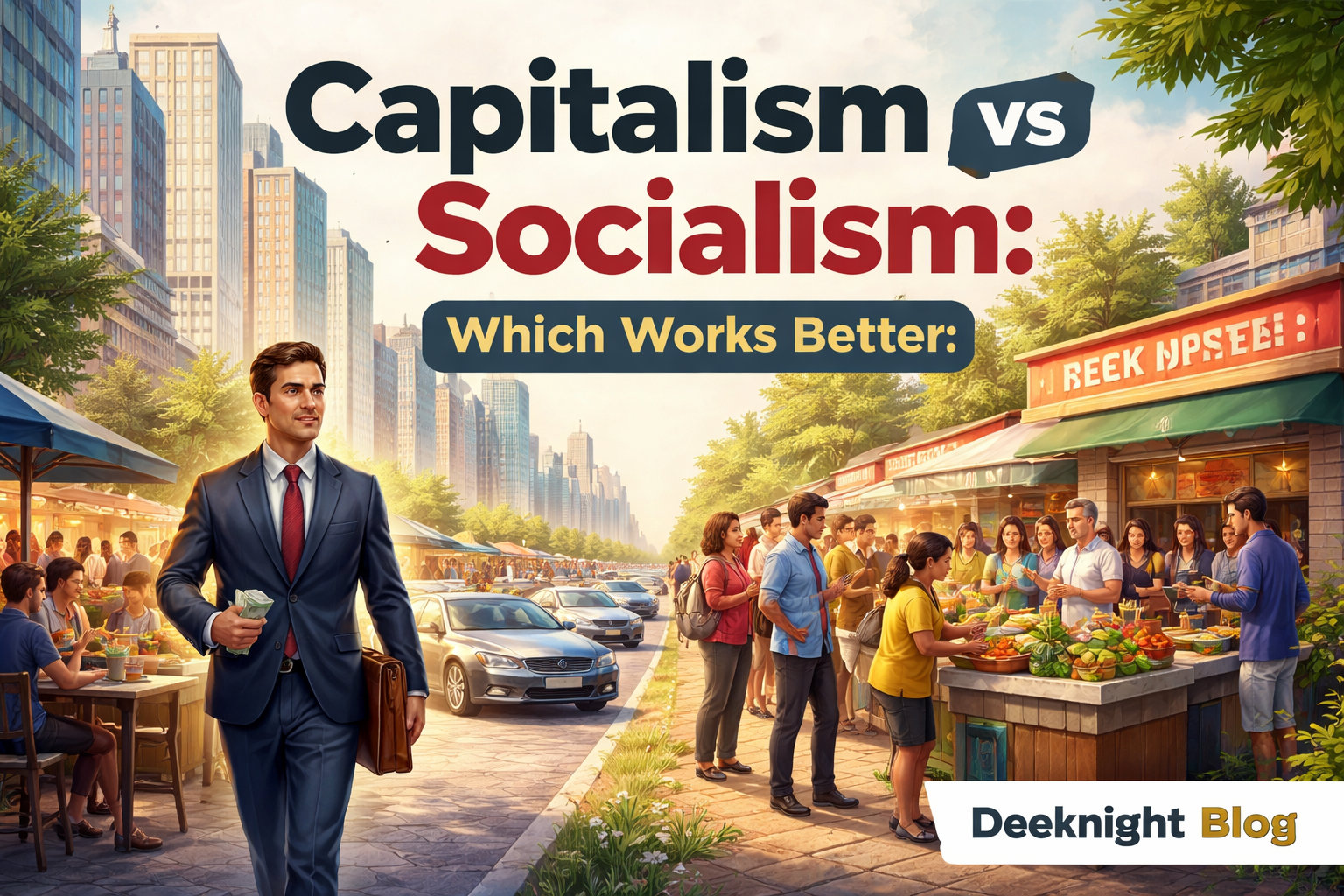
The political and economic structure of governments has always influenced how societies function, distribute wealth, and create opportunities for citizens. In modern political discussions, one of the most debated topics remains the difference between capitalist and socialist governments and how each system impacts daily life.
As global economies face inflation, unemployment, rising living costs, and technological disruption, many people are reexamining the role governments should play in economic management. Some believe capitalist systems encourage innovation and personal freedom, while others argue socialist policies create fairer societies through stronger social protections and public services.
The debate around capitalism vs socialism is no longer limited to political theory. It directly affects healthcare, education, employment, taxation, housing, and economic stability in countries across the world.
Understanding how capitalist and socialist governments operate in today’s world helps explain why economic systems continue shaping global politics and public opinion.
A capitalist government operates within an economic system based on private ownership, market competition, and profit-driven enterprise. In capitalist societies, businesses and industries are generally controlled by private individuals or corporations rather than the state.
Governments in capitalist economies usually maintain limited involvement in business operations, allowing markets to determine prices, wages, and production through supply and demand.
Supporters argue capitalist systems promote economic freedom by giving people the ability to start businesses, invest money, compete in markets, and build personal wealth.
Countries with capitalist structures often encourage entrepreneurship, foreign investment, and industrial growth. Many of the world’s largest economies rely heavily on capitalist principles to drive innovation and economic expansion.
Advocates who explain why capitalism is better than socialism frequently point to the success of free-market economies in generating technological progress and global trade.
A socialist government plays a more active role in managing the economy and distributing resources. Socialist systems focus on reducing economic inequality by regulating industries, expanding public services, and supporting collective welfare.
In socialist-oriented governments, healthcare, education, transportation, and public infrastructure are often funded or managed by the state. Taxes are commonly used to support welfare programs and social protections designed to improve living standards for all citizens.
Supporters believe socialism creates more equal societies by reducing poverty and ensuring access to essential services regardless of personal income.
Critics, however, argue excessive government control can reduce efficiency, limit competition, and slow economic growth.
The debate over is capitalism or socialism better often centers around how much control governments should have over economic systems and public resources.
The primary difference between capitalist and socialist governments involves economic ownership and decision-making power.
Capitalist governments:
Socialist governments:
This distinction affects nearly every part of society, including taxation, employment, education, healthcare, and housing policies.
Modern governments rarely follow purely capitalist or purely socialist systems. Instead, most countries combine elements of both approaches depending on political priorities and economic conditions.
One of the strongest arguments supporting capitalism is its relationship with innovation and economic growth.
Competitive markets encourage businesses to improve products, develop technology, and increase efficiency in order to attract customers and maximize profits.
Capitalist economies often adapt quickly to technological changes because private companies compete aggressively for market leadership. Industries such as artificial intelligence, finance, biotechnology, and digital commerce have expanded rapidly in market-driven economies.
Supporters who debate which is better capitalism or socialism frequently argue that capitalism creates stronger incentives for creativity and entrepreneurship.
Socialist governments, however, may prioritize long-term public investment over short-term profits. Supporters believe government-funded research, education, and infrastructure can also contribute to innovation and economic stability.
Critics of socialism argue excessive regulation and bureaucracy can reduce economic flexibility and slow industrial progress.
Healthcare remains one of the biggest differences between capitalist and socialist governments.
In capitalist systems, healthcare is often influenced heavily by private companies and insurance providers. Supporters believe competition improves medical quality and technological advancement.
However, critics argue private healthcare can become too expensive for lower-income citizens.
Socialist governments generally emphasize universal healthcare funded through taxation. Supporters believe medical care should be accessible to everyone regardless of income or employment status.
The broader comparison between capitalism and socialism often focuses on whether essential services should operate primarily as public rights or private industries.
Education, transportation, and housing policies are also influenced heavily by these competing economic philosophies.
Employment structures differ significantly under capitalist and socialist governments.
Capitalist economies rely heavily on private-sector employment and market competition. Businesses determine wages, hiring practices, and workplace structures based largely on profitability and market demand.
Supporters argue this system rewards hard work, talent, and productivity.
Critics, however, believe unrestricted capitalism can lead to worker exploitation, low wages, and job insecurity.
Socialist governments often support stronger labor protections, labor unions, minimum wage laws, and public employment programs. Advocates believe these policies improve worker stability and reduce economic inequality.
Debates surrounding capitalist vs socialist systems frequently involve disagreements over corporate power and workers’ rights.
Taxation is another major difference between capitalist and socialist governments.
Capitalist systems generally favor lower taxes and reduced government spending to encourage private investment and economic growth.
Socialist governments usually support higher taxation on corporations and wealthy individuals in order to fund healthcare, education, welfare programs, and public infrastructure.
Supporters of socialism argue wealth redistribution helps reduce poverty and improve social equality.
Critics believe excessive taxation may discourage investment, entrepreneurship, and economic productivity.
This disagreement over taxation and wealth distribution remains central to global political debates today.
One important reality often ignored in political arguments is that most modern governments already combine capitalist and socialist elements.
Even strongly capitalist economies maintain public schools, social welfare programs, labor regulations, and government-funded infrastructure. Likewise, countries with socialist policies still rely heavily on private businesses and international trade.
These mixed systems reflect the understanding that neither pure capitalism nor complete socialism fully addresses modern economic challenges.
Governments continue searching for balanced approaches that encourage innovation while also protecting social welfare.
Readers interested in exploring the broader ideological debate can also read Capitalism vs Socialism Analysis featured on Deeknight Blog.
As global economies evolve, debates surrounding capitalism vs socialism are becoming increasingly relevant. Automation, artificial intelligence, climate change, and rising living costs are forcing governments to reconsider traditional economic policies.
Some countries are moving toward stronger social welfare systems, while others continue emphasizing free-market reforms and private-sector growth.
The future will likely involve more hybrid economic models that combine capitalist innovation with socialist-style public protections.
How governments balance these priorities may shape global economic stability for decades to come.
The difference between capitalist and socialist governments extends far beyond economics. These systems influence healthcare, education, employment, taxation, innovation, and social equality across the modern world.
Capitalist governments prioritize market freedom, competition, and private ownership, while socialist governments focus more on public welfare, economic equality, and state involvement.
Both systems offer advantages and face criticism. Capitalism can generate innovation and rapid economic growth, while socialism may provide stronger social protections and reduced inequality.
Ultimately, the ongoing debate surrounding capitalism vs socialism reflects the broader challenge of creating economic systems that balance opportunity, stability, freedom, and fairness in an increasingly complex global society.