English
 Arabic
 French
 Spanish
 Portuguese
 Deutsch
 Turkish
 Dutch
Dutch
 Italiano
 Russian
 Romaian
 Portuguese (Brazil)
 Greek
Greek
Revealed: The Future of Jet Engine Overhaul Services in the Growing Aviation Market
Other |
2026-06-22 09:18:02
 Advertise With Us
 About Us
 Terms And Conditions
 Πολιτική Ιδιωτικότητας
δες τα όλα
Πολιτική Ιδιωτικότητας
δες τα όλα

Upgrade to Pro
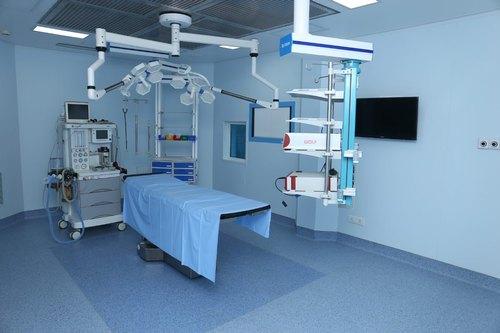
Choosing the right operation theater manufacturer is one of those decisions that quietly shapes everything that happens in a hospital for the next ten or fifteen years. Get it right, and your surgical teams work in a space that supports them on every case. Get it wrong, and you end up dealing with air quality complaints, recurring maintenance visits, and infection control headaches long after the ribbon cutting ceremony is over.
Most hospital administrators and procurement teams only go through this process once or twice in their careers. So it makes sense that the market feels confusing. Every manufacturer's brochure promises "world class quality" and "international standards," but very few explain what actually separates a dependable partner from one that will disappear the moment something goes wrong post installation.
This guide breaks down what genuinely matters when you're evaluating an operation theater manufacturer, based on how these facilities actually perform in real hospital settings, not just on paper specifications.
An operation theater isn't a one time purchase like furniture or office equipment. It's a controlled environment where air pressure, filtration, temperature, and surface materials all work together to keep infection rates low and surgical outcomes high. A poorly built OT can quietly undermine even the most skilled surgical team.
Because of this, the manufacturer you choose ends up influencing:
With that context in mind, here are the features that separate a genuinely reliable manufacturer from one that just looks good in a sales pitch.
General fabrication companies sometimes enter the medical infrastructure space because it looks profitable, but building an OT is nothing like building a cleanroom for electronics manufacturing or a food processing unit. Healthcare environments demand a different level of precision around infection control, gas lines, and emergency backup systems.
A reliable manufacturer should be able to show you completed projects in hospitals, not just renderings or catalog images. Ask specific questions like:
Experience also shows up in smaller details, like how a company handles unexpected site conditions, uneven flooring, or last minute changes in electrical load requirements.
This is non negotiable. A trustworthy manufacturer should design and build according to established healthcare infrastructure guidelines, including:
Certifications alone don't guarantee quality, but their absence is a red flag. Ask the manufacturer for documentation, not just verbal assurance. A confident company will happily walk you through their compliance paperwork because they know it builds trust.
The materials used in wall panels, ceiling systems, and doors determine how well the OT resists bacterial growth, moisture, and daily wear. Look closely at what the manufacturer actually uses rather than what they claim.
Wall and ceiling panels should be made from powder coated GI sheets or stainless steel with sealed, seamless joints. Seams and corners are where dust and bacteria collect, so rounded coving and gasket sealed junctions matter more than they might seem at first glance.
HEPA filtration systems need to achieve at least 99.97 percent efficiency at 0.3 microns. Cheaper filters may look identical but fail to maintain this efficiency over time, especially under continuous use.
Doors should be hermetically sealed or sliding, built from non porous materials, and ideally support automated or touchless operation to reduce cross contamination during procedures.
Flooring in and around the OT should be antistatic, seamless, and easy to disinfect, usually vinyl or epoxy based systems rather than standard tiles with grout lines.
A manufacturer that can explain the reasoning behind each material choice, rather than just listing specifications, usually has genuine engineering depth behind their claims.
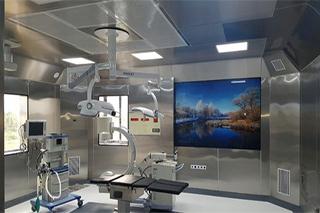
Every hospital has a different footprint, patient volume, and surgical specialty mix. A cardiac OT has different airflow and equipment integration needs than a general surgery theater or an orthopedic OT that needs to accommodate C arm imaging.
A dependable manufacturer works with your architects and medical planners to design a layout around your actual workflow instead of pushing a fixed template. This includes:
If a manufacturer only offers a handful of fixed size packages with no room for adjustment, that's usually a sign of limited engineering capacity rather than genuine efficiency.
This is a detail many buyers overlook. Some companies market themselves as manufacturers but actually outsource panel fabrication, HVAC ducting, or control systems to third parties and simply assemble everything on site.
There's nothing inherently wrong with sourcing certain specialized components externally, laminar flow units or surgical pendants for example. But the core fabrication, particularly wall panels, doors, and ceiling systems, should ideally happen in house or under the manufacturer's direct supervision. This gives you:
Ask directly whether the manufacturer owns its production facility and ask if you can visit it. A company confident in its process will say yes without hesitation.
Building an operation theater involves coordinating civil work, electrical systems, HVAC, medical gas pipelines, and equipment installation, often within a live hospital environment where downtime has to be minimized. A reliable manufacturer should offer turnkey execution, meaning they manage the entire project timeline rather than handing off pieces to your internal team.
Good turnkey management typically includes:
This matters even more in hospitals that are still operational during construction. A manufacturer with genuine project management experience knows how to phase work around active departments without disrupting patient care.
Infection control in an OT is largely a function of air management. The manufacturer should understand how to design and integrate HVAC systems that maintain:
A manufacturer that treats HVAC as an afterthought, or simply installs whatever unit is cheapest, is setting your hospital up for recurring air quality issues that are expensive to fix after the fact.
The relationship with your manufacturer shouldn't end once installation is complete. HEPA filters need periodic replacement, control panels need calibration, and door seals wear out over time. A reliable manufacturer offers:
Before signing a contract, ask what the maintenance agreement actually covers and what response time is guaranteed in writing. Vague promises during the sales process rarely hold up once the invoice is paid.
Reliable manufacturers provide detailed, itemized quotations rather than vague lump sum figures. This transparency helps you compare vendors accurately and avoid hidden costs later, such as charges for design changes, additional filtration, or extended warranty coverage.
Look for a company willing to share:
Finally, talk to hospitals that have actually used the manufacturer's OT for a few years, not just recently commissioned ones. A theater that looks great on day one but develops issues within eighteen months tells you something important about build quality that a showroom visit never will.
Ask references specific questions:
| Feature | Reliable Manufacturer | Average or Risky Manufacturer |
|---|---|---|
| Healthcare experience | Multiple hospital projects, verifiable references | Limited or unclear healthcare specific portfolio |
| Certifications | ISO, NABH aligned, documented compliance | Certifications claimed but not shown on request |
| Manufacturing setup | Owns production facility, willing to allow visits | Outsources core fabrication with no transparency |
| Materials | Seamless panels, medical grade HEPA, sealed doors | Generic panels, unverified filter efficiency |
| Customization | Designs around hospital workflow and specialty | Offers only fixed, one size fits all packages |
| Project management | Dedicated turnkey execution with clear timelines | Fragmented coordination, frequent delays |
| After sales support | Scheduled maintenance, guaranteed response time | Support disappears after installation |
| Pricing | Itemized, transparent quotations | Lump sum pricing with hidden add ons |
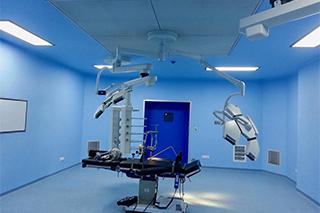
Selecting an operation theater manufacturer is ultimately about trust built on evidence, not promises. The features that matter most are the ones that continue to hold up years after installation: consistent air quality, durable materials, responsive support, and a manufacturing partner who treats your hospital's needs as unique rather than generic.
Take the time to visit an existing installation, speak with hospitals that have used the manufacturer for several years, and ask direct questions about materials, certifications, and maintenance commitments. A little diligence at this stage saves years of operational headaches later, and more importantly, it helps ensure your surgical teams have the safe, efficient environment they need to do their best work.