English
 Arabic
 French
 Spanish
 Portuguese
 Deutsch
 Turkish
 Dutch
Dutch
 Italiano
 Russian
 Romaian
 Portuguese (Brazil)
 Greek
Greek
Handmade Engagement Ring: A Timeless Symbol of Love and Craftsmanship
Other |
2026-07-30 10:11:51
 Advertise With Us
 About Us
 Terms And Conditions
 Πολιτική Ιδιωτικότητας
δες τα όλα
Πολιτική Ιδιωτικότητας
δες τα όλα

Upgrade to Pro
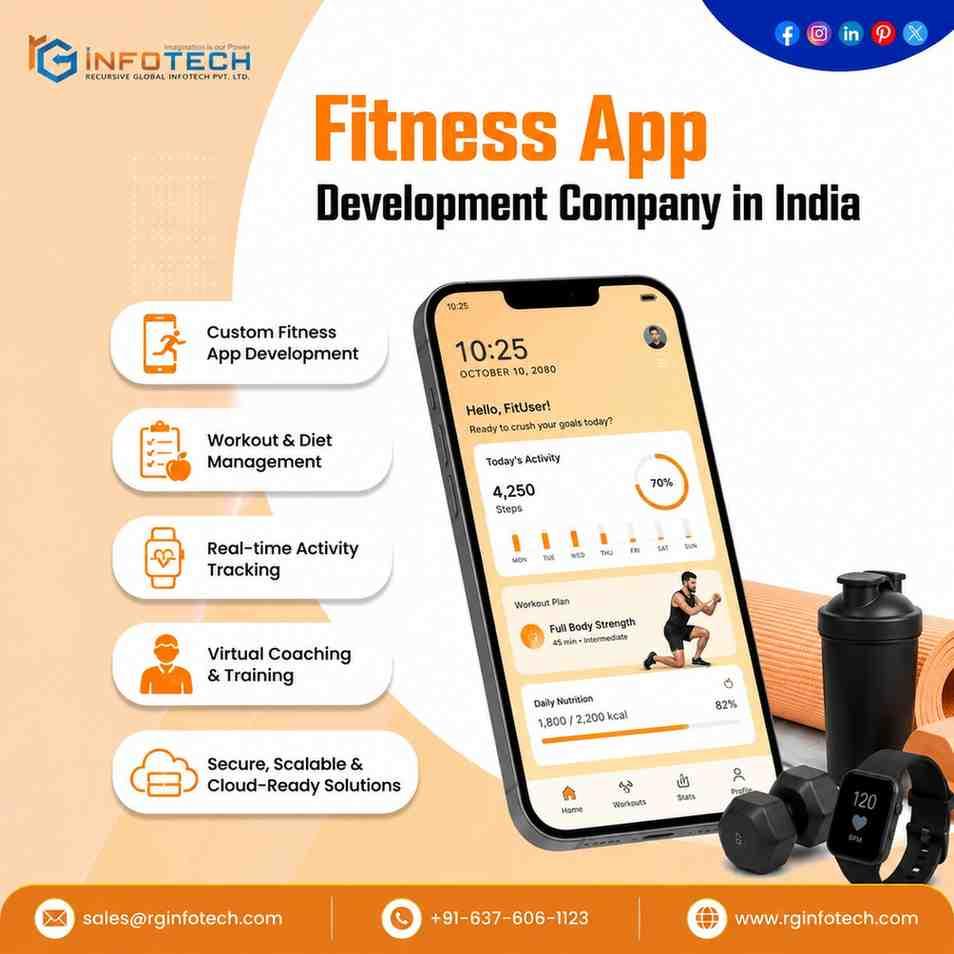
The fitness industry is evolving faster than ever, with mobile apps becoming the go-to solution for workout planning, nutrition tracking, virtual coaching, and wellness monitoring. In 2026, users expect more than simple exercise libraries—they want personalized fitness experiences powered by AI, wearable devices, and real-time analytics.
If you're planning to build a fitness app, having a clear development roadmap is essential. From validating your idea to launching and scaling the app, every stage plays a crucial role in its success.
This guide walks you through the complete roadmap to create a fitness app from scratch in 2026.
Every successful fitness app starts with a well-defined concept.
Begin by identifying:
Your target audience
The problem your app will solve
Your unique value proposition
Revenue goals
Long-term business vision
For example, your app may focus on:
Home workouts
Personal training
Yoga and meditation
Nutrition planning
Running and cycling
Strength training
Corporate wellness
A clear niche helps you build features that truly meet user needs.
Before investing in development, study your competitors and market trends.
Analyze popular fitness apps to understand:
Core features
User reviews
Subscription models
Design patterns
Customer pain points
This research helps you identify opportunities to create a better user experience and differentiate your app from competitors.
Avoid trying to include every feature in the first version.
Focus on essential functionality that delivers immediate value.
Must-have features include:
User registration
Personal profiles
Workout plans
Exercise videos
Progress tracking
Goal setting
Push notifications
Nutrition tracking
Payment integration
Starting with core features helps reduce development costs while accelerating your launch.
AI is becoming a standard feature in modern fitness applications.
Popular AI features include:
Personalized workout recommendations
Smart fitness coaching
Exercise suggestions
Nutrition recommendations
AI chatbots
Progress analysis
Fitness goal prediction
These intelligent features improve engagement and encourage users to continue using the app.
Next, decide where your app will be available.
Options include:
Offers access to a large global audience.
Ideal for users who value premium digital experiences.
Frameworks like Flutter and React Native allow one codebase for both Android and iOS.
Cross-platform development is often the best choice for startups because it reduces costs and speeds up development.
Fitness apps should motivate users rather than overwhelm them.
Your UI/UX should focus on:
Clean layouts
Simple navigation
Easy onboarding
Interactive dashboards
Attractive progress charts
Motivational visuals
A user-friendly interface improves retention and encourages daily engagement.
Choosing suitable technologies ensures your app remains fast, secure, and scalable.
Popular technologies include:
Frontend
Flutter
React Native
Swift
Kotlin
Backend
Node.js
Python
Java
Database
PostgreSQL
MongoDB
MySQL
Cloud Platforms
AWS
Google Cloud
Microsoft Azure
Selecting modern technologies simplifies future updates and scaling.
Wearables continue to shape the fitness industry.
Popular integrations include:
Apple Health
Google Fit
Fitbit
Garmin
Samsung Health
These integrations allow users to automatically sync activity data, heart rate, calories burned, sleep patterns, and workout history.
Your backend manages all application data and services.
It handles:
User authentication
Workout history
Cloud storage
Notifications
AI processing
Subscription management
Analytics
A scalable backend ensures smooth performance as your user base grows.
Choose a revenue model that aligns with your audience.
Popular monetization options include:
Monthly subscriptions
Annual memberships
Premium workout plans
In-app purchases
Personal trainer bookings
Nutrition consultations
Advertisements
Affiliate partnerships
Combining multiple revenue streams often creates better long-term profitability.
Testing is essential before launch.
Your quality assurance process should include:
Functional testing
Security testing
Performance testing
Device compatibility testing
Load testing
User acceptance testing
A thoroughly tested app provides a better user experience and reduces post-launch issues.
Instead of building every feature immediately, release a Minimum Viable Product (MVP).
An MVP helps you:
Validate your business idea
Gather customer feedback
Improve usability
Reduce development costs
Enter the market faster
After collecting user feedback, you can gradually add advanced features.
Development alone doesn't guarantee success.
A strong marketing strategy should include:
App Store Optimization (ASO)
Social media marketing
Influencer partnerships
Fitness communities
SEO
Content marketing
Paid advertising
Effective promotion increases downloads and builds brand awareness.
After launch, continuously monitor your application's performance.
Track important metrics such as:
Daily active users
Session duration
User retention
Subscription conversions
Workout completion rates
Customer feedback
Analytics help identify opportunities for improvement and future feature development.
Successful fitness apps evolve continuously.
Regular updates may include:
New workout programs
AI enhancements
Better recommendations
Improved performance
Security upgrades
Bug fixes
Wearable integrations
Community features
Consistent innovation keeps users engaged and strengthens customer loyalty.
Many startups encounter challenges during development.
Avoid these common mistakes:
Skipping market research
Building too many features initially
Ignoring user feedback
Weak security implementation
Poor UI/UX design
Lack of scalability planning
Working with an experienced Fitness App Development Company in India can help businesses avoid these issues and build a strong foundation for long-term success.
Creating a fitness app requires expertise in AI, mobile development, cloud computing, wearable integrations, cybersecurity, and user experience design.
A trusted Fitness App Development Company in India can guide you through every stage—from planning and design to development, testing, and post-launch support. Their technical expertise helps ensure your app is secure, scalable, and ready for future growth.
Building a fitness app from scratch in 2026 requires careful planning, the right technology, and a user-first approach. By following a structured roadmap—starting with market research, defining essential features, integrating AI, selecting a scalable tech stack, and continuously improving your app—you can create a solution that stands out in the competitive fitness market.
Rather than trying to build everything at once, focus on launching an MVP, gathering user feedback, and scaling strategically. Partnering with a reliable Fitness App Development Company in India can help you streamline the development process, reduce risks, and deliver a high-quality application that meets modern user expectations.