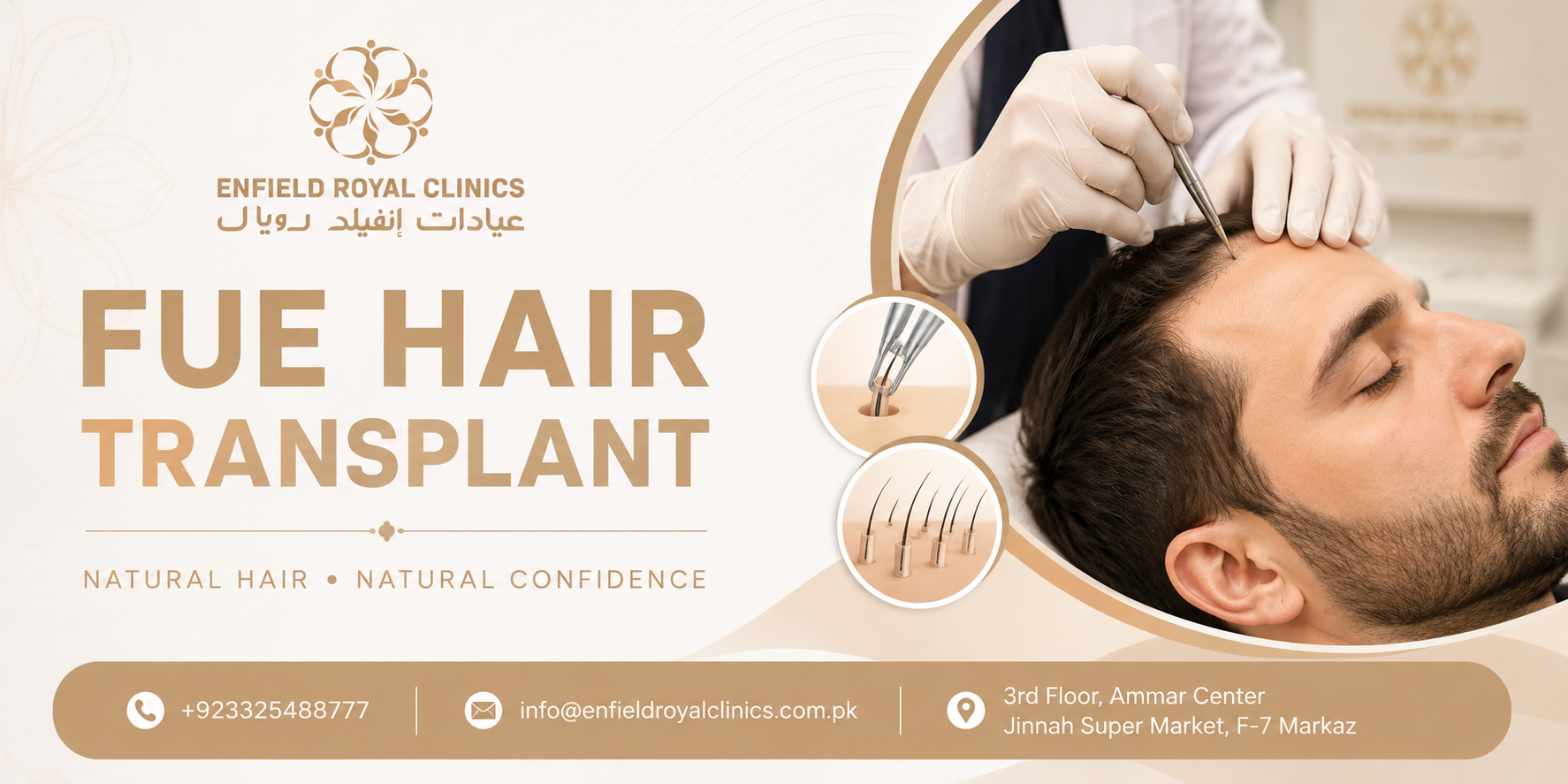
A receding hairline is one of the most common signs of hair loss, especially among men. It often begins with thinning around the temples and gradually moves backward, changing the shape of the hairline. For many people, this change can affect confidence and create concerns about their overall appearance.
Modern hair restoration techniques have made it possible to improve receding hairlines with natural-looking results. FUE Hair Transplant is one of the most advanced methods used to restore lost hair along the front hairline and create a fuller, more balanced appearance.
What Causes a Receding Hairline?
A receding hairline can occur due to several reasons, but the most common cause is male pattern baldness, which is linked to genetics and hormonal factors. A hormone called dihydrotestosterone (DHT) can gradually weaken hair follicles, causing them to become thinner and eventually stop producing hair.
Other factors that may contribute to hairline recession include:
- Family history of hair loss
- Hormonal changes
- Stress
- Poor nutrition
- Certain medical conditions
- Excessive hair treatments
Understanding the cause of hair loss is important before choosing any restoration method because it helps determine the most suitable treatment approach.
How Can FUE Hair Transplant Restore a Receding Hairline?
A FUE Hair Transplant can help restore a receding hairline by moving healthy hair follicles from a donor area to the areas where hair has become thin or disappeared.
During the procedure, individual follicles are carefully extracted, usually from the back or sides of the scalp. These follicles are then implanted along the front hairline according to the natural pattern of hair growth.
The goal is not only to add hair but also to recreate a natural-looking hairline that matches the patient’s facial features and existing hair direction.
How Is the Hairline Designed During the Procedure?
Hairline design is one of the most important steps in achieving successful results. A poorly designed hairline can appear unnatural, while a carefully planned one can blend smoothly with existing hair.
Before the procedure, specialists consider factors such as:
- Age of the patient
- Facial structure
- Existing hair density
- Natural hair growth pattern
- Future hair loss possibilities
The placement angle and direction of each follicle are carefully planned to create a realistic appearance.
Who Is a Good Candidate for Hairline Restoration?
Not everyone with a receding hairline requires the same approach. A consultation is necessary to determine whether a patient is suitable for the procedure.
Good candidates often include individuals who:
- Have noticeable hairline recession
- Have healthy donor hair follicles
- Experience stable hair loss
- Want a permanent hair restoration solution
- Have realistic expectations
Patients with ongoing rapid hair loss may require additional evaluation before undergoing treatment.
Benefits of FUE for a Receding Hairline
Many people choose this technique because of its advanced benefits and natural results.
Natural Appearance
Since the procedure uses the patient’s own hair follicles, the restored hairline looks natural. The transplanted hair grows in the same way as normal hair.
Minimal Scarring
FUE removes individual follicles instead of taking a strip of scalp. This results in tiny extraction marks that are usually difficult to notice after healing.
Customized Results
Every hairline restoration plan can be adjusted according to individual needs. Specialists can create a design that complements the person’s appearance.
Long-Lasting Improvement
Transplanted follicles are generally resistant to common hair loss factors, allowing them to provide long-term improvement when properly cared for.
What Results Can You Expect?
Hair growth after the procedure happens gradually. In the first few weeks, transplanted hairs may shed as part of the normal growth cycle. This does not mean the treatment has failed.
New hair growth usually begins after a few months. Over time, the transplanted hair becomes thicker and stronger, with more noticeable improvement appearing between six and twelve months.
Final results may continue developing beyond one year as the follicles mature.
Can FUE Fix a Completely Receded Hairline?
The ability to restore a severely receded hairline depends on several factors, especially the availability of donor hair. If enough healthy follicles are available, significant improvement may be possible.
However, the goal of treatment is to create the best possible natural appearance rather than restoring the exact hairline from younger years.
A specialist can assess the level of recession and recommend the most realistic outcome.
Recovery After Hairline Restoration
After the procedure, patients need to follow proper aftercare instructions to protect newly implanted follicles.
Important recovery tips include:
- Avoid touching or scratching the scalp
- Follow recommended washing instructions
- Protect the scalp from direct sunlight
- Avoid strenuous activities during early healing
- Attend follow-up appointments
Proper care supports healing and improves the chances of successful hair growth.
Conclusion
A FUE Hair Transplant can effectively cover a receding hairline and help restore a more youthful, natural appearance. By carefully moving healthy follicles to areas of hair loss, this technique provides a personalized solution with minimal scarring and long-lasting results.
The success of hairline restoration depends on factors such as donor hair quality, treatment planning, and professional expertise. With proper evaluation and care, FUE can be an effective option for people looking to improve a receding hairline.
 English
 Arabic
 French
 Spanish
 Portuguese
 Deutsch
 Turkish
 Dutch
Dutch
 Italiano
 Russian
 Romaian
 Portuguese (Brazil)
 Greek
Greek
 Advertise With Us
 About Us
 Terms And Conditions
 Politique de confidentialité
Tout voir
Politique de confidentialité
Tout voir