English
 Arabic
 French
 Spanish
 Portuguese
 Deutsch
 Turkish
 Dutch
Dutch
 Italiano
 Russian
 Romaian
 Portuguese (Brazil)
 Greek
Greek
Blockchain In Security Market Expands as Digital Transformation and Cybersecurity Priorities Accelerate Global Enterprise Adoption
Other |
2026-07-21 06:59:25
 Advertise With Us
 About Us
 Terms And Conditions
 Datenschutzbestimmungen
Alle anzeigen
Datenschutzbestimmungen
Alle anzeigen

Upgrade auf Pro
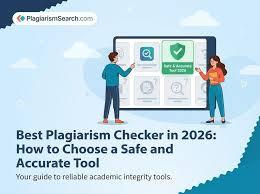
Every writer, student, and content creator faces the same underlying question at some point: is this work truly original? With so much information available online and AI writing tools making content creation faster than ever, ensuring originality has never been more important — or more challenging. A plagiarism checker offers a practical solution, giving writers a clear, data-backed way to confirm their work stands on its own.
At its core, a plagiarism checker is designed to compare a piece of writing against an enormous pool of existing content — websites, published books, academic journals, and other documents — to identify any matching or suspiciously similar text. The tool then generates a report, typically showing a similarity percentage and pinpointing exactly which sentences or phrases overlap with other sources.
This process helps writers catch unintentional overlaps, verify proper citation, and confirm that their content is genuinely their own before it's submitted, published, or graded.
The digital landscape has made it incredibly easy to access, reference, and — sometimes unintentionally — echo existing content. This makes originality checks a critical part of the writing process across multiple fields.
Students are often required to write research papers, essays, and reports that draw on outside sources. Without careful citation, it's easy to blur the line between research and copying. Academic institutions rely heavily on plagiarism checkers to uphold honesty standards and ensure students are developing genuine analytical skills.
Publishers, bloggers, and marketing teams must protect their brand's credibility. Duplicate or copied content can damage a website's reputation, confuse readers, and even trigger legal complications if copyrighted material is used without permission.
Search engines are built to reward unique, valuable content. Plagiarized or duplicate material tends to rank poorly, since algorithms are specifically designed to detect and deprioritize repeated content across the web.
While each tool has its own technical approach, most follow a similar underlying process.
The submitted text is broken down into smaller units — phrases, sentences, or short passages — making it easier to compare against existing content databases piece by piece.
These fragments are then checked against massive repositories that include indexed web pages, scholarly articles, books, and previously submitted documents, depending on the platform.
Once the comparison is complete, the tool produces a similarity score and highlights specific matching sections, often linking directly to the original source so users can review and address the overlap.
Sometimes copying and pasting is more blatant than 표절 검사기. A reliable checker should be able to catch several variations.
The most straightforward form, where text is lifted directly from another source without any changes or credit.
Even reworded content can be flagged if it follows the same structure and ideas as an existing source too closely without proper attribution.
This involves piecing together slightly altered phrases from multiple sources, creating a "patchwork" of borrowed language that can be difficult to spot without a dedicated tool.
Reusing previously submitted or published work — including your own — without disclosure can also count as plagiarism in academic and professional contexts.
Not all tools offer the same level of accuracy or usefulness. Consider these factors when choosing one.
The more extensive the database, the more likely the tool is to catch obscure or lesser-known sources of overlap.
A strong plagiarism checker should highlight exactly which portions of text are flagged, making it simple to revise and properly cite where needed.
Whether checking a short article or a lengthy dissertation, an efficient tool should deliver results quickly without sacrificing accuracy.
Since sensitive or unpublished material is often uploaded, it's worth confirming how a platform handles and stores your content.
To make the most of a plagiarism checker, keep these habits in mind:
Run checks during the drafting process, not just before final submission.
Cite sources consistently, even for paraphrased ideas.
Pair plagiarism detection with AI content detection for a more complete originality assessment.
Address flagged sections meaningfully by rewriting with your own voice and structure, rather than making minor word substitutions.
A plagiarism checker isn't just a technical safeguard — it's a tool that supports honest, credible, and high-quality writing across education, publishing, and business. By understanding how these tools function and integrating them early into the writing process, students and professionals alike can confidently produce content that is authentic, properly attributed, and built to last.
For more Blogs: Click Here