English
 Arabic
 French
 Spanish
 Portuguese
 Deutsch
 Turkish
 Dutch
Dutch
 Italiano
 Russian
 Romaian
 Portuguese (Brazil)
 Greek
Greek
Optoelectronic Transistors Market Opportunities Driven by Optical Communication and Sensing
Other |
2026-08-20 13:43:24
 Advertise With Us
 About Us
 Terms And Conditions
 Política de privacidade
Ver todos
Política de privacidade
Ver todos

Atualizar para Plus
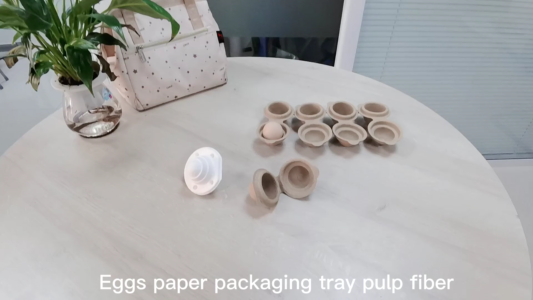
Behind every finished pulp packaging tray is a multi-stage production process that determines its final strength, appearance, and consistency. Understanding how this process works helps brands appreciate why quality control matters so much, and why not all manufacturers deliver the same level of reliability across large production runs.
Production begins with sourcing recycled paper fiber, which is broken down and mixed with water to create a pulp slurry. The quality of this raw material directly affects the final product's strength and consistency, so reputable manufacturers, including Lianpack, maintain strict sourcing standards to ensure fiber quality remains stable across different production batches and suppliers.
Once the pulp slurry is prepared, it's drawn into custom-designed molds using vacuum forming techniques that shape the material around the mold's exact contours. This is where custom engineering becomes critical, since mold precision determines how well the final product will fit and protect whatever it's designed to hold. Even minor mold imperfections can lead to fit issues across an entire production run.
After molding, the wet pulp shapes need to be dried and cured to achieve their final strength and rigidity. This stage typically involves controlled heat application, and the drying time and temperature significantly affect the finished product's durability. Rushing this stage can result in weaker packaging that doesn't hold up under real shipping stress, which is why experienced manufacturers carefully calibrate their drying processes.
Once dried, molded pieces go through trimming to remove excess material and achieve clean, consistent edges. Some products also receive additional finishing treatments, such as coatings for moisture resistance or surface texturing for aesthetic purposes. This stage is where the packaging takes on its final professional appearance before moving to quality inspection.
Rather than testing only finished products, strong manufacturing operations build quality checks into every stage of production, from raw fiber testing to mold inspection to final strength testing. This layered approach catches problems early, before defective materials move further down the production line and waste additional time and resources on units that will ultimately fail quality standards.
For large production runs, manufacturers typically pull samples at regular intervals to verify that quality remains consistent throughout the entire batch. This sampling process helps identify any drift in fiber composition, mold performance, or drying consistency before it affects a significant portion of the order, protecting both the manufacturer's reputation and the client's product integrity.
Understanding the production process helps brands ask better questions when evaluating potential manufacturing partners, rather than simply comparing price quotes. A manufacturer that can clearly explain its quality control measures at each production stage is generally a safer long-term partner than one that treats the process as a black box, since transparency here often correlates directly with reliability once orders scale up.