English
 Arabic
 French
 Spanish
 Portuguese
 Deutsch
 Turkish
 Dutch
Dutch
 Italiano
 Russian
 Romaian
 Portuguese (Brazil)
 Greek
Greek
FYP Worthy The 6 Types of Working Genius by Patrick Lencioni
Travel |
2026-06-11 06:49:27
 Advertise With Us
 About Us
 Terms And Conditions
 سياسة الخصوصية
عرض كل النتائج
سياسة الخصوصية
عرض كل النتائج

ترقية الحساب
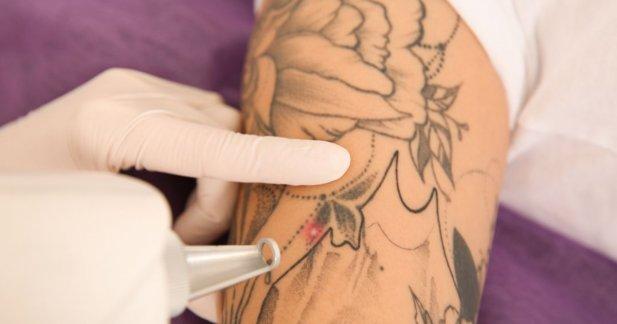
The technological landscape of dermatology has transformed tattoo removal in Jeddah from a painful, scar-prone procedure into a highly precise medical science. Central to this evolution is the ongoing advancement in laser hardware, specifically the comparison between traditional Q-switched nanosecond lasers and modern picosecond systems. Understanding how these two technologies operate helps patients appreciate the precision involved in clearing unwanted body art.
For decades, Q-switched lasers have served as the clinical standard for professional tattoo removal, establishing a reliable track record of safety and efficacy.
Q-switched lasers deliver energy in nanoseconds—billionths of a second. When the light beam contacts the tattoo ink, the pigment absorbs the thermal energy rapidly, causing the ink particles to expand and fracture into smaller pieces. This photothermal action is exceptionally effective at breaking down deep, dark pigments such as black and dark blue. While newer technologies have emerged, Q-switched devices remain versatile workhorses in dermatological clinics, particularly for patients with specific ink compositions and skin types.
Representing a significant leap forward in optical physics, picosecond lasers deliver energy in trillionths of a second, fundamentally changing how ink is pulverized within the dermal layer.
Because picosecond pulses are delivered at an ultra-short duration, the primary mechanism shifts from thermal heating to a powerful photo-acoustic shockwave. This pressure wave shatters the ink particles into dust-like micro-particles that are far smaller than those produced by nanosecond devices.
Faster Clearance: Because the ink is pulverized into finer fragments, the body's macrophage cells can transport the debris through the lymphatic system much more efficiently, often reducing the total number of required sessions.
Reduced Thermal Trauma: Delivering energy in trillionths of a second minimizes heat transfer to surrounding skin tissues, significantly lowering the risk of thermal burns, blistering, and post-treatment hyperpigmentation.
Better Handling of Resistant Colors: Picosecond systems excel at breaking down stubborn pigments, such as greens and blues, which traditionally require a higher number of passes with older laser generations.
Choosing between or combining these advanced laser systems depends entirely on a comprehensive pre-treatment assessment conducted by an experienced clinical specialist.
During an initial consultation, the practitioner evaluates the tattoo's depth, ink density, color palette, and the patient's natural skin phototype. In many modern clinics, specialists utilize a combination of both Q-switched and picosecond wavelengths across a multi-stage protocol to tackle different layers and colors of ink effectively.
Regardless of the specific laser technology utilized, achieving a flawless, unblemished finish relies on respecting the skin's biological recovery timeline. Spacing appointments six to eight weeks apart ensures that the dermal matrix repairs itself completely and the lymphatic system clears away the shattered pigment.
By combining cutting-edge laser mechanics with disciplined clinical expertise, individuals undergoing tattoo removal in Jeddah can achieve exceptional aesthetic outcomes while maintaining optimal skin health.