English
 Arabic
 French
 Spanish
 Portuguese
 Deutsch
 Turkish
 Dutch
Dutch
 Italiano
 Russian
 Romaian
 Portuguese (Brazil)
 Greek
Greek
Macchina Marcatrice Laser Mopalaser: Precisione Industriale per Marcature di Alta Qualità
Other |
2026-05-18 09:13:01
 Advertise With Us
 About Us
 Terms And Conditions
 Politique de confidentialité
Tout voir
Politique de confidentialité
Tout voir

Mise à niveau vers Pro
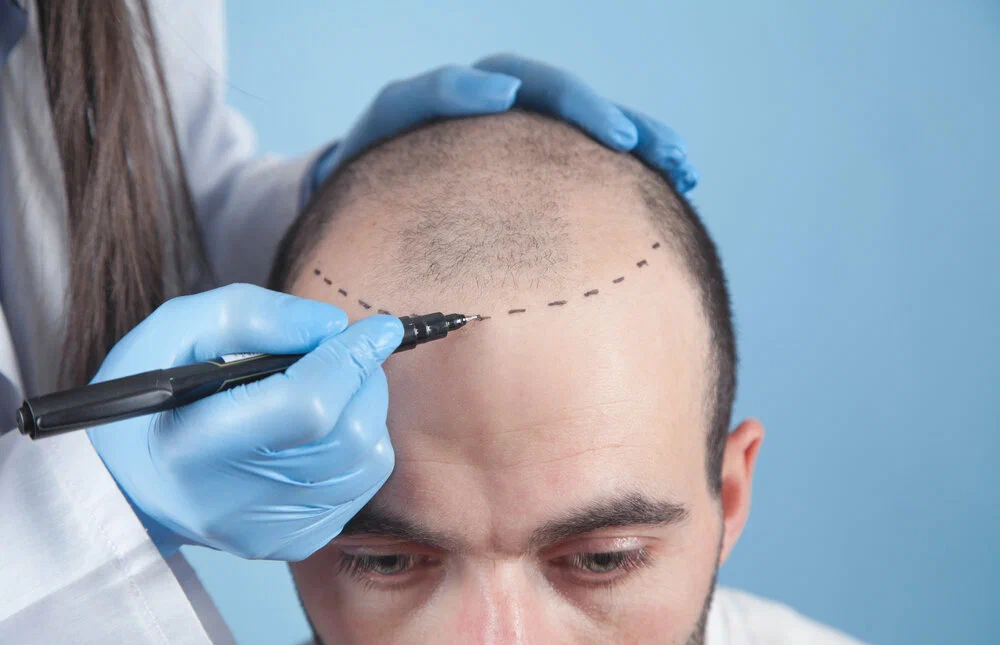
The foundation of a successful Follicular Unit Transplantation (FUT) procedure lies in the anatomical characteristics of the donor area. When patients undergo FUT Hair Transplant in Jeddah, specialized surgeons carefully evaluate the back and sides of the scalp to determine safe harvesting limits, tissue laxity, and overall graft yield. Understanding how the donor zone functions provides essential insight into how high-volume coverage is achieved while maintaining a completely natural appearance.
Human hair distribution is not uniform. While hair on the top and front of the head is often vulnerable to miniaturization driven by dihydrotestosterone (DHT), hair located along the occipital and parietal scalp exhibits lifelong genetic resistance.
DHT Resistance: Follicles harvested from this permanent safe zone retain their genetic code even after being relocated, ensuring that they will continue to grow for the remainder of the patient's life.
Optimal Density and Caliber: Surgeons assess both the number of follicular units per square centimeter and the hair shaft thickness (caliber) within the donor strip to maximize coverage efficiency during microscopic dissection.
Preserving Natural Harmony: Careful harvesting ensures that the density of the donor area remains balanced and visually untouched, preventing any over-harvesting or visible thinning along the back of the head.
Tissue laxity—the natural flexibility and looseness of the scalp skin—is a critical factor unique to the FUT technique.
Evaluating Skin Mobility: During the initial consultation, the specialist tests scalp laxity to determine the safe width and length of the donor strip that can be excised without placing excessive mechanical tension on the closure.
Multi-Layered Closure Techniques: Utilizing advanced suture techniques distributes healing tension across deeper dermal layers rather than directly on the skin surface, ensuring the linear donor mark heals smoothly and remains easily concealable.