English
 Arabic
 French
 Spanish
 Portuguese
 Deutsch
 Turkish
 Dutch
Dutch
 Italiano
 Russian
 Romaian
 Portuguese (Brazil)
 Greek
Greek
Hospital Management Software India - Empowering Modern Healthcare with Purple Sky Health
Other |
2026-08-03 12:55:59
 Advertise With Us
 About Us
 Terms And Conditions
 Privacy Policy
Mostra tutti i risultati
Privacy Policy
Mostra tutti i risultati

Passa a Pro
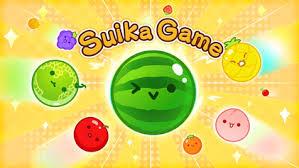
Let me paint a picture for you. It's late at night. You're supposed to be sleeping. Instead, you're hunched over your phone, watching a strawberry roll past an apple and nudge a grape into exactly the right spot. Two grapes touch. They pop. A dekopon appears — and then it bumps into another dekopon, and another pop sounds. The screen flickers. Your score jumps. You feel a quiet rush of triumph. Then a cherry appears at the top and you're already planning your next move.
This is the spell of the watermelon puzzle game. It has no story, no villains, no timers, and no stakes beyond a little line at the top of a jar. And yet it grips you harder than most games with all of those things.
The rules are so simple they barely qualify as rules. A container shaped like a tall jar stands in the middle of the screen. Fruits drop from above, one at a time. You decide where each one lands by clicking or tapping at the spot. When two identical fruits touch, they merge and transform into the next fruit in the chain. Cherry turns into strawberry. Strawberry becomes grape. Grape becomes dekopon (a citrus fruit you likely never thought about before this game). It continues through persimmon, apple, pear, peach, pineapple, melon, and finally — the grand prize — a watermelon.
That's it. No extra systems, no hidden mechanics, no secret bosses. Just eleven fruits and one jar.
You can experience this firsthand at Suika Game, a free browser version of the puzzle that started the craze on Nintendo Switch. The trip from Japan to your phone was fueled entirely by social media clips of chain reactions — and once you try it, you'll understand exactly why those clips spread.
Here is what makes this different from every other puzzle you've played: physics.
Fruits in this game do not snap neatly into a grid. They are round and wobbly. They roll off each other, tumble into unexpected gaps, and settle with a little bounce that feels almost alive. You might aim a grape for a clean spot on the left, watch it roll right, and discover it just merged with a grape you forgot was even there. That moment — when the physics engine does something better than your plan — is pure dopamine.
It also works the other way. A pineapple you drop carefully can wobble sideways and land exactly where you did not want it, blocking a whole section of the jar for the rest of the run. The game does not punish you with dramatic sound effects or sad music. It just makes the puzzle harder, quietly, and lets you figure it out yourself.
The audio deserves a mention here. The background melody is light and cheerful — the kind of tune you hum without noticing. The merge sound is a soft, satisfying pop. Together they create a bubble of concentration that makes your evening disappear in what feels like ten minutes.
If you have been playing for a while and feel stuck, here is what has worked for many players.
Anchor the big ones to a wall. Pineapples, melons, and watermelons are bulky. If they sit in the middle of the jar, they block everything around them. Guide them toward the left or right wall early. This keeps the centre open for smaller fruits and gives you cleaner sightlines for placement.
Wait before you drop. The strongest urge in this game is to drop the next fruit immediately after a merge. Fight it. Give the jar one second to settle. After a merge, the new fruit might roll into another match and start a cascade. If you drop too fast, you land on an unstable pile and lose control.
Use cherries as filler, not trash. It is easy to treat small fruits as annoyances. But a cherry placed carefully in a tight corner can plug a gap that would otherwise trap a larger fruit. Think of them as scaffolding — they hold things in place while you build upward.
Learn the value of height. Dropping a fruit from higher up makes it bounce further into the pile, which can be useful or disastrous depending on your goal. For precision work in a narrow gap, hover low before you release. The closer your cursor is to the pile, the more control you have over where the fruit ends up.
Watch for the merge threshold. This is the advanced move. When two large fruits sit close but not quite touching, a well-placed medium fruit dropped between them can create a chain reaction that connects everything. It is tricky to pull off, but clearing three or four fruits in one cascade is one of the most satisfying feelings the game offers.
There is something quietly radical about a game that asks nothing from you except patience and a little spatial thinking. No reflexes required. No microtransactions. No FOMO battle passes. Just you, a jar, and a parade of smiling fruit.
The watermelon at the end of the chain is not really the point. The point is the twenty minutes of careful decisions, the accidental chain reactions that make you gasp, the cherries wedged into impossible gaps, and the moment you finally see two melons touch and know the watermelon is coming. It is a small victory — but it feels entirely yours.
And when the pile finally tips over the line and the game ends, you sit back, look at the screen, and think: one more.