English
 Arabic
 French
 Spanish
 Portuguese
 Deutsch
 Turkish
 Dutch
Dutch
 Italiano
 Russian
 Romaian
 Portuguese (Brazil)
 Greek
Greek
The Wellness Wave: Key Drivers of the Global Fitness App Market Growth
Other |
2026-01-22 10:04:57
 Advertise With Us
 About Us
 Terms And Conditions
 Privacy Policy
Mostra tutti i risultati
Privacy Policy
Mostra tutti i risultati

Passa a Pro
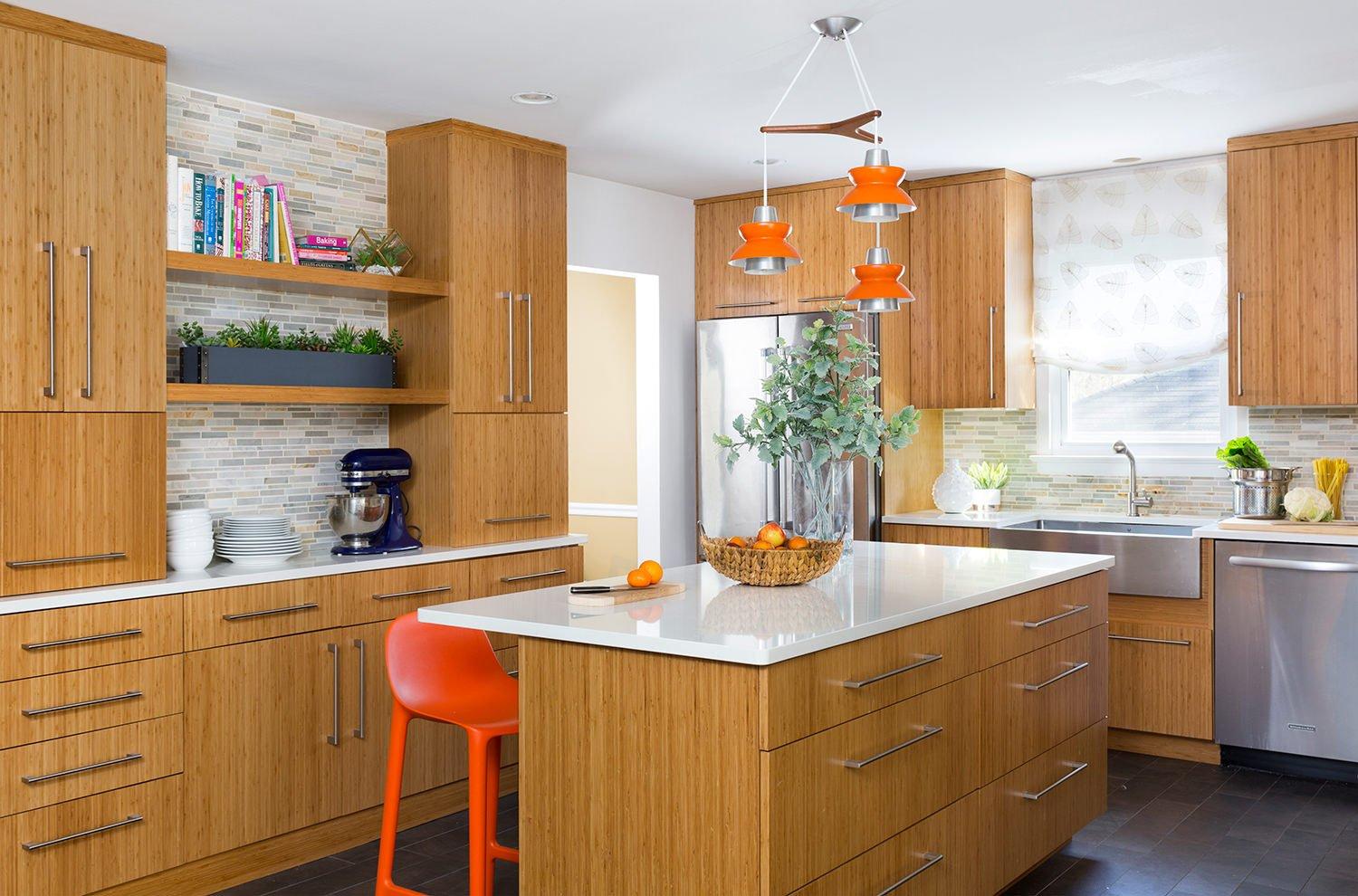
The appeal of a curved surface in cabinetry and furniture design is undeniable. It breaks the rigidity of traditional box-like structures, adding an organic, sophisticated flow to a room. However, when the material of choice is bamboo veneer, craftsmen often find themselves facing a unique set of challenges. Bamboo is not technically wood; it is a grass. Its anatomy consists of long, longitudinal vascular bundles held together by a natural polymer called lignin. While this structure gives bamboo its legendary tensile strength, it also makes the material prone to splintering and "checking" when forced into a tight radius.
Achieving a flawless curve with bamboo veneer requires a departure from standard woodworking techniques used for walnut or maple. It demands an understanding of the material's cellular biology and a disciplined approach to moisture, heat, and pressure. When managed correctly, bamboo can be coaxed into remarkably sharp bends without a single fiber snapping.
To prevent cracking, one must first understand why it happens. In a traditional hardwood veneer, the fibers are somewhat interwoven and supported by medullary rays. Bamboo lacks these rays. Its fibers run in strictly parallel lines. When you bend a sheet of bamboo veneer, the fibers on the outside of the curve are subjected to extreme tension, while the fibers on the inside are subjected to compression.
Because bamboo is so dense, the fibers have very little "give." If the tension on the outer face exceeds the elastic limit of the vascular bundles, they will pull apart, resulting in long, unsightly cracks that follow the grain. This is often exacerbated by the fact that bamboo is naturally drier and more brittle than many hardwoods. The goal of any bending operation is to temporarily soften the lignin—the "glue" that holds those fibers together—allowing them to slide past one another slightly rather than snapping.
Not all bamboo veneers are created equal when it comes to flexibility. The manufacturing process plays a massive role in how the material behaves under stress. There are generally three types of bamboo veneer: plain pressed (horizontal grain), side pressed (vertical grain), and strand woven.
For curved work, vertical grain (side pressed) is often the most forgiving. The narrow strips provide more frequent "joints" where the lignin can flex. However, the most critical factor is the backing. Raw, unbacked bamboo veneer is incredibly fragile and almost impossible to bend around a tight radius without specialized industrial equipment. For most professional shops, paper-backed or fabric-backed veneers are the standard. The backing acts as a reinforcement layer, distributing the tension across the entire surface and preventing individual fibers from isolating and cracking.
If the design requires an exceptionally tight radius—such as a 2-inch cylinder—a 2-ply bamboo veneer is often the best choice. This involves two layers of veneer laminated with their grains running perpendicular or slightly offset, which provides the structural integrity needed to resist splintering.
The secret to bending any fibrous material lies in the "glass transition temperature" of its internal polymers. When lignin is cold and dry, it is a brittle solid. When it is heated and moistened, it becomes "plastic," meaning it can be deformed without breaking and will retain its new shape once cooled and dried.
There are two primary ways to achieve this state in a workshop: steaming and chemical softening. For bamboo, chemical softening agents are often more effective than pure steam. Products known as veneer softeners—typically a mixture of water, alcohol, and glycerin—penetrate deep into the bamboo's dense vascular structure.
To use a softener, the veneer should be lightly sprayed on both sides and allowed to sit under a plastic sheet for thirty minutes to an hour. This doesn't just make the veneer "wet"; it chemically relaxes the fibers. The alcohol acts as a carrier to pull the glycerin into the cells, where it acts as a lubricant. This allows the bamboo to stretch on the outer radius of the curve without reaching the breaking point.
A curve is only as good as the form beneath it. When working with veneer, any imperfection in the substrate will "telegraph" through to the surface. If the curved substrate has a flat spot or a small ridge, the bamboo veneer will likely crack at that exact point because the pressure is not being distributed evenly.
Most professionals use layers of "bendy plywood" or kerf-cut MDF to create the curved core. Once the core is glued and dried, it must be sanded with a long, flexible sanding block to ensure the radius is perfectly consistent. Any deviation in the curve creates a "stress riser"—a point where the tension on the veneer becomes concentrated. By ensuring a mathematically perfect curve on the substrate, you remove one of the most common causes of fiber failure.
Once the veneer is softened and the substrate is ready, the actual application of the veneer is the most critical phase. There are two schools of thought here: the vacuum press and the mechanical caul system.
The vacuum press is arguably the most effective tool for complex or wide curves. By placing the substrate and the veneer inside a heavy-duty polyurethane bag and evacuating the air, the atmosphere itself provides an even pressure of roughly 14.7 pounds per square inch. This uniform pressure ensures that every square millimeter of the bamboo is pressed firmly against the substrate. Because the pressure is atmospheric, it follows the curve perfectly, minimizing the risk of localized stress that causes cracking.
For smaller, tighter edges where a vacuum bag might be overkill, a mechanical "caul" is used. A caul is a flexible piece of material—often a thin sheet of zinc, aluminum, or 1/8-inch hardboard—that is placed over the veneer. Clamps are then applied to the caul rather than the veneer itself. This distributes the clamping force and prevents the clamps from crushing the bamboo fibers or causing them to buckle.
The choice of glue can make or break a curved bamboo project. Contact cement is often tempting because of its immediate "grab," but it is generally discouraged for high-tension curves. Contact cement remains somewhat flexible even after it cures, which can allow the bamboo's natural desire to straighten out to pull the veneer away from the substrate over time, leading to "bubbling" or eventual cracking.
A rigid-set glue, such as a high-quality PVA (wood glue) or a urea-formaldehyde resin, is superior for curved work. These glues create a structural bond that essentially turns the veneer and the substrate into a single, monolithic piece. Urea-formaldehyde is particularly favored by high-end furniture makers because it has no "creep." Once it sets, the bamboo fibers are locked in their new curved orientation forever.
However, using these glues requires a longer "open time" and a more rigorous clamping setup. If using PVA, you must work quickly to get the veneer into the press before the water in the glue causes the veneer to curl or expand unevenly.
When planning the layout of the veneer, the direction of the bend relative to the grain is paramount. Bending "with" the grain (where the curve follows the length of the fibers) is significantly easier than bending "across" the grain.
In a "with the grain" bend, you are essentially rolling a bundle of straws. In an "across the grain" bend, you are trying to fold those straws. If your design requires an across-the-grain bend, the radius must be much larger, or the veneer must be much thinner. For tight vertical edges, like the corner of a desk, always orient the grain so that it runs vertically, allowing the bend to happen with the grain. This simple planning step eliminates 90% of the risk of fiber separation.
Even with perfect preparation, the organic nature of bamboo means that an occasional crack can occur. If a fiber snaps during the pressing process, all is not lost. If the crack is small and follows the grain, it can often be repaired using a "burn-in" stick or a mixture of fine bamboo sanding dust and a clear drying resin.
The key to a successful repair is to address it before the final finish is applied. Because bamboo is so dense, a crack will stand out as a dark line once the oil or lacquer hits it. By filling the void with a matching paste and sanding it flush while the glue is still relatively fresh, the repair can be made virtually invisible to the naked eye.
The final step in preserving the integrity of a curved bamboo surface is the finish. A curved surface has more surface area exposed to the air than a flat one, and the fibers are under constant internal stress. An evaporative finish, like lacquer, or a reactive finish, like polyurethane, provides a moisture barrier that prevents the bamboo from drying out and cracking years after the project is finished.
Penetrating oils are also popular for bamboo because they highlight the depth of the vascular bundles. However, for curved work, ensure the oil is one that "cures" or hardens within the fibers. This adds an extra layer of internal support to the cells that were stretched during the bending process.
Mastering the bend in bamboo veneer is a rite of passage for many modern woodworkers. It sits at the intersection of traditional craft and modern material science. By respecting the parallel nature of the fibers and using the trio of moisture, heat, and even pressure, you can move past the limitations of the material.
The result is a piece of work that defies the expected "flatness" of bamboo. A perfectly executed curve, free of splinters and checks, demonstrates a level of control over the medium that is rare. It allows the natural, sustainable beauty of bamboo to be applied to the most avant-garde and fluid designs, proving that even the most stubborn grass can be molded to the human imagination if approached with the right technique.