English
 Arabic
 French
 Spanish
 Portuguese
 Deutsch
 Turkish
 Dutch
Dutch
 Italiano
 Russian
 Romaian
 Portuguese (Brazil)
 Greek
Greek
Lithium Cobalt Oxide Cathode Materials Market Size, Analytical Overview, Growth Factors, Demand, Trends and Forecast By 2033
Other |
2026-04-08 12:57:18
 Advertise With Us
 About Us
 Terms And Conditions
 Политика конфиденциальности
Смотреть все
Политика конфиденциальности
Смотреть все

Обновить до Про
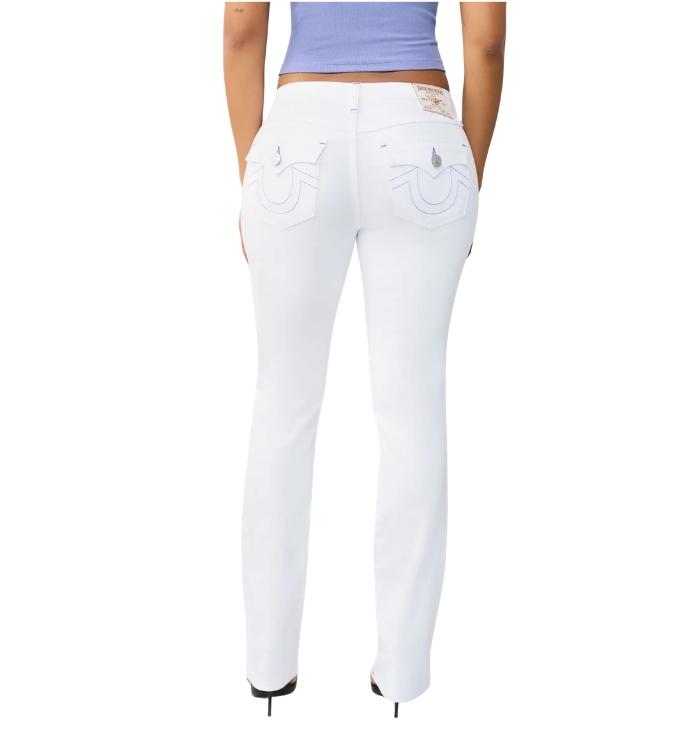
There are certain pairs of jeans that do more than cover your legs. They mark a decade, a mood, a whole way of dressing that people either lived through or wish they had. True Religion jeans belong in that category. Anyone who grew up watching MTV in the mid 2000s, or scrolled through old magazine spreads from that era, remembers the thick contrast stitching, the horseshoe on the back pocket, and the flare that made every pair look bigger than life. This article walks through the styles that turned True Religion into a denim label people still talk about, and why certain releases became the ones fans mention first when the brand comes up in conversation.
Before getting into specific styles, it helps to understand what made the brand different in the first place. Founded in 2002 by Jeff Lubell, True Religion built its name on oversized stitching, heavy topstitching in bold thread colors, and a horseshoe shaped design on the back pockets that became one of the most recognized logos in denim. At a time when most jeans were plain and understated, True Religion went the opposite direction. The stitching was loud, the fit was often relaxed through the thigh and wide at the ankle, and the branding was impossible to miss. That approach turned out to be exactly what the early 2000s wanted.
The Joey cut is one of the earliest releases that helped define the brand's look. It featured a slightly looser fit through the leg with a flare at the bottom, paired with the now familiar big stitch detailing across the back pockets. What made the Joey stand out was how the flare balanced the oversized stitching. The wider leg opening gave the thick threadwork room to breathe instead of looking crowded, and that balance is part of why this cut became a template for later releases.
The Billy is often mentioned alongside the Joey as one of the two silhouettes that made True Religion instantly recognizable. It carried a similar low rise and flared leg, but with slightly different pocket placement and stitching width depending on the release year. Celebrities photographed at award shows and on red carpets in the mid 2000s frequently wore the Billy, which pushed the style from denim enthusiast circles into mainstream fashion coverage. Once magazines started running photos of musicians and actors in these jeans, demand grew fast.
Not every https://truereligionn.us/ release leaned into extreme flare. The Bobby offered a straighter leg opening while keeping the brand's signature thick stitching and pocket design. This cut appealed to buyers who wanted the recognizable look without the dramatic flare of the Joey or Billy. It also aged a bit better as fashion trends shifted away from flares later in the decade, which is part of why some collectors still consider the Bobby one of the more versatile pieces the brand ever produced.
On the women's side, the Becky became one of the defining fits. It combined a fitted waist with a flare that started around the knee, creating a silhouette that was closely tied to the era's overall denim trends. The Becky often appeared with rhinestone accents or embellished back pockets in special releases, which added another layer of detail that fans still search for when looking at resale listings today.
If there is one design element that fans point to as the most identifiable feature of the brand's peak years, it is the Super T stitch. This was an even bolder version of the standard horseshoe stitching, using thicker thread and a wider pattern that covered more of the back pocket. Jeans featuring Super T stitching are frequently cited as some of the most sought after pieces from the brand's catalog, partly because the design took the brand's already loud aesthetic and pushed it even further.
It would be easy to assume that jeans built around oversized stitching and dramatic flares would fade into nostalgia and stay there. Instead, secondhand marketplaces and vintage denim communities regularly see renewed interest in these pieces. Part of the reason comes down to how fashion cycles work. Trends that once felt dated often circle back once enough time passes for them to feel fresh again rather than simply old. Another part comes down to craftsmanship. The heavy stitching and thick denim used in these releases were built to last, so many original pairs from the 2000s are still wearable decades later, which keeps them showing up in resale searches and styling discussions.
There is also a cultural angle worth mentioning. These jeans are tied to a specific stretch of pop culture history, one full of reality television, early paparazzi culture, and a very particular kind of red carpet fashion. Wearing an original pair today carries a bit of that history with it, which is something a lot of newer denim simply cannot offer.
Looking back at the most iconic True Religion jeans is really a way of looking back at how loud, expressive denim once dominated an entire era of fashion. From the flared Joey and Billy cuts to the straighter Bobby, the fitted Becky, and the bold Super T stitching that tied it all together, each release added something to a look that still gets recognized instantly today. Whether someone is revisiting old photos, digging through a closet, or browsing a resale site out of curiosity, these styles remain a clear marker of a specific and memorable moment in denim history.
What made True Religion jeans stand out from other denim brands? The thick horseshoe stitching, bold thread colors, and relaxed to flared fits set the brand apart during a time when most denim looked plain by comparison.
Which True Religion cut is considered the most iconic? The Joey and Billy styles are usually named first due to their flared leg and heavy stitching, though the Super T stitching detail is often called out as the brand's signature feature.
Are original True Religion jeans from the 2000s still wearable today? Many original pairs hold up well because of the heavy denim and reinforced stitching used at the time, which is why they still appear regularly in resale and vintage searches.