English
 Arabic
 French
 Spanish
 Portuguese
 Deutsch
 Turkish
 Dutch
Dutch
 Italiano
 Russian
 Romaian
 Portuguese (Brazil)
 Greek
Greek
Chittoor Call Girls Service: Premium Chittoor Escort Service With Russian Girls & MILF Companions
Art |
2026-07-14 06:33:13
 Advertise With Us
 About Us
 Terms And Conditions
 Política de privacidade
Ver todos
Política de privacidade
Ver todos

Atualizar para Plus
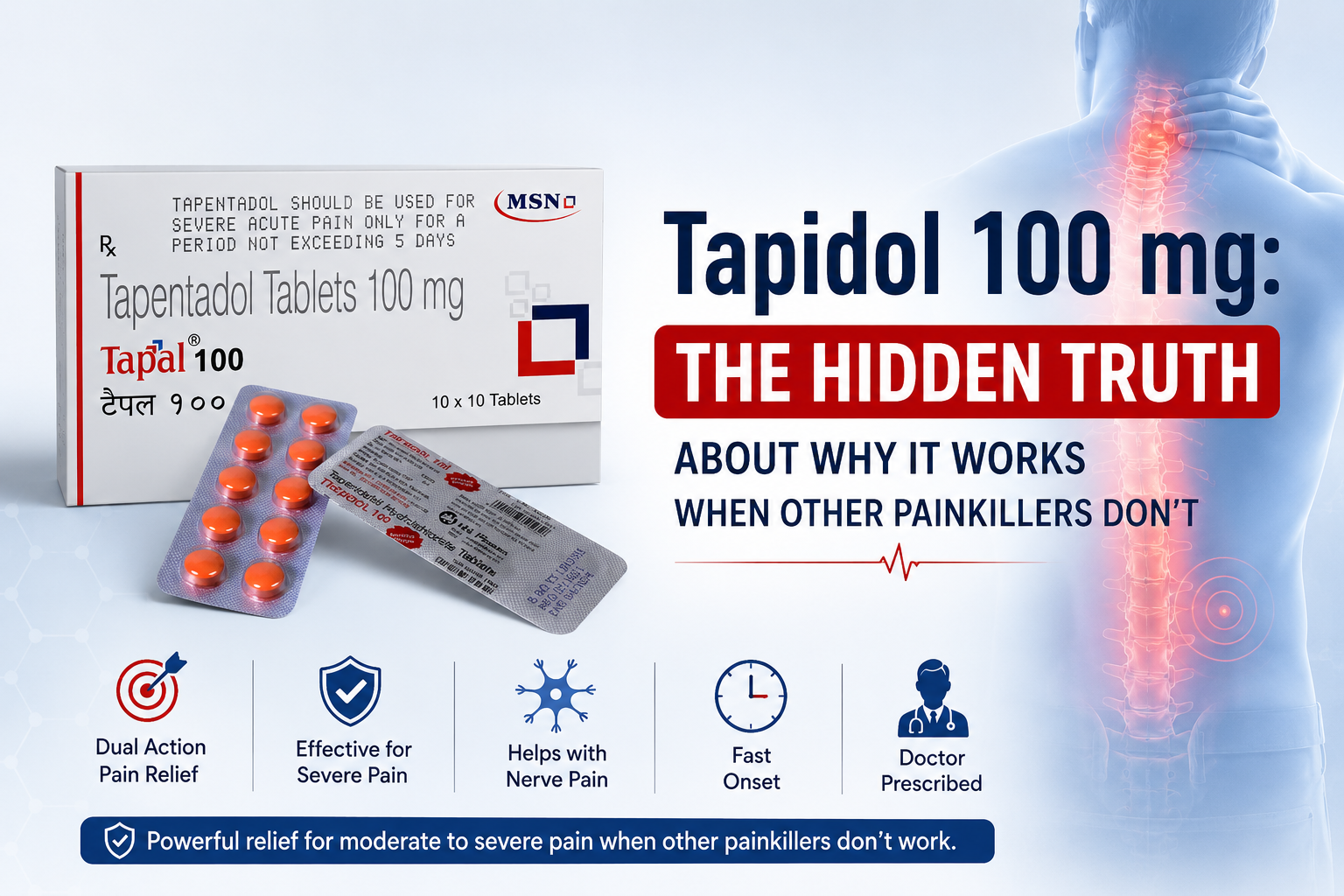
If your doctor has mentioned tapentadol extended-release (often sold under brand names like Tapal ER, Nucynta ER, or Palexia SR) for chronic pain, you probably have two questions before anything else: does this actually work for pain like mine, and how risky is it? Those are the right questions to ask about any long-acting opioid, and this guide answers them honestly, including where tapentadol fits, where it doesn't, and what current clinical guidance actually recommends for conditions like diabetic nerve pain and trigeminal neuralgia.
Tapentadol is a centrally acting opioid analgesic. It's structurally and pharmacologically distinct from older opioids like morphine or oxycodone because it works two ways at once: it activates mu-opioid receptors (the classic opioid pain-blocking pathway), and it inhibits norepinephrine reuptake in the spinal cord, a mechanism more commonly associated with certain antidepressants used for nerve pain. That dual action is why tapentadol is sometimes described as sitting between a traditional opioid and a nerve-pain medication, though it is legally and clinically classified as an opioid, specifically a Schedule II controlled substance in the United States, with equivalent controlled-drug status in the UK.
The extended-release (ER) formulation releases the drug slowly over roughly 12 hours, intended for around-the-clock management of moderate to severe chronic pain, not for occasional or breakthrough pain, which is where the immediate-release (IR) version is used instead.
This is the part patients are rarely told clearly, so it's worth being direct about it.
Diabetic peripheral neuropathy: Tapentadol ER does have regulatory approval in some countries (including the U.S.) specifically for neuropathic pain associated with diabetic peripheral neuropathy, and clinical trials have shown it can reduce pain scores compared with placebo. However, major guidelines including those referenced by the American Diabetes Association and NICE in the UK still position first-line treatment around non-opioid options: gabapentin, pregabalin, duloxetine, or amitriptyline. Opioids, including tapentadol, are generally reserved for patients who haven't responded adequately to these first-line agents, or who can't tolerate them, because of the long-term risks associated with opioid use.
Trigeminal neuralgia: This is a different situation. Trigeminal neuralgia is typically driven by nerve compression and abnormal signaling, and it responds poorly to opioids in general this is well documented in neurology literature and reflected in NICE and American Academy of Neurology guidance. The first-line treatment is carbamazepine or oxcarbazepine, not opioid therapy. If you've been prescribed tapentadol for trigeminal neuralgia specifically, it's worth asking your prescriber directly why an opioid was chosen over the standard anticonvulsant approach, since that's outside the usual treatment pathway.
None of this means tapentadol ER is never appropriate for nerve-related pain; some patients with mixed or severe pain do end up on it after other options fail. It means it is not usually the starting point, and understanding that helps you have a more informed conversation with your doctor about why it was chosen for you specifically.
Dosing is always individualized by a prescriber based on pain severity, prior opioid exposure, kidney and liver function, and other medications. In general terms:
Tapentadol ER is usually taken twice daily, roughly every 12 hours, swallowed whole, never crushed, split, or chewed, since damaging the extended-release coating can release the full dose at once.
100mg is a mid-to-upper range strength; many patients are started at a lower dose (such as 50mg twice daily) and titrated upward based on response and tolerability.
It can be taken with or without food, but consistency matters; take it the same way each time.
Missed doses should not be doubled up; if a dose is missed close to the next one, patients are usually advised to skip it rather than take two at once, but the specific instruction should come from the prescribing clinician or pharmacist.
Stopping tapentadol ER abruptly after regular use can cause withdrawal symptoms (sweating, anxiety, nausea, muscle aches). It should be tapered down gradually under medical supervision, not stopped suddenly.
Common, usually manageable: nausea, constipation, dizziness, drowsiness, dry mouth, and headache. Constipation in particular tends to persist for as long as you're on the medication, so many prescribers recommend starting a stool softener or fiber supplement proactively rather than waiting for it to become a problem.
Serious seek help promptly for: slow or shallow breathing, extreme drowsiness or difficulty waking, confusion, severe dizziness or fainting, and signs of serotonin syndrome (agitation, rapid heartbeat, high fever, muscle rigidity, tremor), the last of which is a specific concern with tapentadol because of its norepinephrine/serotonin-adjacent activity, especially in combination with certain antidepressants.
Alcohol: Should be avoided. Combining opioids with alcohol significantly increases the risk of dangerous respiratory depression and sedation; this is one of the most consistent warnings from the FDA and equivalent regulators.
Other CNS depressants: Benzodiazepines, sleep medications, muscle relaxants, and other opioids increase sedation and breathing-suppression risk when combined with tapentadol. The FDA has issued a boxed warning specifically about the risk of combining opioids with benzodiazepines.
MAOIs and serotonergic drugs: Tapentadol should not be used within 14 days of taking a monoamine oxidase inhibitor (MAOI), and caution is needed with SSRIs, SNRIs, triptans, and certain other medications that raise serotonin levels, due to serotonin syndrome risk.
Food: No major food-specific restriction is typically required, though grapefruit's general effect on drug metabolism means it's reasonable to mention to your pharmacist if you consume it regularly.
Tapentadol is generally not recommended during pregnancy, particularly in the third trimester, because prolonged opioid use near delivery can cause neonatal opioid withdrawal syndrome in the newborn. It's also generally advised against during breastfeeding, since opioids pass into breast milk and can cause sedation or breathing problems in a nursing infant. Anyone pregnant, planning a pregnancy, or breastfeeding should discuss pain management alternatives with their obstetric provider rather than continuing or starting tapentadol without that conversation.
|
Myth |
Fact |
|
Extended-release means it's gentler than immediate-release. |
ER simply spreads the same total exposure over a longer time for steadier pain control. It is not a lower-risk formulation, and misuse (crushing/chewing) can release a dangerous amount at once. |
|
If a doctor prescribed it, tolerance and dependence won't happen. |
Physical tolerance and dependence are expected pharmacological effects of regular opioid use, not signs of misuse. This is why tapering, not abrupt stopping, is standard practice. |
|
Tapentadol is the standard first choice for diabetic nerve pain. |
Guidelines generally place gabapentinoids, duloxetine, or amitriptyline first, with opioids considered after those options are tried or ruled out. |
Gabapentin or pregabalin — first-line for diabetic neuropathy in most guidelines.
Duloxetine (an SNRI) — also first-line for diabetic neuropathy, with an antidepressant effect that can help if pain is affecting mood or sleep.
Carbamazepine or oxcarbazepine — first-line specifically for trigeminal neuralgia.
Topical agents (capsaicin cream, lidocaine patches) — lower systemic risk, useful for localized pain.
Non-drug approaches — physical therapy, TENS units, and in some trigeminal neuralgia cases, surgical or procedural options like microvascular decompression.
This isn't a suggestion to switch medications on your own — it's context so that if your doctor brings up any of these, you recognize why.
Crushing or splitting the tablet to "make it work faster"; this destroys the extended-release mechanism and can cause a dangerous dose spike.
Drinking alcohol "just once" while on it, underestimating the combined sedative effect.
Stopping suddenly when pain improves, rather than tapering with medical guidance.
Not mentioning other medications (especially antidepressants or sleep aids) to the prescribing doctor or pharmacist.
Assuming a higher dose will help faster-acting pain relief ER formulations are not designed for that.
Get emergency care if you or someone taking tapentadol experiences slow, shallow, or stopped breathing; cannot be woken up; has blue-tinged lips or fingertips; or shows signs of serotonin syndrome such as high fever, muscle rigidity, and confusion. In the U.S. and UK, emergency services (911 / 999) should be contacted immediately in any of these situations; this is not something to wait out at home.
Buy Tapentadol ER 100mg online from Safe4Cure, a trusted online pharmacy serving customers in the United States. We offer genuine medications, secure ordering, discreet packaging, and reliable delivery. Use Tapentadol ER 100mg only with a valid prescription and as directed by your healthcare provider.
Is Tapal 100 ER the same as Tapentadol?
Tapal is a brand name; tapentadol is the active ingredient. The 100 ER designation refers to the 100mg extended-release strength.
What's the difference between Tapentadol ER and immediate-release tapentadol?
Immediate-release is for shorter-term or breakthrough pain and is taken more frequently; extended-release is for continuous around-the-clock pain control, typically dosed twice daily.
Is Tapentadol ER addictive?
As an opioid, it carries a recognized risk of dependence and misuse, which is why it's a controlled substance requiring prescription oversight and periodic review.
Can I drink coffee or take painkillers like ibuprofen alongside it?
Caffeine isn't a known problem. Non-opioid pain relievers like acetaminophen are often used alongside it under medical guidance; NSAIDs like ibuprofen may need caution depending on your kidney function and other conditions; check with your pharmacist.
Why would my doctor choose Tapentadol over gabapentin for nerve pain?
Reasons vary, including prior treatment failures, side effect intolerance to gabapentinoids, or pain severity that hasn't responded to first-line options. If this wasn't explained, it's a reasonable question to ask at your next appointment.
This article is intended for educational purposes only and should not be considered medical advice. Always consult a qualified healthcare professional before starting, stopping, or changing any medication. Do not ignore professional medical advice because of information found in this article. Product availability and regulatory status may vary by country, and medications should only be used as directed by a licensed healthcare provider.