English
 Arabic
 French
 Spanish
 Portuguese
 Deutsch
 Turkish
 Dutch
Dutch
 Italiano
 Russian
 Romaian
 Portuguese (Brazil)
 Greek
Greek
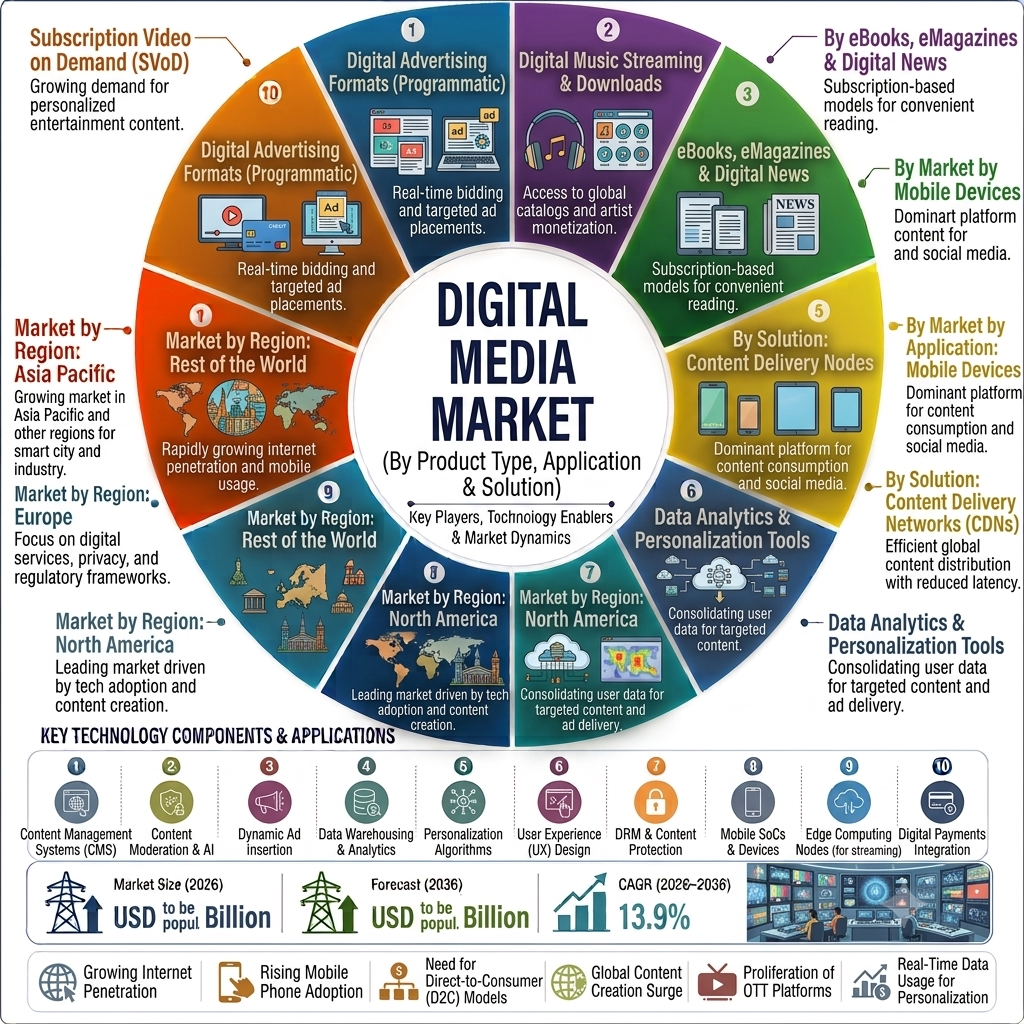
Digital Media Market Set for Strong Growth Through 2036 Driven by Cross-Platform Content Strategies and Expanding Digital Consumption
Wellness |
2026-07-09 06:40:41
 Advertise With Us
 About Us
 Terms And Conditions
 Política de privacidade
Ver todos
Política de privacidade
Ver todos

Atualizar para Plus
Solar Power Meter Market: Measuring the Momentum Behind Solar Energy Growth
As solar energy adoption accelerates worldwide, the tools used to measure and optimize that energy have become just as important as the panels themselves. According to recent market research, the global solar power meter market was valued at USD 3.69 billion in 2024 and is anticipated to register a compound annual growth rate of 10.6% from 2025 to 2034, with the market projected to reach USD 10.08 billion by 2034. The growing global adoption of solar energy systems across residential, commercial, and industrial sectors is a key driving factor for solar power meters, while increasing awareness about energy efficiency and the benefits of monitoring solar power generation significantly boosts their demand. Asia Pacific held the largest share of the market in 2024, reinforcing the region's role as a global leader in renewable energy deployment.
What Solar Power Meters Do and Why They Matter
A solar power meter measures the intensity of solar radiation, typically expressed in watts per square meter, and evaluates the performance of solar energy systems. These devices are indispensable for installers, technicians, researchers, and homeowners alike, helping ensure that solar panel systems operate at peak efficiency and deliver the expected energy output. As solar installations multiply across the globe, the ability to accurately verify performance has shifted from a nice-to-have to an operational necessity.
The Solar Power Meter Market has grown in step with the broader renewable energy transition. As homes and businesses install solar panels to cut electricity costs and reduce their environmental footprint, the need for reliable instruments to monitor and optimize those systems naturally follows.
Key Growth Drivers
Solar PV installations have expanded at a remarkable pace globally, and this expansion is the single largest force propelling the market forward. Solar photovoltaic generation surged significantly in recent years, representing the largest absolute growth among all renewable technologies during that period. As deployed solar capacity keeps climbing, so does the requirement for tools that can verify system performance, detect inefficiencies, and support ongoing maintenance.
Government policy is another powerful driver. Many countries offer subsidies, tax credits, and financing programs to encourage solar adoption. India, for example, has pursued ambitious rooftop solar initiatives alongside substantial renewable capacity additions in recent fiscal years, with solar contributing the largest share of that growth. Programs like these not only expand the installed base of solar systems but also create sustained demand for meters that ensure compliance and verify system output for subsidy and net-metering purposes.
Segment Highlights
By integration type, on-grid solar power meters dominate the market, holding roughly two-thirds of total share in 2024, thanks to widespread grid-connected solar deployment and net metering policies in developed economies. Off-grid meters, however, are set to grow fastest, driven by rural electrification efforts and the expansion of standalone solar-plus-storage systems in underserved regions.
Among product types, net meters lead the segment, supported by global net metering policies that let solar system owners earn credits for excess electricity fed back into the grid. Meanwhile, bi-directional meters are gaining ground quickly as more "prosumers" both generate and consume electricity, requiring meters capable of tracking energy flow in both directions.
On the measurement side, current measurement remains the most widely used metric due to its simplicity in diagnosing basic system health, while power measurement is growing fastest as demand rises for deeper energy analytics and performance-ratio calculations. Digital meters continue to outpace analog technology, offering real-time data, remote monitoring, and integration with smart grid systems.
By end use, residential installations account for the largest share, driven by homeowners seeking lower electricity bills and greater energy independence. Commercial applications are expanding fastest, as businesses invest in larger, more complex solar systems that require advanced, integrated monitoring solutions.
𝐄𝐱𝐩𝐥𝐨𝐫𝐞 𝐓𝐡𝐞 𝐂𝐨𝐦𝐩𝐥𝐞𝐭𝐞 𝐂𝐨𝐦𝐩𝐫𝐞𝐡𝐞𝐧𝐬𝐢𝐯𝐞 𝐑𝐞𝐩𝐨𝐫𝐭 𝐇𝐞𝐫𝐞:
https://www.polarismarketresearch.com/industry-analysis/solar-power-meter-market
Regional Trends
Asia Pacific commands roughly 40% of the global market, with China leading the charge thanks to its enormous installed solar capacity and dominant position in PV panel manufacturing. North America follows closely, propelled by strong federal and state incentives such as the Investment Tax Credit in the United States, along with growing investment in smart grid infrastructure. Europe remains a mature, steady market, with Germany standing out for its long-standing commitment to renewable energy through its Energiewende policy framework.
Competitive Landscape
The market includes established instrumentation leaders and specialized players alike, including Fluke Corporation, Keysight Technologies, Hioki E.E. Corporation, Chauvin Arnoux, Testo SE & Co. KGaA, Kyoritsu Electrical Instruments Works, Extech Instruments (FLIR Systems), SONEL S.A., Benning GmbH, and Solmetric Corporation. Recent developments highlight the pace of innovation: Fluke Reliability partnered with Treon to advance predictive maintenance capabilities, while Hioki introduced a new high-voltage probe for safer solar installation inspections. These moves reflect a broader industry push toward smarter, more connected metering solutions.
Looking Ahead
Despite strong momentum, the market does face some friction, particularly around high initial costs and the technical complexity of advanced metering systems. Even so, the combination of expanding solar capacity, favorable policy environments, and rising demand for granular energy data suggests this friction will ease as technology matures and adoption scales.
Solar Power Meter Market growth reflects the broader global shift toward renewable energy accountability, where accurate measurement is just as vital as generation capacity itself. As solar installations multiply across residential rooftops, commercial buildings, and utility-scale projects, and as smart grid integration becomes the norm rather than the exception, demand for precise, reliable, and increasingly digital metering solutions will only intensify. Stakeholders across the solar value chain, from manufacturers to installers to policymakers, stand to benefit from a market that is fundamentally about making renewable energy investments smarter and more transparent.
More Trending Latest Reports By Polaris Market Research:
User and Entity Behavior Analytics Market
North America UV Nail Gel Market
Electric Vehicle Battery Coolant Market
Next-generation Sequencing Library Preparation Market
North America UV Nail Gel Market
DNA and Gene Cloning Services Market
Gene Expression Analysis Market