English
 Arabic
 French
 Spanish
 Portuguese
 Deutsch
 Turkish
 Dutch
Dutch
 Italiano
 Russian
 Romaian
 Portuguese (Brazil)
 Greek
Greek
Boot Market Expansion Across Outdoor, Workwear, and Lifestyle Segments
Other |
2026-07-07 12:12:35
 Advertise With Us
 About Us
 Terms And Conditions
 Política de privacidade
Ver todos
Política de privacidade
Ver todos

Atualizar para Plus
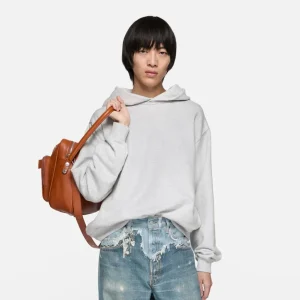
Most fashion houses can be summed up by a signature silhouette or a single hero product. Acne Studios resists that kind of shorthand. Its world is built less around one look and more around a set of ideas — experimentation, honesty, collaboration, and openness — that founder Jonny Johansson has carried through nearly 30 years of design. Understanding those ideas explains why the brand feels different from almost everything around it.
Long before Acne Studios https://acnestudioswear.com/ made a single garment, it existed as an idea. Johansson has described the original concept as built on the "Warholian Factory" idea, imagining himself as a film director, fashion designer, and musician all at once. The brand's earliest form, ACNE, stood for "Ambition to Create Novel Expression," and was intentionally multidisciplinary from day one, exploring music, moving images, illustration, and design side by side, united by a shared instinct to interpret contemporary culture.
Within that broader creative vision, Johansson wanted to create what he described as "the Coca-Cola of fashion," a single, near-universal product built entirely around design integrity. That idea became a pair of jeans. The team made 100 pairs and gave them to fellow creatives in Stockholm, and that gesture — a product made to be shared and discovered, not marketed — became the brand's first real design statement and the foundation everything since has built on.
Johansson has pointed to openness as one of the values he felt was missing from fashion in the mid-1990s, and it's remained central to how Acne Studios operates ever since. That openness shows up in how the brand treats collaboration, chosen not for status but for genuine creative fit — as Johansson has put it, a partnership with a brand like Gucci wouldn't make sense simply because there wouldn't be much to offer each other, while a collaboration like the one with Lanvin worked because the connection felt mutual and earned.
One of the more unusual parts of Acne Studios' philosophy is its approach to pricing and promotion. Johansson has said the brand attributes prices according to each garment's actual cost of fabrication, and has never paid a celebrity to wear its clothes — a notable stance in an industry where celebrity dressing deals are standard practice. That honesty-first approach is part of what's helped the brand build a cult following, since the loyalty it earns tends to feel more genuine than manufactured buzz.
Beyond its overall attitude, Acne Studios sets itself apart through how it treats familiar, functional pieces. Rather than chasing entirely new categories, the brand revisits everyday items — jackets, bags, denim — and applies a very personal approach to volume and color. Its handbag line is a good example: instead of chasing "it-bag" status, Johansson developed pieces that fit the brand's broader design methodology, including the Rope Bag, which came from experimenting with reducing a garment's volume using a simple length of rope found lying around the studio.
Johansson has compared his design process to an artist's studio or a band's rehearsal room, describing experimentation as something he genuinely loves rather than a means to an end. That process results in collections that stretch in different directions each season, while still reading as unmistakably Acne Studios — dressed with a sense of lightness, sexiness, and wearability that keeps the experimentation grounded in clothes people can actually wear.
Acne Studios' design philosophy extends into its physical spaces. Its Stockholm store sits inside the former bank building tied to the origin of the term "Stockholm Syndrome," described as somewhere between a retail space and a place of worship. More recently, the brand's new Paris headquarters, opened in a converted laboratory, was designed specifically to reflect a culture of collaboration, with Johansson noting that the space is about the people participating in the brand's world, rather than simply displaying art it purchased.
Acne Studios' world isn't built around a single design trick — it's built around a set of consistent values: openness, honesty, experimentation, and genuine collaboration. From its earliest days as a multidisciplinary collective to its current global presence, the brand has stayed remarkably close to those founding instincts, even as its scale has changed dramatically. That's ultimately what its design philosophy comes down to: treating fashion as one part of a much bigger creative conversation, rather than an end in itself.
1. What was Acne Studios originally meant to be? It started as a multidisciplinary creative collective exploring film, music, and design together, inspired by a "Warholian Factory" concept, before fashion became its primary focus.
2. Why does Acne Studios avoid paying celebrities to wear its clothes? Founder Jonny Johansson has described this as part of the brand's commitment to honesty, preferring organic adoption over manufactured celebrity endorsement deals.
3. How does Acne Studios choose its collaborators? Collaborations are chosen based on genuine creative fit and shared spirit rather than brand prestige, as reflected in partnerships with Fjällräven, Lanvin, and select artists.
4. What does "openness" mean in Acne Studios' design philosophy? Johansson has cited openness and curiosity as values he felt were missing from 1990s fashion, and both continue to shape how the brand approaches design and collaboration today.
5. How does Acne Studios price its clothing? According to Johansson, prices are attributed based on each garment's actual cost of fabrication, rather than being driven primarily by brand markup.
6. Does Acne Studios' physical retail and office design reflect its philosophy? Yes. Spaces like its Stockholm store and Paris headquarters are designed to express collaboration and cultural depth, not just to function as conventional retail or office space.