English
 Arabic
 French
 Spanish
 Portuguese
 Deutsch
 Turkish
 Dutch
Dutch
 Italiano
 Russian
 Romaian
 Portuguese (Brazil)
 Greek
Greek
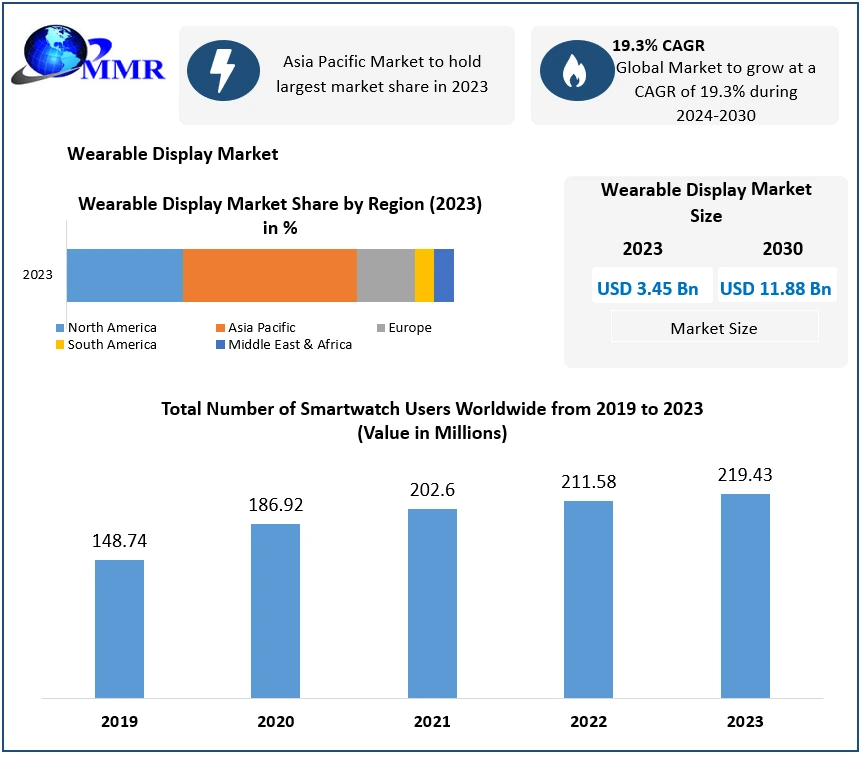
Global Wearable Display Market to Grow from USD 3.62 Billion in 2023 to USD 10.84 Billion by 2030 at 16.97% CAGR
Networking |
2026-06-10 07:48:44
 Advertise With Us
 About Us
 Terms And Conditions
 Privacy Policy
See All
Privacy Policy
See All

Upgrade to Pro
The modern vehicle is rapidly evolving into a sophisticated, aware machine, and its ability to perceive the world is the foundation of this revolution. The global ADAS and AD Sensor Suite Market is the epicenter of this transformation, encompassing the collection of advanced sensors that act as the eyes, ears, and nervous system for today's cars. This "sensor suite" is a carefully orchestrated combination of cameras, radar, LiDAR, and ultrasonic sensors that work in concert to power everything from basic safety alerts to fully autonomous driving (AD). As vehicles progress from simple Advanced Driver-Assistance Systems (ADAS) like lane-keeping assist and automatic emergency braking towards higher levels of autonomy, the complexity, capability, and sheer number of these sensors increase exponentially. They are no longer optional extras but have become a non-negotiable, core component of automotive design, safety, and technological advancement.
The strength of an ADAS/AD sensor suite lies in its diversity, as each sensor type has unique strengths and weaknesses. Cameras are the "eyes" of the system, excellent at classifying objects, reading traffic signs, and detecting lane markings, but they can be compromised by poor weather or low light. Radar is the dependable workhorse; it uses radio waves to accurately measure the distance and velocity of other objects and performs exceptionally well in rain, fog, and snow, though its resolution is lower than other sensors. LiDAR (Light Detection and Ranging) provides the most detailed "vision," creating a high-resolution, 3D point-cloud map of the vehicle's surroundings, making it superb for precise object detection and localization. Historically expensive, its cost is rapidly decreasing. Finally, ultrasonic sensors are the short-range specialists, using sound waves to detect objects at very close proximity, making them ideal for parking assistance and low-speed maneuvers.
The true magic of the sensor suite is not in the individual components but in how their data is combined through a process called sensor fusion. This is the "brain" of the vehicle's perception system, where sophisticated software algorithms take the overlapping data streams from the cameras, radar, and LiDAR to create a single, unified, and highly reliable model of the environment. For example, a camera may identify a shape as a pedestrian, the radar can confirm its speed and distance, and the LiDAR can precisely map its 3D form and trajectory. This creates a level of redundancy and confidence that is impossible to achieve with a single sensor type. If a camera is blinded by sun glare, the radar and LiDAR can still detect a car ahead. This fusion of data is computationally intensive but absolutely critical for making the safe, split-second decisions required for advanced driver assistance and autonomous driving.
The immense growth in the sensor suite market is propelled by a powerful combination of safety regulations, consumer demand, and the relentless pursuit of full autonomy. Global safety organizations like the NCAP (New Car Assessment Program) award higher safety ratings to vehicles equipped with ADAS features such as Automatic Emergency Braking (AEB) and Lane Keeping Assist, compelling automakers to make these sensor-based systems standard. Consumers, in turn, are increasingly demanding the safety and convenience these features provide. The ultimate driver, however, is the multi-billion-dollar race between automakers, technology companies, and Tier 1 suppliers to solve Level 4 and Level 5 autonomous driving. This push requires an exponential increase in sensor capability and count, moving from the handful of sensors in a Level 2 car to suites of 20, 30, or even more for a fully autonomous vehicle, driving massive market volume.
The future of the ADAS/AD sensor suite market is focused on making the technology more powerful, more integrated, and more affordable. A key trend is the development of solid-state LiDAR, which has no moving parts, making it more robust and vastly cheaper to produce for mass-market vehicles. Concurrently, we are seeing the emergence of "4D imaging radar," which adds elevation data to the traditional distance, velocity, and direction, giving it near-LiDAR-like capabilities in all weather conditions. The biggest challenge remains the software and processing power needed to handle the firehose of data these sensors produce, leading to a major architectural shift towards powerful, centralized domain controllers in vehicles. As the industry advances, the sensor suite will continue to evolve, becoming the indispensable foundation upon which the entire software-defined, autonomous future of mobility is being built.