English
 Arabic
 French
 Spanish
 Portuguese
 Deutsch
 Turkish
 Dutch
Dutch
 Italiano
 Russian
 Romaian
 Portuguese (Brazil)
 Greek
Greek
Automotive Diagnostic Tool Market Size, Industry Overview
Other |
2026-05-27 20:29:25
 Advertise With Us
 About Us
 Terms And Conditions
 Privacy Policy
Mostra tutti i risultati
Privacy Policy
Mostra tutti i risultati

Passa a Pro
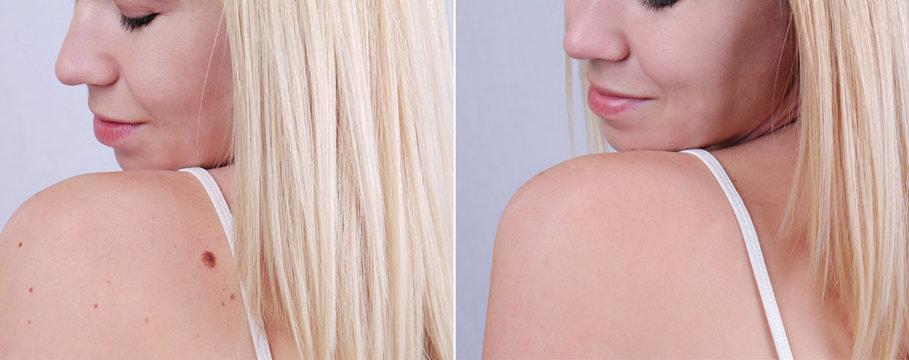
While terms are sometimes used interchangeably by laypersons, precise medical classification is vital for achieving successful clinical outcomes. When patients seek specialized Birthmark removal in Jeddah, dermatologists and vascular specialists conduct thorough evaluations to distinguish true vascular malformations from common vascular birthmarks. Understanding these structural differences ensures that patients receive the most accurate diagnosis and the most effective targeted laser therapy available.
Vascular malformations are structural anomalies of the blood vessels that arise during embryonic development due to errors in vascular morphogenesis, rather than simple cellular proliferation.
Congenital Presence: These lesions are always present at birth, even if they are faint or not immediately noticeable, and they grow proportionally in size alongside the child as they mature.
Lack of Spontaneous Regression: Unlike infantile hemangiomas, vascular malformations never undergo a spontaneous involution or shrinking phase; they persist and often become more prominent or textured over time.
Subtypes: This broad category includes capillary malformations (such as port-wine stains), venous malformations, lymphatic malformations, and complex arteriovenous malformations.
It is clinically critical to differentiate congenital malformations from common vascular tumors like infantile hemangiomas, which exhibit a distinct biological lifecycle.
Proliferation Phase: Hemangiomas typically appear shortly after birth and undergo a rapid growth phase during the first few months of life before eventually shrinking.
Malformation Stability: Vascular malformations do not have a rapid growth spurt driven by cellular multiplication; instead, their expansion is purely proportional to the individual's overall physical growth.
Flow Dynamics: Specialists categorize malformations by their blood flow characteristics—low-flow lesions (capillary and venous) versus high-flow lesions (arteriovenous)—which dictates whether laser therapy, sclerotherapy, or surgical intervention is required.
Managing vascular malformations requires sophisticated, energy-based technologies capable of targeting abnormal vessels at varying depths within the skin and subcutaneous tissue.
Pulsed Dye Lasers (PDL): Ideal for superficial capillary malformations, PDL delivers precise light energy absorbed by hemoglobin, safely collapsing superficial abnormal vessels.
Nd:YAG Laser Systems: For deeper venous malformations or thicker vascular structures, longer-wavelength lasers penetrate deep into the dermal tissue to coagulate and close large, abnormal blood vessels effectively.
Because vascular malformations are permanent structural conditions, treatment focuses on significant lightening, texture improvement, and symptom management.
Multi-Session Protocols: Patients require a customized series of spaced treatment sessions to progressively reduce vessel density and fade discoloration.
Specialized Consultation: A thorough diagnostic assessment ensures that high-flow malformations are identified early so appropriate multidisciplinary care can be coordinated safely.