English
 Arabic
 French
 Spanish
 Portuguese
 Deutsch
 Turkish
 Dutch
Dutch
 Italiano
 Russian
 Romaian
 Portuguese (Brazil)
 Greek
Greek
Custom PVC Patches UK
Crafts |
2026-07-04 09:13:06
 Advertise With Us
 About Us
 Terms And Conditions
 Política de Privacidade
Ver Todos
Política de Privacidade
Ver Todos

Atualize para o Pro
Selling through multiple channels has become the standard growth strategy for modern retail brands.
A customer may discover a product on Amazon, complete another purchase through a Shopify store, and later visit a physical outlet expecting the same pricing, product availability, and service experience.
While this creates more revenue opportunities, it also introduces operational complexity that many businesses underestimate.
As order volumes grow across marketplaces, direct-to-consumer websites, and offline stores, managing them through disconnected systems quickly becomes unsustainable.
This is where an Ecommerce Order Management System shifts from being a supporting tool to becoming the operational backbone of a growing retail business.
Adding a new sales channel is relatively straightforward. Managing inventory, orders, returns, and fulfillment across all channels simultaneously is considerably more challenging.
Every new platform generates its own orders, inventory updates, customer expectations, and fulfillment timelines. Without centralized coordination, teams spend more time reconciling information than serving customers.
An effective Ecommerce Order Management System allows retailers to manage channel expansion without multiplying operational complexity.
Customers rarely think about inventory systems until something goes wrong.
An item displayed as available but later cancelled because of stock shortages damages trust far more than an out-of-stock message displayed upfront.
Accurate inventory visibility enables businesses to:
Synchronize stock across Amazon, Shopify, warehouses, and physical stores.
Prevent overselling while maximizing available inventory.
Allocate products intelligently based on demand and fulfillment capacity.
When inventory remains consistent across every touchpoint, customer confidence naturally improves.
Winning an online order is only the beginning. The real challenge lies in fulfilling it efficiently.
Should an order ship from the nearest retail store, a regional warehouse, or a central distribution center?
The answer depends on inventory availability, delivery timelines, shipping costs, and operational priorities.
Without centralized order orchestration, these decisions often become manual, increasing delays and fulfillment expenses.
Intelligent order routing helps businesses optimize speed, cost, and inventory utilization simultaneously.
Many growing brands operate each sales channel independently because every platform performs well on its own.
The difficulty emerges when leadership attempts to manage the entire business.
Common operational challenges include:
Separate inventory records across online and offline channels.
Manual reconciliation of orders, returns, and stock movements.
Limited visibility into fulfillment performance across locations.
Inconsistent customer experiences between marketplaces and owned channels.
These inefficiencies rarely appear in daily operations but become increasingly expensive as order volumes continue to grow.
Technology should simplify multichannel operations instead of adding another management layer.
A modern Ecommerce Order Management System should unify inventory, marketplace integrations, Shopify operations, retail stores, warehouses, logistics partners, and customer order data within a single platform.
Real-time inventory synchronization, intelligent order routing, centralized dashboards, automation, configurable fulfillment rules, and end-to-end order visibility enable businesses to scale confidently while maintaining operational consistency.
The objective is not simply processing more orders. It is creating a connected fulfillment network capable of supporting sustainable business growth.
Retail customers no longer distinguish between online and offline businesses—they interact with one brand.
Delivering that unified experience requires connected operations behind the scenes.
Businesses that centralize inventory, automate order orchestration, and gain real-time visibility across every sales channel are better positioned to improve customer satisfaction while controlling operational costs.
As commerce continues evolving across marketplaces, brand websites, and physical stores, operational coordination will increasingly determine competitive success.
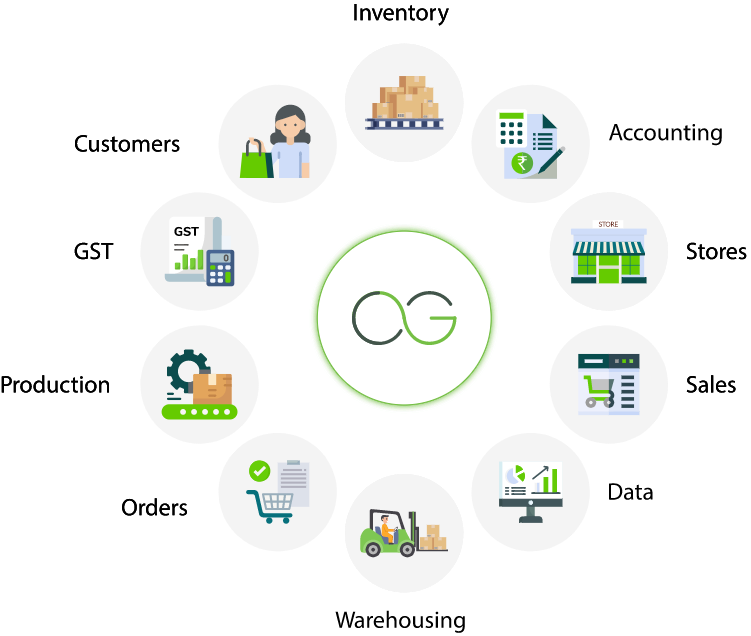
GinesysOne provides an integrated retail technology ecosystem that combines ERP, POS, Order Management, inventory management, analytics, GST compliance, and omnichannel capabilities into a unified platform.
Its Order Management capabilities help businesses connect marketplaces, brand websites, warehouses, and retail stores while supporting centralized inventory visibility and intelligent order fulfillment across multiple sales channels.