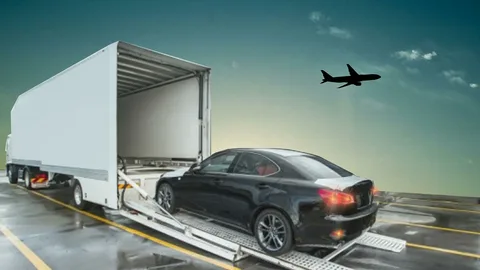
When the time comes to move a car, truck, or SUV across the country or just a few states away, the question of automobile shipping costs inevitably takes center stage. For many, this term feels like entering unfamiliar territory. But the reality is that automobile shipping costs follow a logical pattern based on concrete factors. Once you understand those factors, the entire process transforms from a guessing game into a straightforward logistics exercise. This guide walks you through everything that influences automobile shipping costs, empowering you to plan your vehicle’s journey with clarity and confidence.
The Distance Factor and Its Real Impact
The most obvious driver of automobile shipping costs is the number of miles your vehicle must travel. A short hop of two hundred miles between neighboring cities will never carry the same expense as a cross-country trek from the Atlantic to the Pacific. However, distance does not work in a simple straight line. Longer hauls often benefit from economies of scale. A carrier moving a vehicle two thousand miles can spread certain fixed costs across that distance, making the per-mile rate lower than on a very short trip. Conversely, extremely short moves may feel expensive relative to the miles because the carrier still needs to invest time in pickup, inspection, securement, and delivery. Understanding this nuance helps set realistic expectations about automobile shipping costs for different trip lengths.
How Vehicle Size and Weight Change the Equation
Not all automobiles are created equal in the eyes of a transporter. A lightweight compact car occupies minimal space on a multi-car trailer and adds relatively little to the carrier’s fuel burn. By contrast, a full-size pickup truck, a heavy luxury SUV, or a modified van takes up more room and adds significant weight. Some oversized vehicles, such as lifted trucks or those with extended cabs, may even require two parking spots on the trailer. When that happens, the carrier loses the ability to transport another paying vehicle. That loss of opportunity directly influences automobile shipping costs. Being honest about your vehicle’s dimensions and modifications from the very beginning ensures an accurate estimate and avoids surprises later.
The Open Versus Enclosed Transport Decision
Every car owner faces a fundamental choice that shapes automobile shipping costs more than almost any other single decision. Open transport is what you see on highways every day: those long, double-decker trailers carrying multiple cars in plain view. This method is efficient, reliable, and represents the most economical path for the vast majority of shipments. Because carriers can move eight to ten vehicles at once, the cost per car remains manageable. Enclosed transport, in contrast, shields your vehicle inside a covered trailer. This protects against road debris, weather, and prying eyes. It is the preferred method for exotic sports cars, vintage classics, and high-end luxury sedans. However, an enclosed trailer carries far fewer vehicles, and the equipment itself costs more to operate. As a result, enclosed automobile shipping costs can be substantially higher. The choice ultimately depends on your vehicle’s value and your personal tolerance for risk.
Seasonal Swings and Timing Tactics
Automobile shipping costs are not static throughout the year. They rise and fall with the rhythms of human migration. Spring and summer see families relocating, college students moving home, and snowbirds returning to northern climates. During these peak months, demand for carriers outstrips supply, and prices naturally climb. Winter often brings lower demand, particularly in regions with harsh weather. However, winter also introduces risks such as snowstorms and icy roads that can delay shipments. Savvy vehicle owners who can plan their moves during the shoulder seasons of early autumn or late winter may find more favorable automobile shipping costs. Another timing tactic involves booking well in advance. Rushing a last-minute shipment forces carriers to rearrange existing routes, which almost always carries a premium. Giving yourself three to four weeks of lead time allows for better planning and often results in more predictable rates.
The Influence of Pickup and Delivery Locations
Where your journey begins and ends plays a surprisingly large role in automobile shipping costs. Major metropolitan areas with dense populations and well-developed highway networks are dream locations for carriers. They can easily find loads going in both directions, keeping their trailers full and their wheels turning. Rural locations, small towns, or areas far from interstate highways present more challenges. A carrier may have to deviate from an efficient route or deadhead many miles without a paying load. In extreme cases, remote areas like the mountains or certain island communities require additional coordination. Many customers find that choosing a convenient pickup or drop-off point near a major highway interchange or a large truck stop helps streamline the process. Some even opt for terminal-to-terminal shipping, where they leave their vehicle at a secure lot and retrieve it from another lot near their destination. This approach removes local driving from the carrier’s responsibility and can make automobile shipping costs more competitive.
How Vehicle Condition Prepares You for Success
The condition of your automobile on the day of pickup directly affects the smoothness of the shipping process. A clean, well-maintained car with properly inflated tires, no fluid leaks, and a working battery is straightforward to load and secure. Carriers can quickly inspect it, document its condition, and position it on the trailer. An inoperable vehicle that does not start, roll, or steer adds significant labor. The carrier may need to use a winch, push the car, or maneuver it with specialized equipment. That extra time and effort translates into higher automobile shipping costs. Similarly, a car with extremely low ground clearance, such as a lowered sports car, may require special ramps or extra care during loading. Being transparent about your vehicle’s operational status and any unique characteristics ensures that carriers can prepare appropriately and that you receive accurate information.
Making Confidence Your CoPilot
Understanding automobile shipping costs transforms what could be a stressful experience into a manageable plan. By recognizing the roles of distance, vehicle size, transport type, season, location, and vehicle condition, you gain the ability to ask smart questions and make informed choices. The goal is not to find the cheapest option but to find the right balance of reliability, safety, and value for your specific situation. Every vehicle tells a story, and moving that story to a new destination should feel like a step forward, not a leap into the unknown. With knowledge as your guide, your car will arrive exactly where it needs to be.
 English
 Arabic
 French
 Spanish
 Portuguese
 Deutsch
 Turkish
 Dutch
Dutch
 Italiano
 Russian
 Romaian
 Portuguese (Brazil)
 Greek
Greek
 Advertise With Us
 About Us
 Terms And Conditions
 Politique de confidentialité
Tout voir
Politique de confidentialité
Tout voir