English
 Arabic
 French
 Spanish
 Portuguese
 Deutsch
 Turkish
 Dutch
Dutch
 Italiano
 Russian
 Romaian
 Portuguese (Brazil)
 Greek
Greek
FYP Book Where I Should've Been by Max Monroe
Shopping |
2026-07-03 06:26:35
 Advertise With Us
 About Us
 Terms And Conditions
 Политика конфиденциальности
Смотреть все
Политика конфиденциальности
Смотреть все

Обновить до Про
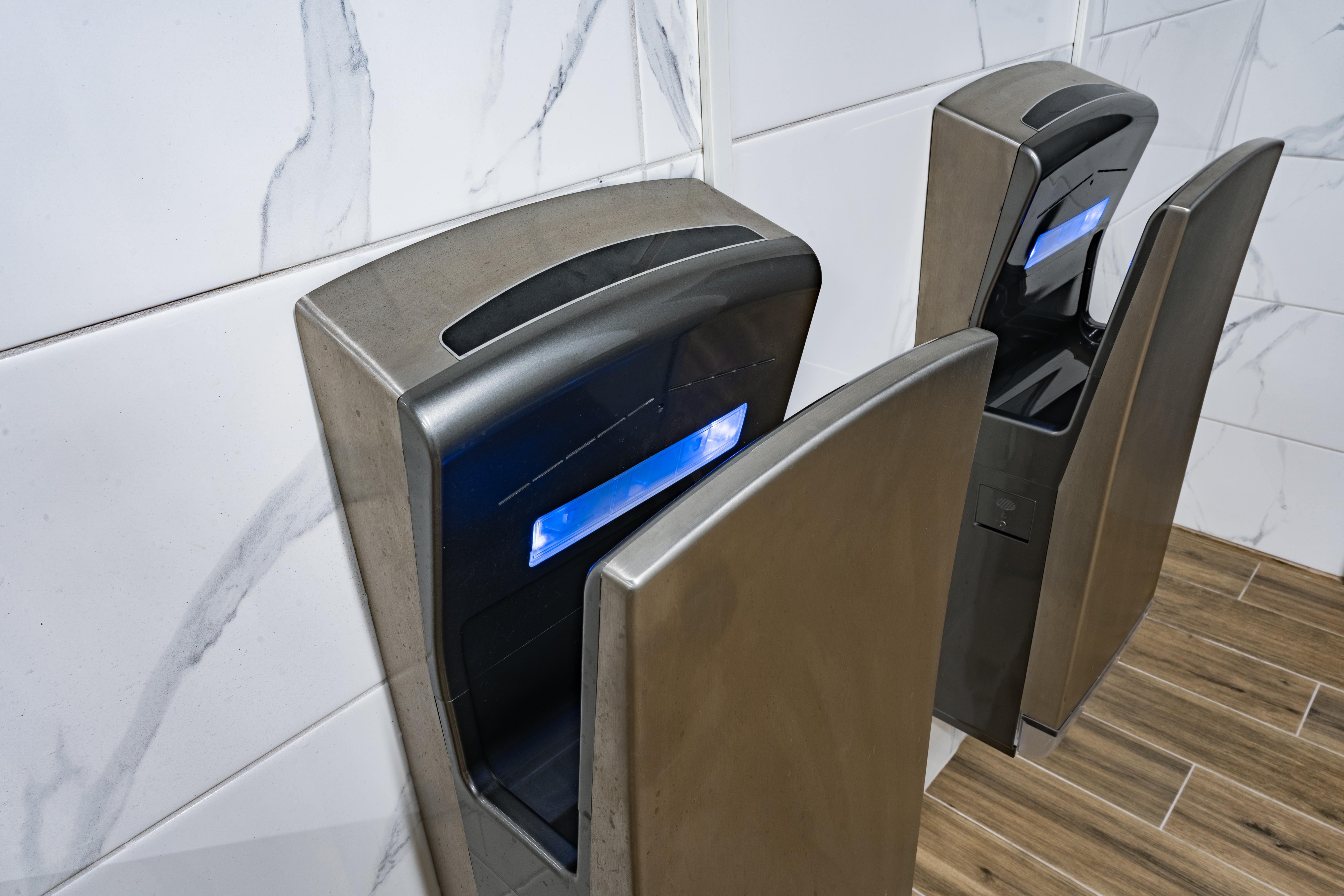
Accessibility is an essential part of designing safe, functional, and welcoming public restrooms. From shopping malls and schools to airports and office buildings, every visitor should be able to use restroom facilities comfortably and independently. One fixture that often receives less attention, but plays an important role in accessibility, is the hand dryer.
Choosing the right ADA hand dryers ensures that your restroom not only delivers fast, hygienic hand drying but also supports accessibility standards for people with disabilities.
In this guide, we'll explain what ADA-compliant hand dryers are, the features to look for, installation considerations, and the best types of hand dryers for public restrooms.
ADA hand dryers are commercial hand dryers that are installed in accordance with the Americans with Disabilities Act (ADA) Standards for Accessible Design. While the hand dryer itself may include accessibility-friendly features, proper installation is equally important for meeting ADA requirements.
ADA compliance focuses on ensuring restroom fixtures are accessible for individuals who use wheelchairs, have limited mobility, or have visual impairments.
A compliant installation considers:
Accessible restroom design benefits everyone—not just individuals with disabilities.
Properly installed ADA hand dryers help provide:
Businesses that prioritize accessibility also demonstrate their commitment to inclusivity and customer care.
Although specific requirements depend on the restroom layout, several important ADA considerations apply.
The hand dryer should be mounted within the ADA-recommended reach range so users can comfortably activate and use the unit.
Proper mounting height allows people using wheelchairs to access the dryer without difficulty.
Objects projecting too far into walkways can create hazards for individuals with visual impairments.
Many facilities choose recessed or low-profile hand dryers because they minimize wall protrusion while helping maintain accessible circulation paths.
Users should have sufficient space to approach and operate the hand dryer comfortably.
Clear floor space is especially important for wheelchair accessibility.
Automatic infrared sensors eliminate the need for buttons or manual controls, making the dryer easier for everyone to use.
Touch-free activation also improves restroom hygiene.
Not every commercial hand dryer offers the same accessibility benefits.
When comparing models, prioritize the following features.
Hand dryers that extend less from the wall help improve accessibility and reduce the risk of accidental contact.
Recessed hand dryers are particularly popular in high-traffic public facilities.
Touchless technology allows users to activate the dryer simply by placing their hands beneath the airflow.
This improves both convenience and hygiene.
Efficient drying encourages users to complete the handwashing process while minimizing waiting time.
Lower operating noise creates a more comfortable restroom experience, particularly for children and individuals with sensory sensitivities.
Modern ADA hand dryers often feature energy-efficient motors that reduce electricity consumption while maintaining excellent drying performance.
Commercial-grade stainless steel or vandal-resistant housings provide long-lasting reliability in busy public restrooms.
Rather than focusing on individual brands, it's helpful to understand which types of hand dryers best support accessibility.
These models are installed inside the wall cavity, reducing wall projection and improving accessibility.
Ideal for:
Slim surface-mounted models provide easier installation while maintaining a reduced wall projection.
Ideal for:
These dryers combine automatic activation with fast drying performance.
Ideal for:
Premium commercial hand dryers with HEPA filtration provide cleaner airflow while maintaining touchless operation.
Ideal for:
ADA-compliant hand dryers are recommended for nearly every type of public restroom, including:
Any location serving the public should consider accessibility during restroom planning.
Installing ADA-compliant hand dryers provides numerous operational and user benefits.
Everyone can use the restroom more comfortably and independently.
Touchless operation minimizes contact with shared surfaces.
Hand dryers eliminate the need for disposable paper towels, supporting more sustainable restroom operations.
Businesses save money on paper towel purchases, storage, and waste disposal.
Sleek hand dryers contribute to a clean, professional appearance.
Commercial-grade construction ensures reliable performance in high-traffic facilities.
Even high-quality hand dryers can fail to meet accessibility expectations if installed incorrectly.
Avoid these common errors:
Careful planning helps ensure long-term accessibility.
Before purchasing, ask these questions:
Selecting the right model depends on your facility's size, traffic, and accessibility goals.
A hand dryer is only one component of an accessible restroom.
Other important accessibility features include:
When all restroom fixtures are designed together, the result is a safer and more inclusive environment.
Choosing the best ADA hand dryers for public restrooms means considering accessibility, hygiene, durability, and long-term efficiency. Touchless activation, recessed or low-profile designs, fast drying performance, and energy-efficient operation all contribute to a restroom that serves every visitor more effectively.
Whether you're designing a new facility or renovating an existing one, investing in ADA-compliant hand dryers helps create a more welcoming restroom while supporting accessibility standards and improving the overall user experience.
An ADA-compliant hand dryer is installed according to accessibility standards, including proper mounting height, wall projection, clear floor space, and reach range requirements.
Yes. Recessed hand dryers reduce wall projection, making them an excellent choice for maintaining accessible circulation paths in public restrooms.
Yes. Automatic infrared sensors eliminate the need for manual controls, making hand dryers easier to use while also improving hygiene.
Schools, hospitals, airports, hotels, restaurants, office buildings, government facilities, shopping centers, libraries, and other public spaces can all benefit from ADA-compliant hand dryers.
Yes. Many ADA-compliant commercial hand dryers are energy efficient and eliminate paper towel waste, helping businesses reduce maintenance, supply purchases, and long-term operating costs while maintaining accessible restroom facilities.