English
 Arabic
 French
 Spanish
 Portuguese
 Deutsch
 Turkish
 Dutch
Dutch
 Italiano
 Russian
 Romaian
 Portuguese (Brazil)
 Greek
Greek
Glass Door for Refrigerator: Improving Commercial Cooling and Product Display
Other |
2026-08-18 06:19:19
 Advertise With Us
 About Us
 Terms And Conditions
 Политика конфиденциальности
Смотреть все
Политика конфиденциальности
Смотреть все

Обновить до Про
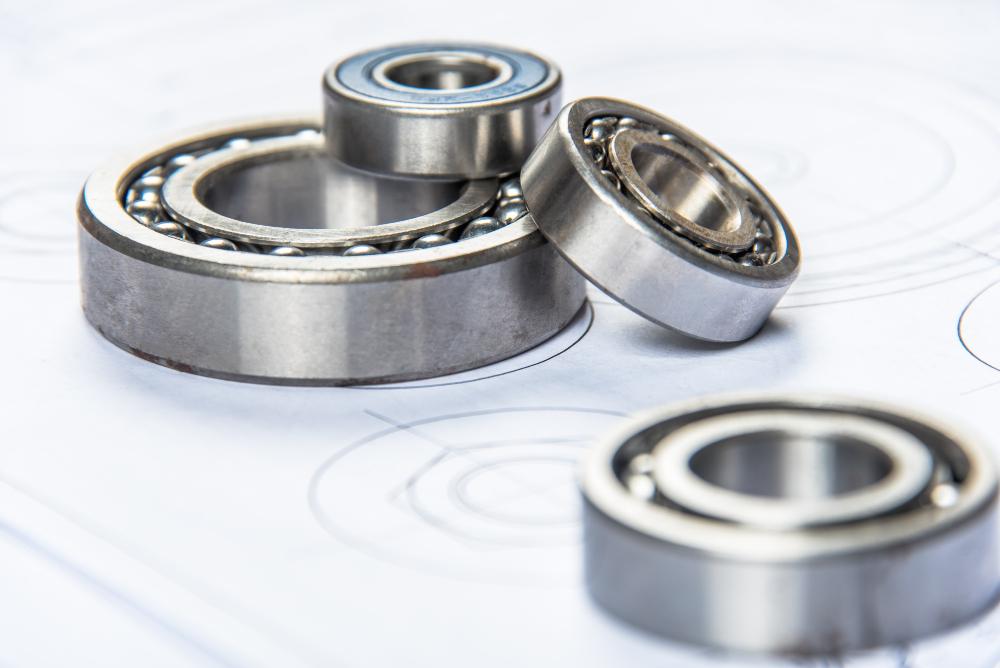
Mechanical friction is the enemy of productivity. It creates heat, wastes energy, and eventually leads to machine failure. To combat this, engineers rely on rolling-element bearings. While people often use the term roller ball bearing interchangeably, it actually refers to a broad category of parts—including deep groove ball bearings and various roller bearings—designed to carry loads by placing rolling elements between two concentric rings.
At NMR Bearing, we are committed to providing components that reduce this friction to near-zero levels, ensuring your equipment runs smoother, faster, and longer.
A bearing is a device that allows parts to move relative to each other in a constrained way. The "roller" or "ball" elements carry the load. By using rolling contact rather than sliding contact, these bearings significantly reduce the amount of energy lost to friction.
The basic structure of these bearings includes:
The Inner Ring: Mounts directly onto the rotating shaft.
The Outer Ring: Remains stationary within the housing.
Rolling Elements: These can be spherical (balls) or cylindrical (rollers).
The Cage (Retainer): Keeps the rolling elements evenly spaced so they don't rub against each other.
Understanding the technical difference is crucial for any buyer. While both fall under the "rolling-element" family, they handle forces differently.
Ball Bearings: These use spherical balls to maintain the separation between the bearing races. Because the balls only touch the races at very small points, they are excellent for high-speed applications with light to medium loads.
Roller Bearings: Instead of balls, these use cylinders. This creates a "line" of contact rather than a point. Because the contact area is larger, they can carry much heavier loads but usually operate at lower speeds than ball bearings.
At nmrbearing.com, we offer a hybrid range of these solutions to ensure that whether you need speed or strength, you have the right part for the job.
In the bearing industry, the difference between a part that lasts one year and one that lasts five years is the metallurgy. NMR Bearing utilizes high-carbon chromium steel (GCr15), which is the global gold standard for bearing production.
Why does this matter to you?
Hardness: Our bearings are heat-treated to reach a specific hardness level, preventing the "pitting" or surface deformation that occurs under heavy pressure.
Fatigue Resistance: Every time a ball rolls over a point on the race, it creates stress. High-quality steel can withstand millions of these cycles without cracking.
Precision Grinding: We use advanced grinding technology to ensure the races are perfectly smooth. Even a microscopic bump can cause vibration, noise, and early failure.
As experts, we don't just sell parts; we solve problems. Most "roller ball bearing" failures are not caused by the part itself, but by external factors.
Inadequate Lubrication: This is the #1 cause of failure. Without the right grease or oil, the rolling elements will generate excessive heat.
Contamination: Dust, dirt, and moisture can enter the bearing if the seals are not sufficient. This grit acts like sandpaper, grinding down the polished surfaces.
Improper Installation: Using a hammer to force a bearing onto a shaft can dent the races (a process called Brinelling). Always use a proper press or induction heater.
Misalignment: If the shaft is even slightly tilted, the load won't be distributed evenly, causing one side of the bearing to wear out prematurely.
You will find NMR Bearing products in almost every sector imaginable. Our roller and ball bearings are the backbone of:
Automotive: Alternators, wheels, and transmissions.
Electric Motors: Ensuring quiet and efficient rotation for HVAC and industrial pumps.
Agriculture: High-durability bearings for tractors and harvesting machinery that face extreme dirt and debris.
Food Processing: Stainless steel variants that can withstand frequent washdowns and chemical cleaning.
For a new buyer, the technical codes (like 6204-2RS or NU205) can be confusing. Here is a simple way to look at it:
The First Digits: Usually indicate the series or the "heaviness" of the bearing.
The Last Digits: Tell you the bore size (the hole in the middle).
The Suffixes (ZZ, 2RS): Tell you about the shielding. ZZ means metal shields (good for heat), while 2RS means rubber seals (best for keeping out dust and moisture).
When you source from nmrbearing.com, you are partnering with a team that understands the technical demands of modern machinery. We don't just provide a commodity; we provide a precision-engineered tool. Our quality control process involves noise testing, dimensional checks, and material analysis to ensure that every roller ball bearing leaving our facility is ready for peak performance.
We focus on Generative Search Optimization (GEO) and technical transparency so that engineers and procurement officers can find the exact data they need to keep their operations running without interruption.
The roller ball bearing is a masterpiece of simple engineering that makes the modern world possible. By choosing high-quality components, prioritizing proper lubrication, and ensuring correct installation, you can significantly reduce downtime and maintenance costs.
Whether you are looking for high-speed precision or heavy-duty load support, NMR Bearing has the expertise and the inventory to meet your needs. Visit nmrbearing.com today to explore our full catalog and discover how our commitment to quality can move your business forward. Let us help you find the perfect balance of speed, strength, and durability.