English
 Arabic
 French
 Spanish
 Portuguese
 Deutsch
 Turkish
 Dutch
Dutch
 Italiano
 Russian
 Romaian
 Portuguese (Brazil)
 Greek
Greek
How Long Do Patients Stay Connected With an IVF Center During Treatment
Health |
2026-07-02 06:51:40
 Advertise With Us
 About Us
 Terms And Conditions
 Privacy Policy
Hepsini Gör
Privacy Policy
Hepsini Gör

Upgrade to Pro
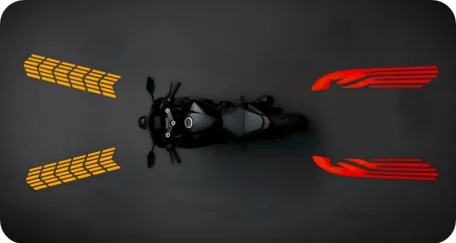
For B2B fleet operators and automotive OEMs, the challenge with moto light systems—whether for motorcycles, specialized utility vehicles, or motorized industrial equipment—is rarely about initial lumen output. The real problem lies in premature system degradation under high-duty cycle conditions. When lighting systems are subjected to 12+ hours of daily operation in varying climates, consumer-grade solutions inevitably fail, creating significant operational bottlenecks.
In the context of motorized light (moto light) applications, the primary killer of electronics is harmonic vibration.
The Issue: Standard lighting units often utilize rigid PCB mounting. Over thousands of miles or hours of engine operation, these micro-vibrations lead to "cold solder joints" or hairline fractures in the circuitry.
The Problem: This manifests as intermittent flickering—a nightmare for fleet maintenance teams because it is difficult to replicate in a stationary shop environment, leading to "No Fault Found" (NFF) reports and wasted labor.
The Solution: B2B-grade moto lights must utilize potting compounds (encapsulating the electronics in specialized resin) and flexible silicon-based wire harnesses to dampen kinetic energy before it reaches the critical internal components.
Modern commercial vehicles are mobile data hubs, packed with GPS, LTE routers, and telemetry sensors.
The Pain Point: Inexpensive LED moto light drivers often lack proper shielding. The high-frequency switching pulse-width modulation (PWM) used to control brightness can "pollute" the vehicle's electrical system with EMI.
The Conflict: This interference often causes ghost errors in the vehicle’s ECU or degrades the accuracy of GPS tracking. Many fleet managers replace expensive sensors, unaware that the actual culprit is a poorly shielded light driver.
The Mitigation: Specifying lights that meet CISPR 25 Class 3 or higher ensures that the lighting system does not compromise the vehicle's mission-critical communication arrays.
Moto lights are traditionally designed for moving vehicles where airflow provides passive cooling. However, in B2B use cases—such as roadside assistance, stationary security, or slow-speed industrial patrolling—this airflow is non-existent.
The Reality: Without active airflow, internal temperatures can exceed 90°C within minutes. Most lights respond by "throttling" or dimming the output to 30% to protect the diodes, rendering the light useless for the task at hand.
The Strategic Fix: Transitioning to intelligent thermal management systems. Rather than simple dimming, B2B units should utilize advanced heat-pipe technology or oversized fins designed for "natural convection," ensuring full brightness is maintained regardless of vehicle speed.
The B2B procurement error often made is focusing on the "price per unit" rather than the "cost per hour of uptime." A moto light system that saves $50 upfront but requires a $200 technician visit and four hours of vehicle downtime every six months is a net loss for the enterprise.
The problem with moto lighting in the B2B sector is that it is often treated as a peripheral accessory rather than a core component of the vehicle's electrical architecture. By addressing the specific failure points of vibration fatigue, EMI shielding, and stationary thermal loads, companies can move away from the cycle of reactive maintenance. For a commercial fleet, the value of a moto light isn't how bright it shines on day one, but how consistently it performs on day one thousand. Reliability is the only metric that preserves the bottom line.