English
 Arabic
 French
 Spanish
 Portuguese
 Deutsch
 Turkish
 Dutch
Dutch
 Italiano
 Russian
 Romaian
 Portuguese (Brazil)
 Greek
Greek
Trending Read Poor Economics: A Radical Rethinking of the Way to Fight Global Poverty by Abhijit V. Banerjee
Shopping |
2026-07-01 05:52:00
 Advertise With Us
 About Us
 Terms And Conditions
 Πολιτική Ιδιωτικότητας
δες τα όλα
Πολιτική Ιδιωτικότητας
δες τα όλα

Upgrade to Pro
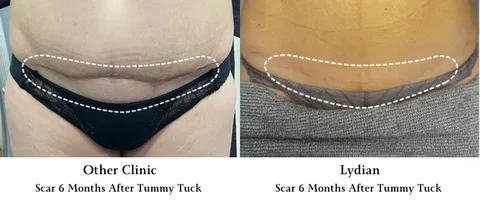
For individuals who have struggled with stubborn abdominal laxity, a Tummy tuck in Jeddah offers a proven pathway to regaining a smooth, firm, and contoured midsection. This surgical procedure, known professionally as an abdominoplasty, is specifically designed to address the physical changes that often accompany significant weight loss, pregnancy, or the natural progression of aging. By targeting both excess skin and underlying muscle laxity, this operation provides a transformative solution that diet and exercise alone often cannot achieve.
The fundamental goal of a tummy tuck is to restore structural integrity to the abdominal wall and remove redundant tissue. The procedure typically begins with a carefully planned incision, usually placed low on the abdomen so that any resulting scar can be easily hidden by clothing. Through this incision, the surgeon performs two critical tasks: muscle repair and skin excision.
Many people develop diastasis recti, a condition where the abdominal muscles separate due to pressure or weight changes. During the surgery, these muscles are brought back together and sutured in a tighter position, effectively acting as an internal corset. Once the foundation is firm, the skin is pulled taut, and the excess portion is removed. The remaining skin is then meticulously re-draped to ensure a natural, smooth appearance. The belly button is also often repositioned or reconstructed to maintain a natural aesthetic proportion to the newly tightened abdomen.
Ideal candidates for this procedure are generally healthy individuals who have reached a stable body weight but remain bothered by a protruding or sagging midsection. It is important to emphasize that a tummy tuck is not a weight-loss tool; it is a body-sculpting intervention. Candidates should be non-smokers, as smoking can significantly impair the healing process and increase the risk of complications.
A thorough consultation is the first step in the process. During this time, the specific anatomy of the patient is evaluated. Some individuals may only require a "mini" tummy tuck if their concerns are limited to the area below the navel, while others may benefit from a full abdominoplasty. By assessing the degree of skin elasticity and muscle laxity, a personalized surgical plan can be developed to align with the patient’s specific aesthetic vision.
Understanding the recovery timeline is essential for anyone undergoing a tummy tuck. Immediately post-surgery, patients will feel tight and may experience soreness, which is well-managed with professional care and medication. A compression garment is a standard part of the recovery phase, as it provides essential support, reduces swelling, and helps the body conform to its new shape.
While the physical results of the surgery are immediate, the final aesthetic outcome evolves over several months as the body heals internally and external swelling subsides. Patients are advised to move gently in the initial days but must avoid heavy lifting or high-impact exercise for at least six to eight weeks. Prioritizing rest, maintaining a balanced diet, and following all post-operative instructions ensures that the healing process is efficient and that the long-term results of the tummy tuck are maintained for years to come.