English
 Arabic
 French
 Spanish
 Portuguese
 Deutsch
 Turkish
 Dutch
Dutch
 Italiano
 Russian
 Romaian
 Portuguese (Brazil)
 Greek
Greek
Trending on BookTok The May House: A Novel by Jillian Cantor
Party |
2026-06-15 05:16:39
 Advertise With Us
 About Us
 Terms And Conditions
 Política de Privacidade
Ver Todos
Política de Privacidade
Ver Todos

Atualize para o Pro
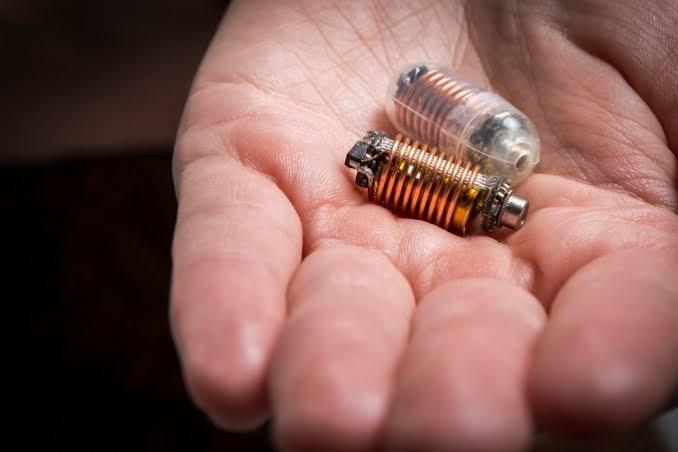
Healthcare is steadily moving toward technologies that can provide more accurate, continuous, and less invasive patient monitoring. Among these innovations, ingestible sensors have emerged as a promising solution that enables clinicians to gather physiological data from inside the human body without relying on traditional diagnostic procedures. These miniature electronic devices are designed to be swallowed safely, offering real-time insights into gastrointestinal health, medication adherence, and various physiological conditions.
The growing interest in smart medical devices has encouraged healthcare providers, researchers, and technology companies to invest in next-generation monitoring solutions. According to a recent analysis of smart capsule technologies by MarkNtel Advisors, the global ingestible sensors landscape is expected to witness steady expansion during the 2026–2032 forecast period, reflecting increasing adoption across medical applications.
Unlike conventional diagnostic techniques that often require hospital visits or invasive procedures, ingestible sensors allow physicians to collect valuable internal health information while improving patient comfort. Their ability to transmit data wirelessly to external receivers also supports remote healthcare models, making continuous monitoring more practical for patients with chronic conditions.
Ingestible sensors are tiny electronic devices encapsulated within biocompatible materials that can safely travel through the digestive tract after being swallowed. Depending on their design, these devices can measure parameters such as temperature, pH levels, pressure, imaging data, or medication adherence before naturally leaving the body.
The collected information is transmitted to wearable receivers, smartphones, or cloud-based healthcare platforms, enabling clinicians to review patient data in near real time. This capability supports faster diagnosis, personalized treatment plans, and more informed clinical decision-making.
Healthcare systems worldwide are managing a growing number of patients living with chronic diseases, gastrointestinal disorders, diabetes, and digestive health conditions. Continuous monitoring is becoming increasingly important for detecting disease progression while reducing unnecessary hospital admissions.
Ingestible sensors provide an attractive alternative to repeated invasive diagnostic procedures. Instead of relying solely on endoscopy or periodic clinical visits, physicians can receive ongoing physiological information that helps monitor patient health more effectively. This approach may improve treatment outcomes while enhancing patient convenience.
As sensor accuracy continues to improve, additional applications are expected to emerge across personalized medicine, preventive healthcare, and digital therapeutics.
Artificial intelligence is increasingly complementing ingestible sensor technology by helping physicians interpret large volumes of physiological data. Machine learning algorithms can identify abnormal patterns, highlight potential health risks, and assist clinicians in making faster diagnostic decisions.
The integration of AI with digital health platforms also enables predictive analytics, allowing healthcare providers to intervene before certain medical conditions worsen. This combination of intelligent software and ingestible devices is gradually transforming how continuous patient monitoring is performed across healthcare systems. Research has highlighted ongoing advances in capsule electronics, imaging, wireless telemetry, and intelligent data analysis that continue to expand the capabilities of ingestible medical devices.
Despite strong technological progress, several challenges remain. Regulatory approvals, patient safety, device reliability, battery life, cybersecurity, and manufacturing costs continue to influence commercialization. Healthcare organizations must also ensure that patient-generated health data is securely transmitted and stored while maintaining compliance with medical privacy regulations.
Clinical validation remains another important factor. Long-term studies are necessary to demonstrate consistent performance across diverse patient populations before widespread adoption becomes standard practice.
As healthcare increasingly embraces connected medical technologies, ingestible sensors are expected to become an important component of precision medicine and remote patient monitoring. Improvements in miniaturization, wireless communication, battery efficiency, and artificial intelligence are likely to expand their clinical usefulness across multiple specialties.
According to MarkNtel Advisors, the global ingestible sensors market is projected to grow from approximately USD 1.18 billion in 2026 to around USD 2.0 billion by 2032, representing a CAGR of 9.19% during the forecast period. Healthcare and medical applications are anticipated to remain the leading industry vertical supporting this growth.
Ingestible sensors represent a significant advancement in digital healthcare by combining medical diagnostics, wireless communication, and intelligent data analysis into a single patient-friendly solution. As healthcare providers continue to prioritize preventive care, continuous monitoring, and personalized treatment strategies, these innovative devices are positioned to play an increasingly valuable role in future medical practice. Continued research, technological refinement, and regulatory progress will determine how rapidly ingestible sensors become part of routine healthcare worldwide.