English
 Arabic
 French
 Spanish
 Portuguese
 Deutsch
 Turkish
 Dutch
Dutch
 Italiano
 Russian
 Romaian
 Portuguese (Brazil)
 Greek
Greek
How Competitive Forces Shape the Factory Automation MRO Services Market
Other |
2026-06-25 11:08:06
 Advertise With Us
 About Us
 Terms And Conditions
 Privacy Policy
TOON ALLES
Privacy Policy
TOON ALLES

Upgrade to Pro
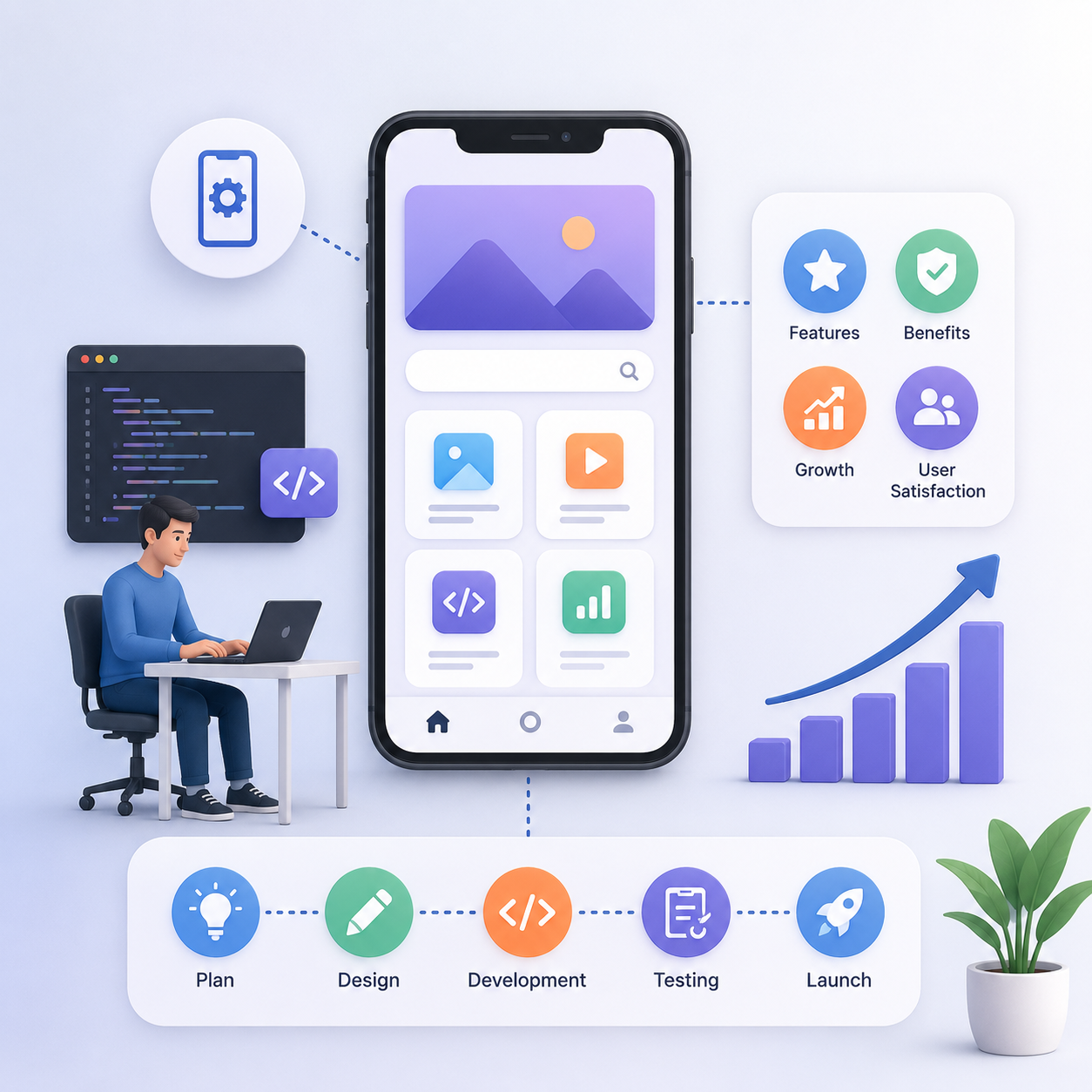
The rapid growth of online shopping has transformed the way businesses connect with customers. Today, consumers expect a seamless shopping experience that is fast, secure, and accessible from their smartphones. This shift has made eCommerce mobile app development a strategic investment for businesses looking to increase sales, improve customer engagement, and strengthen brand loyalty.
Whether you're a startup launching your first online store or an established retailer expanding your digital presence, understanding the complete app development process is essential. This guide walks you through every stage of eCommerce mobile app development—from validating your idea to successfully launching and maintaining your application.
Businesses across industries are adopting eCommerce mobile app development to deliver personalized shopping experiences and stay competitive in an increasingly digital marketplace.
Some of the key benefits include:
Unlike websites, mobile applications provide a more personalized and intuitive experience, encouraging customers to return and make repeat purchases.
Developing a successful eCommerce application requires careful planning and execution. Each stage contributes to the overall performance, security, and usability of the app.
Before writing a single line of code, analyze your target audience, competitors, and market trends.
Research should answer questions like:
Comprehensive research helps identify opportunities and reduces development risks.
Every eCommerce app should have clear objectives.
Examples include:
Clearly defined goals guide the entire development process.
Businesses generally choose between:
Cross-platform technologies allow businesses to launch on multiple platforms while reducing development time and costs.
The success of any shopping application depends largely on its features. Customers expect convenience, speed, and security throughout their shopping journey.
Important features include:
Instead of adding every possible feature, businesses should prioritize functionality that delivers the greatest value to users.
Understanding eCommerce app development cost is one of the first considerations for any business planning a mobile application.
The overall investment depends on several factors, including:
Simple applications with basic shopping functionality cost significantly less than enterprise-grade platforms with advanced integrations.
Developing separate native applications for Android and iOS generally requires a larger budget compared to cross-platform development.
Custom, user-friendly interfaces improve customer satisfaction but may increase development costs.
Features such as:
can impact the total project budget.
A scalable backend capable of handling growing traffic, customer data, and inventory management is essential for long-term success.
Payment gateways, shipping providers, analytics tools, CRM systems, and marketing platforms often require API integrations, adding to development complexity.
Businesses can reduce initial investment by launching a Minimum Viable Product (MVP) with essential features and expanding the application over time.
The technology stack influences your application's speed, scalability, and maintenance.
Common frontend technologies include:
Backend technologies often include:
Databases may include:
Cloud infrastructure enables secure storage, scalability, and high application availability.
Professional eCommerce app development services typically cover the complete application lifecycle, helping businesses transform their ideas into fully functional mobile solutions.
These services generally include:
Working with experienced development professionals ensures that every stage of the project is handled efficiently while maintaining high-quality standards.
Security is critical for any eCommerce application because it handles sensitive customer information, payment details, and personal data.
Essential security measures include:
Building customer trust starts with protecting their information.
A successful shopping app should make purchasing products as easy as possible.
Focus on:
Reducing unnecessary steps during checkout significantly improves conversion rates.
Thorough testing ensures the application performs reliably across different devices and operating systems.
Testing should include:
Identifying and resolving issues before launch minimizes negative customer experiences.
Launching an application involves more than publishing it on app stores.
A successful launch strategy includes:
Generating early downloads and positive reviews helps improve app visibility.
The launch is only the beginning of your mobile app journey.
Regular maintenance includes:
Continuous improvement keeps your application relevant and competitive.
Technology continues to reshape online shopping experiences. Businesses should stay informed about emerging innovations to remain competitive.
Some major trends include:
Adopting these technologies can improve customer satisfaction and create new opportunities for business growth.
Building a successful shopping application requires strategic planning, customer-focused design, reliable technology, and continuous optimization. Investing in eCommerce mobile app development enables businesses to enhance customer experiences, improve operational efficiency, and increase online sales.
Understanding eCommerce app development cost helps businesses plan realistic budgets while prioritizing the features that matter most. Choosing comprehensive eCommerce app development services ensures that every stage—from idea validation and design to deployment and ongoing maintenance—is managed professionally.
As consumer expectations continue to evolve, businesses that invest in secure, scalable, and user-friendly eCommerce applications will be better positioned to grow, strengthen customer relationships, and thrive in the competitive digital marketplace.