English
 Arabic
 French
 Spanish
 Portuguese
 Deutsch
 Turkish
 Dutch
Dutch
 Italiano
 Russian
 Romaian
 Portuguese (Brazil)
 Greek
Greek
Floor Tiling Dubai | Professional Tile Installation Services
Other |
2026-07-01 06:23:55
 Advertise With Us
 About Us
 Terms And Conditions
 Política de privacidade
Ver todos
Política de privacidade
Ver todos

Atualizar para Plus
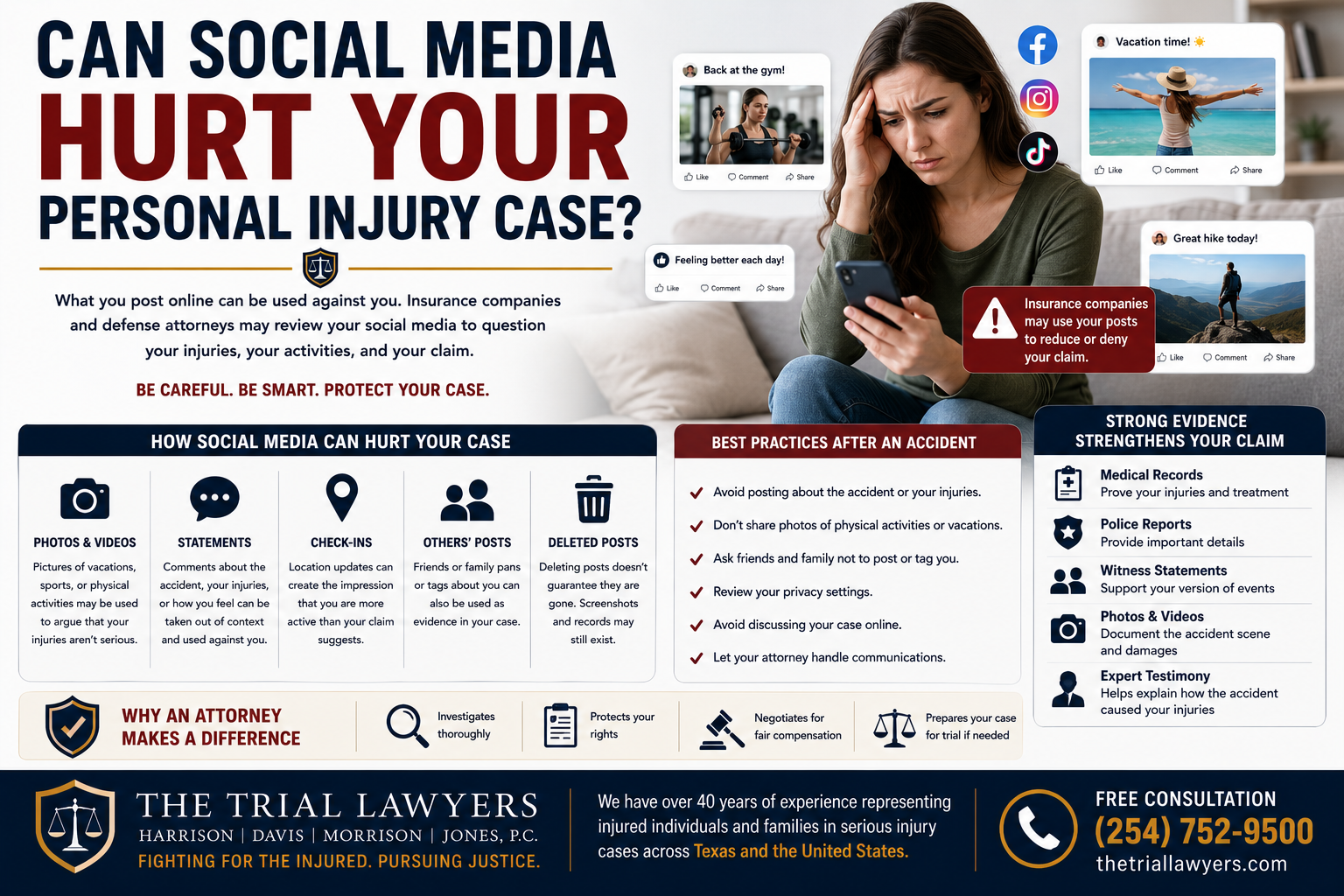
After an accident, it's natural to want to update friends and family about what happened or share details about your recovery online. However, what you post on social media can sometimes become evidence in a personal injury claim. Even seemingly harmless photos, comments, or check-ins may be used to challenge your injuries or reduce the value of your claim. Speaking with experienced personal injury attorneys early in the claims process can help you understand how social media activity may affect your case and how to avoid common mistakes.
Insurance companies and defense attorneys often investigate accident claims thoroughly. As part of that process, they may review publicly available information on social media platforms.
Posts, photos, videos, and comments can sometimes be used to argue that:
Your injuries are less serious than claimed.
Your physical abilities are better than reported.
You have recovered more quickly than expected.
Your version of events is inconsistent.
Even if a post is taken out of context, it may still become part of the legal process.
In many cases, yes.
Insurance adjusters may review public profiles on platforms such as:
TikTok
X (formerly Twitter)
While private account settings may provide additional protection, they do not necessarily prevent certain content from becoming discoverable during litigation.
It's generally safest to assume that anything posted online could eventually be reviewed.
Not every post will damage a personal injury claim, but some types of content can create unnecessary challenges.
Pictures of vacations, sporting events, hiking, exercising, or lifting heavy objects may be used to question the severity of your injuries.
Even if the photo was taken before the accident or only captures a brief moment, it could be misunderstood.
Avoid discussing:
Who caused the accident
How the collision occurred
Your injuries
Settlement negotiations
Conversations with your attorney
Incomplete or inaccurate statements may later be used against you.
Frequent location updates may create the impression that your injuries have not significantly affected your daily life.
Although appearances can be misleading, insurance companies may still attempt to use this information during settlement negotiations.
Many people want to reassure friends and family by saying they are "feeling better."
Unfortunately, these comments may later be cited as evidence that your injuries were minor or fully resolved.
Sometimes.
Deleting content after an accident does not always eliminate it.
Posts may already have been:
Viewed
Shared
Saved
Archived
Captured in screenshots
In some situations, deleting evidence after legal proceedings begin may create additional legal complications.
Rather than deleting content, consult your attorney regarding the best approach.
If your case proceeds to litigation, both sides exchange relevant evidence through a process known as discovery.
Depending on the circumstances, social media content may become part of that process if it is considered relevant to issues such as:
Physical limitations
Emotional distress
Daily activities
Statements about the accident
Extent of injuries
Courts evaluate requests for social media evidence based on the facts of each case.
Insurance companies evaluate many factors when determining settlement value.
If they believe social media content weakens your claim, they may:
Dispute the seriousness of your injuries.
Challenge your credibility.
Offer a lower settlement.
Argue that your damages are exaggerated.
Even when the evidence is taken out of context, responding to these arguments can require additional time and resources.
Protecting your personal injury claim often means being cautious with your online activity.
Consider the following guidelines:
Avoid posting about the accident.
Do not discuss your injuries publicly.
Refrain from sharing photos of physical activities.
Ask friends and family not to tag you in posts.
Review your privacy settings.
Avoid commenting on ongoing legal matters.
Consult your attorney before making public statements.
These precautions may help reduce unnecessary challenges during your case.
While social media may become part of an investigation, strong evidence remains the foundation of a successful claim.
Important evidence often includes:
Medical documentation demonstrates the extent of your injuries and the treatment you received.
Official accident reports provide valuable details about how the incident occurred.
Independent witnesses can support your account of the accident.
Images of:
The accident scene
Vehicle damage
Hazardous conditions
Visible injuries
may help establish liability and damages.
Medical experts and accident reconstruction specialists can explain how the accident caused your injuries and the long-term effects you may experience.
An experienced attorney can help protect your claim by:
Advising you on communications with insurance companies.
Explaining how social media may affect your case.
Gathering strong supporting evidence.
Responding to challenges raised by the defense.
Negotiating for fair compensation.
Preparing your case for trial if necessary.
Having legal guidance early in the process helps reduce avoidable mistakes that could affect your recovery.
If another party's negligence caused your injuries, you may be eligible to recover compensation for:
Including:
Emergency treatment
Hospital care
Surgery
Physical therapy
Prescription medications
Future medical treatment
You may also recover compensation for:
Lost income
Reduced earning capacity
Future wage losses
Non-economic damages may include:
Physical pain
Emotional distress
Mental anguish
Permanent disability
Loss of enjoyment of life
Every claim depends on the unique facts surrounding the accident and resulting injuries.
Social media has become a routine part of daily life, but after an accident, even an innocent post can complicate a personal injury claim. Photos, comments, location updates, and conversations shared online may be misunderstood or used to challenge the seriousness of your injuries.
If you've been injured because of someone else's negligence, it's wise to be cautious about your online activity while your claim is pending. Combined with prompt medical care, thorough documentation, and experienced legal guidance, avoiding unnecessary social media mistakes can help protect your right to pursue the full compensation you deserve.