English
 Arabic
 French
 Spanish
 Portuguese
 Deutsch
 Turkish
 Dutch
Dutch
 Italiano
 Russian
 Romaian
 Portuguese (Brazil)
 Greek
Greek
Understanding Body Contouring with Liposuction in Jeddah
Health |
2026-07-18 17:43:20
 Advertise With Us
 About Us
 Terms And Conditions
 Politique de confidentialité
Tout voir
Politique de confidentialité
Tout voir

Mise à niveau vers Pro
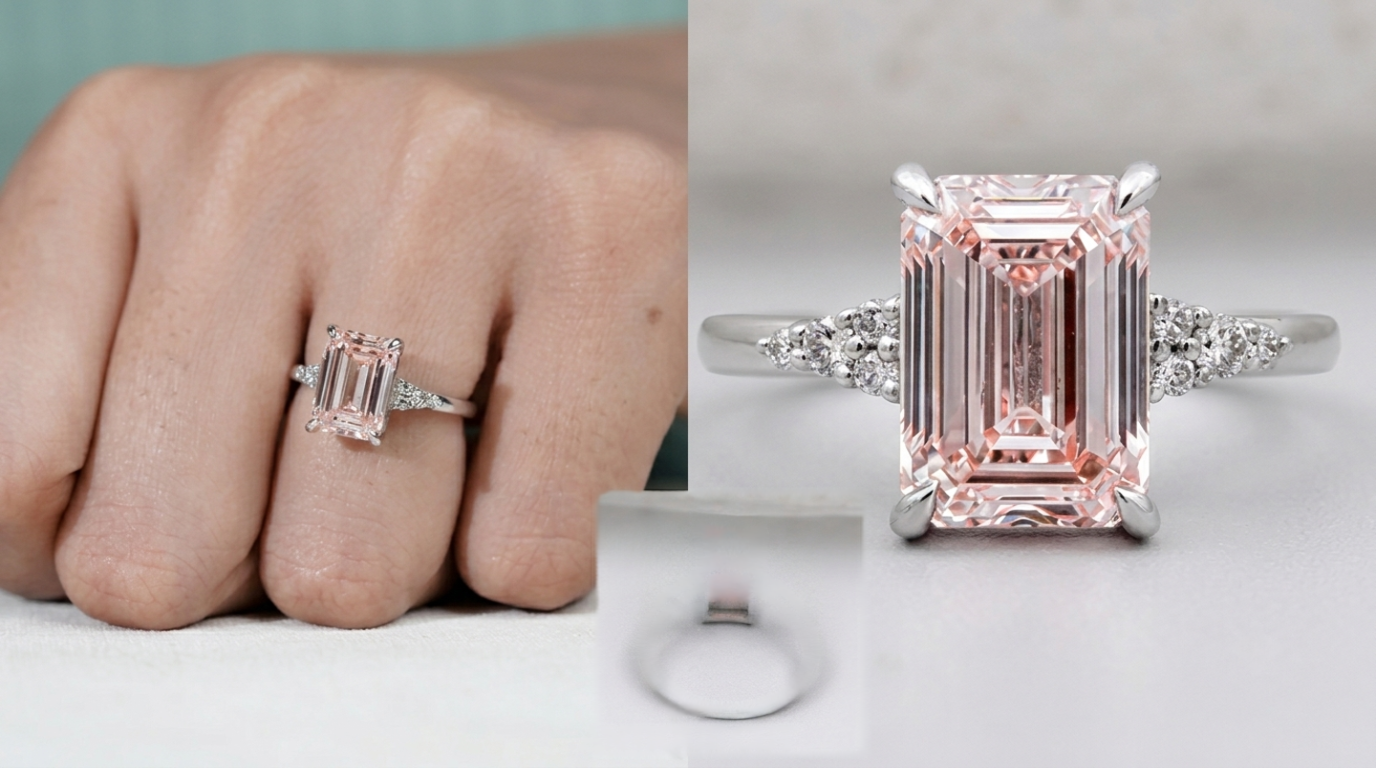
The criteria for evaluating high-end fine jewelry have undergone a profound evolution. In previous generations, luxury was often defined by rigid, traditional parameters where understated, minimalist lines and conservative dimensions served as the default standard for elegance. Today, however, that paradigm has shifted entirely.
A major cultural and economic movement has emerged, driven by a self-assured generation of global collectors who demand bold visual presence, structural grandeur, and absolute visual dominance from their personal collections. At the very center of this luxury renaissance is the growing prominence of double-digit carat jewelry statements.
When a gemstone of such monumental scale is expertly integrated into a custom white gold band, the pairing creates a visual and structural synergy that elevates the design into a premium tier of its own, setting an uncompromised benchmark for contemporary luxury and artistic sophistication.
To understand why fine jewelry enthusiasts consistently favor a white precious metal setting for an ultra-large gemstone, one must examine how light interacts with highly faceted crystals. Diamonds act as highly sophisticated networks of microscopic mirrors and prisms. When light enters the top table facet, it travels down through the stone, bounces internally off the pavilion angles, and reflects back out to the viewer's eye as brilliant white light and intense, rainbow-colored fire.
However, diamonds are also naturally hyper-reflective of their immediate physical environment. If a colorless or near-colorless crystal is set into a traditional yellow or rose gold mounting, the rich, warm body color of the underlying metal will inevitably reflect inside the pavilion, giving a pristine stone an unwanted tinted cast.
When a gemstone achieves a massive, multi-carat volume, this optical vulnerability is magnified exponentially due to the expansive surface area of the facets. By utilizing a crisp white gold alloy, designers provide a completely neutral, ice-like canvas. The metal reflects pure, white light back into the stone, ensuring the diamond's natural color grade remains entirely uncompromised, pristine, and blindingly bright.
Taking a closer look at 10 carat diamond engagement ring architecture reveals how master jewelers use advanced metalwork to maximize security without adding visual bulk. By hardening the precious metal alloy, artisans can sculpt ultra-fine prongs and low-profile gallery rails that hold the monumental stone securely in place.
Beyond the immediate visual advantages, an ultra-large center stone places immense physical demands on the jewelry band supporting it. A crystal of significant mass exerts continuous downward force and is naturally top-heavy. If the mounting is built using thin, commercial-grade dimensions, the ring will constantly rotate on the finger, causing physical discomfort and exposing the setting to dangerous everyday impacts.
To overcome these structural challenges, white gold offers distinct metallurgical advantages. In its pure state, gold is incredibly soft and malleable, but when expertly mixed with strong white companion metals such as palladium, silver, or nickel, its tensile strength increases dramatically.
To fully appreciate the meticulous labor required to balance these heavy structural frameworks, a sophisticated collector can take a closer look at 10 carat diamond engagement ring engineering frameworks. They will discover that this enhanced metal rigidity allows master jewelers to sculpt incredibly secure, fine-wire double prongs or seamless bezel borders that anchor a massive gem firmly in place without requiring bulky, distracting metal elements.
Luxury trends naturally move in cycles, shifting back and forth between strict minimalism and elaborate historical maximalism. While warmer precious metals are often tied to specific traditional eras, white gold possesses a clean, monochromatic neutrality that effortlessly bridges the gap between radically different design philosophies.
When rendered in a polished white alloy, a monumental statement ring takes on a clean, sleek appearance that coordinates effortlessly with contemporary high fashion and a diverse wardrobe. It strips away the visual heaviness sometimes associated with large jewelry, making a massive piece feel remarkably wearable and integrated rather than restricting it to ultra-formal evening galas.
At the same time, this icy palette pays a brilliant homage to the iconic early Art Deco movement, where bold geometric lines, step-cut diamonds, and monochromatic precious metals defined the pinnacle of global luxury. This rare duality allows contemporary wearers to enjoy an asset that feels thoroughly forward-thinking today while remaining deeply anchored by a sense of vintage heritage and timeless artistic gravitas.
The contemporary elite consumer rejects mass-produced commercial inventory in favor of authentic, bespoke design language. They recognize that a gemstone of extraordinary proportions demands a highly personalized manufacturing process that honors the individual character, dimensions, and optical footprint of the chosen crystal.
When a collector chooses to bring a monumental design vision to life with a specialized, leading heritage brand like Antiquecut, the production journey transforms into a deliberate artistic partnership. Master craftsmen utilize advanced three-dimensional digital mapping to design custom cathedral settings, where elegant arches of white gold rise gracefully from the shank to meet the head of the ring, distributing the weight of the massive crystal evenly across the hand.
Every interior gallery, hidden halo, and wire framework is meticulously hand-finished to ensure optimal light entry from all directions, maximizing the stone's internal scintillation. This uncompromising commitment to custom metallurgy and architectural precision ensures that the setting behaves as an organic extension of the stone itself, transforming raw materials into a fluid, museum-quality masterpiece.
Choosing a grand diamond ring set in a crisp white gold alloy represents the absolute pinnacle of intentional luxury design. It proves that true premium status is not achieved by coincidence, but through a deliberate understanding of optical physics, advanced metallurgy, and timeless style.
By providing an optically neutral environment that maximizes a diamond's internal fire, offering superior structural security for high-value crystals, and delivering a versatile, sophisticated aesthetic that honors both past heritage and future innovation, this classic pairing remains the definitive benchmark for jewelry connoisseurs around the globe.