English
 Arabic
 French
 Spanish
 Portuguese
 Deutsch
 Turkish
 Dutch
Dutch
 Italiano
 Russian
 Romaian
 Portuguese (Brazil)
 Greek
Greek
(A Story by) Dinos Love Donuts by Ben Okon
Dance |
2026-06-19 08:16:44
 Advertise With Us
 About Us
 Terms And Conditions
 Politique de confidentialité
Tout voir
Politique de confidentialité
Tout voir

Mise à niveau vers Pro
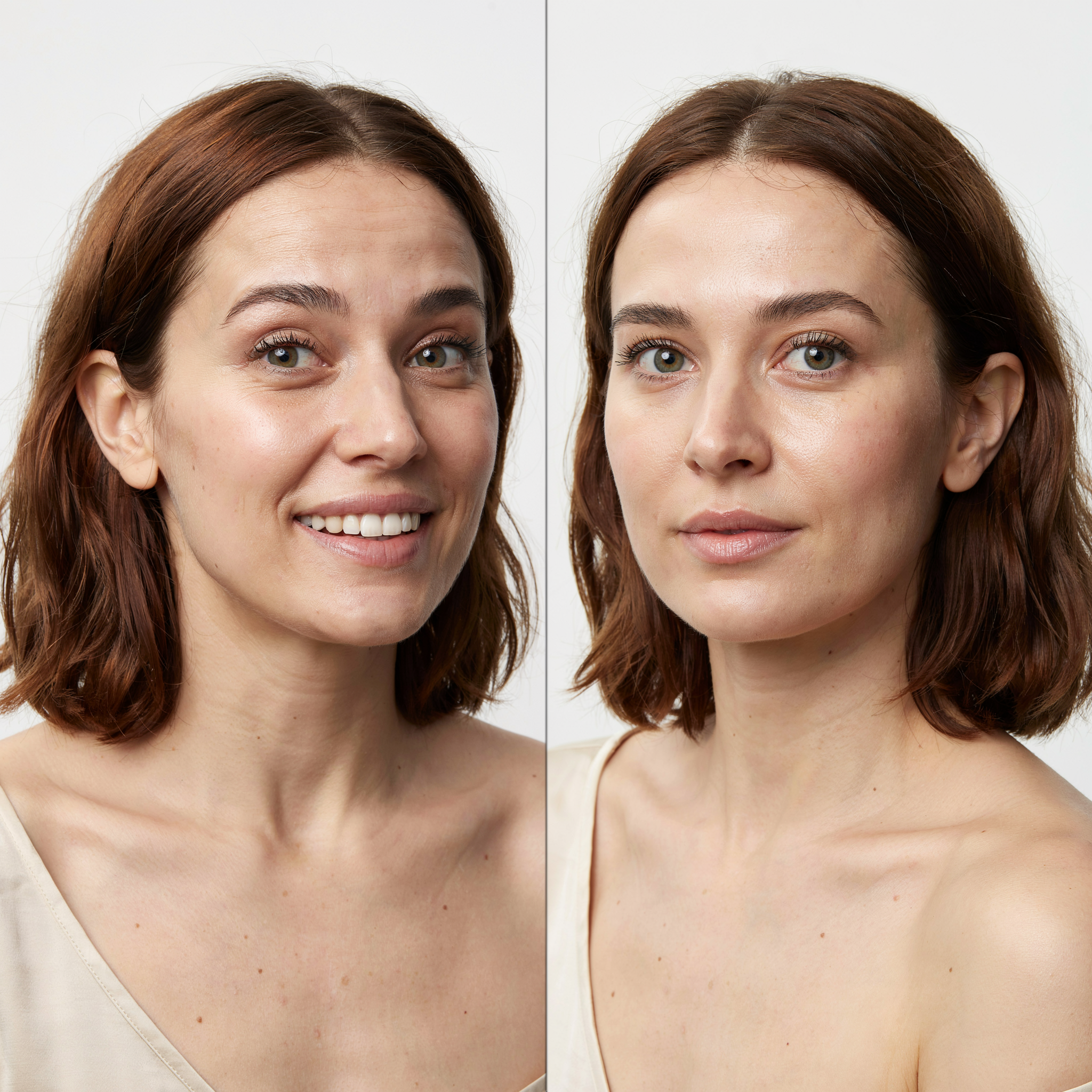
There is a particular moment many people recognize—a glance in the rearview mirror, a candid photograph, a video call where your face seems to hold tension long after you’ve relaxed. The lines between your brows remain etched. The crinkles around your eyes don’t fully dissolve when your smile fades. These are called dynamic wrinkles, and they are not signs of skin aging alone. They are the footprints of repeated muscle movement, carved over years of squinting, concentrating, laughing, and frowning. BOTOX, a neuromodulator with decades of clinical use, works by gently quieting those muscles, giving the overlying skin a chance to smooth and rest. At Enfield Royal Medspa, this treatment is approached not as a way to freeze a face into stillness, but as a tool for softening expression lines while preserving the warmth and movement that make a face feel like yours.
The word “BOTOX” often conjures images of extremes—a forehead that won’t move, a look of perpetual surprise. In practiced hands, however, the reality is far more nuanced. It is a treatment that, when done well, goes unnoticed in exactly the right way. People might tell you that you look rested, that you seem lighter, but they won’t necessarily know why.
BOTOX is a purified protein derived from botulinum toxin type A. When injected in micro-doses, it temporarily blocks nerve signals to specific muscles, reducing their ability to contract. Because many of the lines we associate with aging—crow’s feet, the vertical “11” between the brows, the horizontal creases across the forehead—are caused by the repeated folding of skin over active muscles, relaxing those muscles allows the surface to lay flat. The skin itself remains unchanged in quality; what shifts is the underlying pull that created the crease. It is not a volumizer, not a filler, and not a laser. It is a neuromodulator, meaning it modulates nerve-to-muscle communication, and it works only where it is precisely placed.
Every facial expression is the result of a muscle contracting beneath the skin. Over time, even when your face is at rest, those muscles can hold a low level of residual tension, keeping lines visible. BOTOX interrupts the chemical signal that tells a muscle to tighten. Within a few days of injection, the targeted muscle gradually relaxes, and the skin above it smooths out. The effect is temporary because the nerve endings eventually sprout new branches and reconnect, typically over three to four months.
Crucially, BOTOX does not travel throughout the body. It stays localized to the injection site and affects only the muscles into which it is administered. Nearby muscles continue to function normally, which is why a skilled injector can soften frown lines while preserving the ability to express surprise, concern, or delight naturally. The artistry lies in knowing which muscles to treat and which to leave untouched so that the face remains expressive and balanced, not immobilized.
While the most familiar use of BOTOX is smoothing existing lines, the benefits are broader when the treatment is integrated thoughtfully into a long-term skincare philosophy.
The outcome, in most cases, is not a frozen mask but a refreshed version of your own face—an appearance that suggests you slept well, drank enough water, and got genuinely good news. That kind of anti-aging treatment feels less like erasure and more like restoration.
An appointment for BOTOX is often surprisingly quick and low-key. After a brief consultation to review your anatomy and goals, the provider marks a few strategic points on your face. A very fine needle is used to deliver small amounts of the product into the targeted muscles. Most people describe the sensation as a series of tiny pinches that last only seconds. Topical ice or vibration can be used to minimize discomfort, though numbing cream is rarely necessary given how brief the process is.
From start to finish, the injections themselves often take no more than ten to fifteen minutes. You can walk out of the office and go directly back to work, an errand, or dinner. There may be a few small, temporary bumps at the injection sites that disappear within thirty minutes. Mild pinpoint bruising is possible but easily covered.
Results are not immediate. The full muscle-relaxing effect unfolds over three to fourteen days, with most people seeing the peak around day ten. The gradual onset makes the change feel natural, not abrupt. Aftercare is simple: avoid lying flat or rubbing the treated area for a few hours, skip intense exercise for the rest of the day, and steer clear of blood-thinning medications or alcohol for a short window as advised by your provider to minimize bruising.
Adults who are bothered by dynamic wrinkles—those lines that appear with facial expression—and who are in generally good health are often suitable candidates. There is no magic age; some people begin in their late twenties or early thirties with preventive micro-dosing, while others start later to address more established lines. The common thread is a desire for a natural, well-rested look rather than a radically different appearance.
BOTOX should be avoided during pregnancy and breastfeeding. It is also contraindicated for individuals with certain neurological conditions, such as myasthenia gravis or Lambert-Eaton syndrome, or those with an allergy to any component of the formulation. Active skin infections at the injection sites require postponement. A thorough medical history review before treatment ensures safety and appropriateness.
BOTOX is not a permanent fix, nor does it address static wrinkles—those present when the face is completely at rest and caused by sun damage, volume loss, or loss of skin elasticity. Static lines may be better suited to treatments such as dermal fillers, microneedling, or laser resurfacing. Often, a combination approach yields the most graceful, comprehensive facial rejuvenation, where BOTOX addresses muscle movement and other modalities address skin quality and volume.
The muscle-relaxing effect typically lasts three to four months, though some individuals find that with regular, consistent treatment, muscles become conditioned to relax and the interval between sessions slowly extends. Once the product wears off, muscles return to their normal activity, and lines gradually reemerge—not deeper than before, just as they were. Maintenance is flexible. You can choose to treat on a strict schedule, or you can return when you begin to see motion creep back in. There is no physiological dependency and no rebound effect. The treatment simply offers a temporal window of softness that you can renew as it suits you.
Side effects are rare when BOTOX is administered by an experienced injector. Temporary redness, swelling, or bruising are the most common and resolve quickly. A slightly heavy brow or eyelid droop can occur if the product migrates to unintended muscles, but this is uncommon and self-limited, generally resolving within weeks. Injectors who understand facial anatomy in detail minimize this risk significantly.
BOTOX, for all its cultural baggage, remains one of the most studied and reliable tools in aesthetic medicine. Its power is not in changing who you are but in dialing down the tension that can make a face look tired, worried, or stern when that doesn’t match how you feel inside. When placed with judgment and restraint, it leaves the face fully capable of expression—just without the repetitive grooves that inadvertently tell a story you’d rather not broadcast.
If you’re curious about whether BOTOX might align with your personal approach to anti-aging and skin rejuvenation, the team at Enfield Royal Medspa in Melbourne, FL, can help you explore the possibilities with care, clarity, and a focus on outcomes that still look unmistakably like you.