English
 Arabic
 French
 Spanish
 Portuguese
 Deutsch
 Turkish
 Dutch
Dutch
 Italiano
 Russian
 Romaian
 Portuguese (Brazil)
 Greek
Greek
Lithium-Ion Battery Market Research Report: Revenue Analysis, Market Share & Future Growth
Art |
2026-07-26 04:23:45
 Advertise With Us
 About Us
 Terms And Conditions
 سياسة الخصوصية
عرض كل النتائج
سياسة الخصوصية
عرض كل النتائج

ترقية الحساب
 Introduction
Food safety, it's one of the heaviest responsibilities a food business carries. Preparing meals, manufacturing packaged food, supplying raw ingredients, whatever the case, customers expect one thing, safety, every single time. One food safety slip up, and you're looking at complaints, recalls, and a reputation that's hard to rebuild.
That's exactly why so many businesses go for HACCP Certification. It helps organizations catch food safety risks before they turn into actual problems, and builds a system that controls them throughout production, start to finish.
This guide covers what HACCP Certification actually is, who should be applying, and how it benefits food businesses across India.
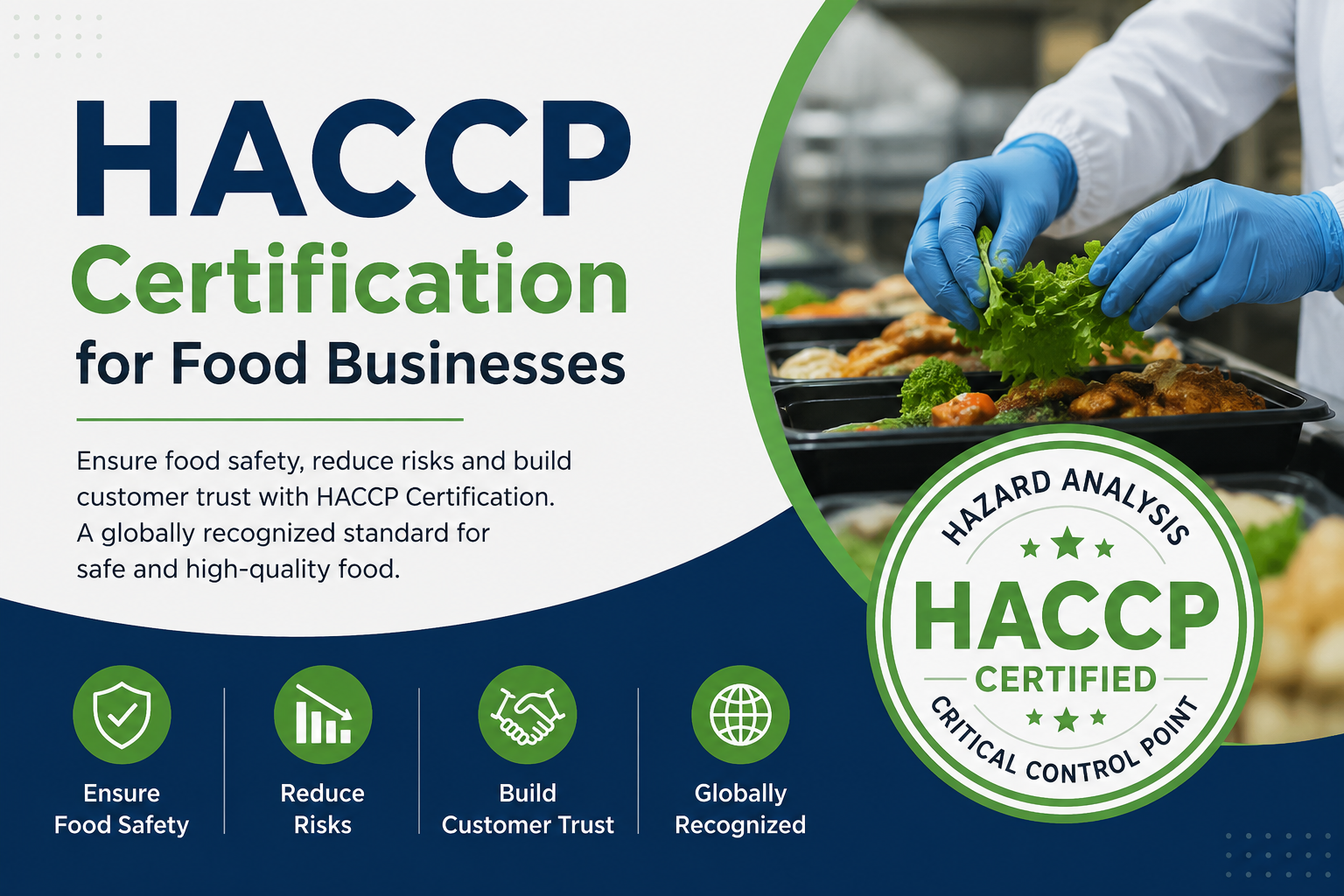
HACCP, short for Hazard Analysis and Critical Control Points. A globally recognized food safety system, helps businesses identify, evaluate, and control hazards that could compromise food safety.
Doesn't wait till after production to check quality. HACCP focuses on prevention, at every single stage, handling, processing, storage, distribution, all of it.
End result, safer food, and businesses staying aligned with both customer expectations and regulatory requirements.
Food businesses deal with something that directly impacts people's health, no room for casual mistakes here. One small error during production, storage, transportation, and you've got a serious food safety risk on your hands.
HACCP gives a structured way to manage exactly this. Helps monitor critical processes, cuts down contamination, pushes food safety standards higher overall.
A lot of retailers, distributors, and international buyers actively prefer suppliers who follow recognized food safety systems too.
Almost every business touching the food supply chain fits here, commonly used by:
Food manufacturers
Restaurants and hotels
Food processing companies
Dairy businesses
Beverage manufacturers
Bakeries
Catering companies
Cold storage facilities
Food packaging companies
Food exporters and importers
Small operation or a large one, HACCP shapes around however the business actually runs.
Improves food safety — catches risks early, preventive action happens before products even reach customers
Builds customer confidence — people trust businesses following internationally recognized food safety practices
Better compliance — supports meeting food safety regulations and legal obligations without last-minute scrambling
Reduces food safety risks — monitoring critical control points cuts down contamination chances significantly
Improves business reputation — shows genuine commitment to maintaining high food safety standards
Better business opportunities — retailers, distributors, export markets, all of them lean toward certified suppliers
Businesses generally prepare these before applying:
Company Registration Certificate
FSSAI License
Food Safety Policy
Process Flow Chart
Standard Operating Procedures (SOPs)
Cleaning and Sanitation Records
Employee Training Records
Internal Audit Reports
Risk Assessment Records
Proper documentation upfront makes the whole certification process move a lot smoother.
Process starts with understanding the food safety risks specific to the business
Critical control points get identified, places where hazards can actually be prevented or controlled
Required documentation gets prepared, food safety procedures implemented across the organization
Employees trained on HACCP practices
Internal review conducted, checking whether the system's genuinely working
Accredited certification body carries out the final certification audit
Standards met, HACCP Certificate gets issued
Regular reviews and surveillance audits keep the system effective going forward
Documentation and employee training, these usually eat up the most time for businesses going through HACCP Certification. Maintaining proper records and monitoring food safety controls also demand continuous attention, not a one time effort.
But with proper planning and regular monitoring, these challenges become a lot more manageable over time.
HACCP Certification gives food businesses a reliable system for managing food safety, right from production to final delivery. Focuses on prevention rather than fixing things after the fact, making products genuinely safer for customers.
Restaurant, food manufacturing unit, bakery, dairy, or food processing business, implementing ISO Certification improves food safety, strengthens customer trust, and supports long term growth. A well managed food safety system protects consumers, sure, but it also builds a much stronger reputation across the food industry.