English
 Arabic
 French
 Spanish
 Portuguese
 Deutsch
 Turkish
 Dutch
Dutch
 Italiano
 Russian
 Romaian
 Portuguese (Brazil)
 Greek
Greek
Solar System Price In Pakistan | Solar System Price
Other |
2026-04-29 10:58:45
 Advertise With Us
 About Us
 Terms And Conditions
 Privacy Policy
Mostra tutti i risultati
Privacy Policy
Mostra tutti i risultati

Passa a Pro
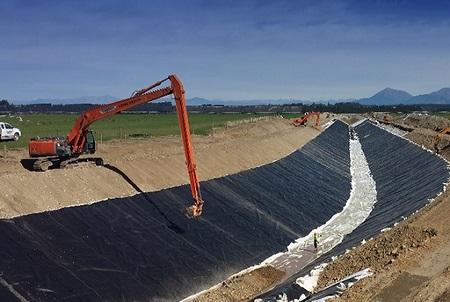
Water storage infrastructure is becoming more important with every passing year. Across irrigation networks, urban supply systems, industrial zones, and rural development projects, the need to store water safely and efficiently has become a serious engineering priority. If you look closely, one of the biggest challenges in dam and reservoir projects is not always the construction itself, but the long-term ability of the structure to retain water without loss. Seepage, leakage through joints, and gradual soil absorption continue to affect the efficiency of many traditional storage systems. Honestly, this is exactly where PVC geomembrane technology is starting to change the conversation.
In many older dam projects, engineers relied heavily on concrete lining, compacted earth, clay cores, or stone pitching to reduce water loss. These methods still have their place, but over time they often begin to show limitations. Concrete surfaces can crack because of thermal expansion, settlement, or age-related wear. Soil-based barriers naturally allow some level of seepage. Even small cracks or weak points can lead to a continuous loss of stored water. At first, the issue may seem manageable, but over months and years the impact on storage efficiency becomes significant.
This is why geomembrane for dams is now being increasingly used in both new construction and rehabilitation projects. A PVC geomembrane acts as a highly impermeable barrier layer that prevents water from escaping into the surrounding soil or through structural surfaces. The concept is simple, but the performance advantage is substantial. By installing a Pvc geomembrane sheet along the dam face, reservoir bed, or containment slopes, engineers can dramatically reduce seepage losses and improve long-term water retention.
One thing that really makes this technology stand out is its flexibility. Dam surfaces and reservoir slopes are rarely perfectly uniform. There are changes in slope angle, soil movement zones, and areas where minor settlement may occur over time. A rigid barrier system can struggle under such conditions. PVC geomembrane, on the other hand, adapts much more effectively. It conforms to uneven surfaces and continues to maintain barrier integrity even when the structure experiences small shifts. Honestly, this flexibility is one of the strongest reasons engineers prefer it for large-scale water infrastructure.
Another important aspect is durability. Water storage projects are designed for long-term use, which means the lining system must be able to perform for years under constant hydrostatic pressure, changing weather, and UV exposure. Modern geomembrane systems are engineered specifically for these conditions. Materials such as 30 mil pvc geomembrane liner and even thicker variants are often selected depending on the project requirement. These liners are built to handle continuous exposure without rapid degradation, which directly improves lifecycle performance.
In many applications, geomembrane systems are combined with Geotextile layers to create a more robust protection system. The geotextile acts as a cushioning layer between the surface and the geomembrane, helping to prevent puncture damage from stones, aggregates, or irregular subgrade conditions. It also improves load distribution and enhances the long-term performance of the waterproofing layer. If you ask me, this combined system is one of the most reliable approaches for large water storage projects.
What’s also worth noticing is that the same technology is widely used beyond dams and reservoirs. You’ll find geomembrane pond liner systems in farm ponds and aquaculture applications, geomembrane for canal lining in irrigation networks, geomembrane for tunnels in seepage control systems, and landfill geomembrane in environmental containment projects. Even road subgrade moisture control and building waterproofing projects use similar principles. This wide range of applications reinforces the engineering confidence behind the material.
From an infrastructure planning perspective, water conservation has become one of the biggest concerns in India. Large dam projects are no longer only about storage capacity; they are equally about retention efficiency. Every unit of water lost through seepage is effectively a reduction in project performance. This is especially important in water-stressed regions where storage efficiency directly affects agriculture, urban supply, and industrial continuity.
Reliable geomembrane manufacturers india are therefore playing an increasingly important role in the country’s infrastructure ecosystem. Projects today often prefer BIS approved geomembrane solutions that comply with BIS IS 15909:2010 standards along with ASTM and EN quality benchmarks. Compliance is not just a technical requirement; it builds trust among consultants, EPC contractors, and government authorities who are responsible for project approvals and long-term performance assurance.
Another reason geomembrane systems are gaining importance is lifecycle cost efficiency. Traditional lining systems may appear less complex at the installation stage, but their long-term repair and maintenance costs can become significant. Crack repairs, seepage treatment, and repeated rehabilitation efforts often lead to increased expenditure over time. PVC geomembrane systems, when installed correctly, significantly reduce this burden. The result is better cost control across the entire project lifecycle.
Looking ahead, the importance of geomembrane for dams is only expected to grow. Climate variability, rising water demand, and infrastructure modernization programs will continue to push the need for better storage efficiency. Future-ready water infrastructure will increasingly depend on materials that combine durability, flexibility, and strong waterproofing performance. Honestly, geomembrane technology is no longer just an optional upgrade. It is steadily becoming a standard engineering solution for modern dam and reservoir projects.
If you’re involved in water infrastructure planning, civil engineering consulting, or public project development, this is definitely one technology worth paying close attention to. It’s practical, proven, and highly relevant for the future of sustainable water management.