English
 Arabic
 French
 Spanish
 Portuguese
 Deutsch
 Turkish
 Dutch
Dutch
 Italiano
 Russian
 Romaian
 Portuguese (Brazil)
 Greek
Greek
Recommended Title Reverse: Deluxe Limited Edition by Kate Stewart
Shopping |
2026-06-30 08:53:40
 Advertise With Us
 About Us
 Terms And Conditions
 Politique de confidentialité
Tout voir
Politique de confidentialité
Tout voir

Mise à niveau vers Pro
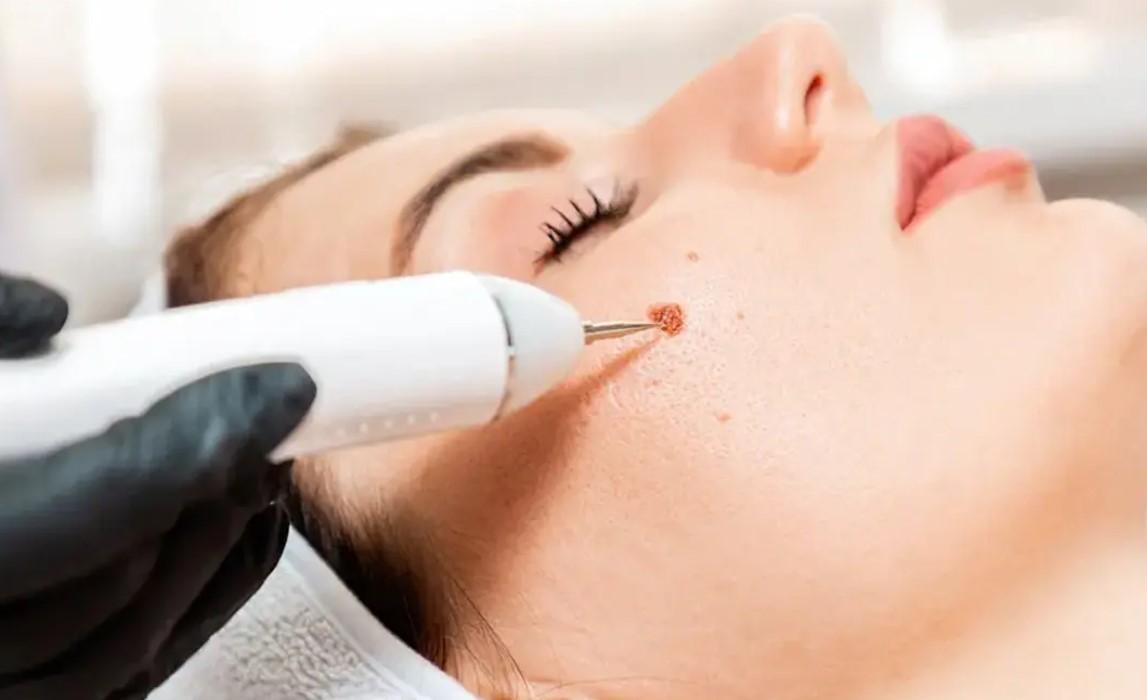
Moles, or nevi, are a completely natural and incredibly common feature of human skin. Most adults have anywhere between 10 and 40 moles scattered across their bodies. While we often view them simply as dark spots, beauty marks, or cosmetic nuances, their presence is the result of intricate biological processes. Mole Removal in Riyadh is a popular cosmetic and dermatological procedure that helps individuals achieve smoother, clearer skin by safely removing unwanted moles.
Understanding exactly what causes moles to develop on the skin can help demystify your body's dermatological changes and empower you to take proactive care of your skin health. Here is an in-depth exploration of the cellular biology, environmental triggers, and internal influences that dictate how, why, and when moles form.
To understand why a mole forms, we have to look closely at the microscopic layers of our skin. The skin's outer layer, the epidermis, contains specialized cells called melanocytes. The primary job of these cells is to produce a natural pigment called melanin, which gives your skin, hair, and eyes their distinct color.
Under normal circumstances, melanocytes are evenly distributed throughout the basal layer of the epidermis, spreading their pigment uniformly to protect your skin from environmental damage. However, a mole develops when these melanocytes begin to grow in tight, localized clusters instead of spreading out evenly.
When hundreds of these pigment-producing cells group together in one specific spot, the high concentration of melanin turns that tiny area of skin dark brown, black, pink, or flesh-colored, creating the physical feature we recognize as a mole.
While the physical clustering of melanocytes is the underlying mechanism, several distinct factors act as the primary catalysts for this behavior.
Your DNA is the ultimate blueprint for your skin. The absolute number of moles you will develop throughout your lifetime is largely determined before you are even born.
If your biological parents or grandparents have a large number of moles, it is highly likely that you carry the specific genetic variations that signal your melanocytes to cluster. Your genes also dictate the structural type of moles you develop—whether they are flat, raised, smooth, or prone to growing hair. Certain genetic syndromes can even lead to an abundance of atypical moles, highlighting just how powerful inherited traits are in dermatological development.
While genetics provides the blueprint, the environment acts as the active construction worker. Ultraviolet radiation from the sun or artificial tanning beds is the most significant external trigger for new mole development.
When UV rays strike unprotected skin, it inflicts microscopic damage on cellular DNA. To shield itself from this radiation, the immune system triggers an emergency response, signaling melanocytes to quickly produce a flood of melanin. Prolonged, intense, or frequent sun exposure—especially during childhood and adolescence—not only darkens existing moles but also forces melanocytes to replicate rapidly, leading to the formation of entirely new clusters.
The human endocrine system undergoes dramatic shifts at various milestones in life, and these hormonal changes have a profound impact on skin behavior. Melanocytes possess specific hormone receptors that respond actively to shifts in estrogen, progesterone, and melanocyte-stimulating hormone (MSH). There are three major life events where hormonal shifts cause sudden mole activity:
Puberty: The sudden surge of sex hormones during the teenage years frequently causes a rapid emergence of new moles.
Pregnancy: Expectant mothers often notice that their existing moles grow slightly larger, become noticeably darker, or that new spots pop up entirely due to elevated hormone levels.
Menopause: Conversely, as hormone levels drop later in life, some individuals find that their moles begin to fade, flatten, or slowly lose their pigment.
The timeline of your life also dictates your skin's profile. Moles follow a very predictable age trajectory. They typically begin to appear during early childhood, increase in number during early adulthood, and peak around the age of 30 to 40.
Additionally, your immune health plays an active role. If the immune system becomes temporarily or permanently suppressed—due to high stress, specific medical conditions, or immunosuppressive therapies—it can lose its ability to regulate cell replication. This can occasionally result in an abrupt, eruptive appearance of multiple new moles over a short period.
Dermatologists broadly separate moles into two categories based on exactly when they make their appearance on your skin:
| Category | Onset Timeline | Common Characteristics |
| Congenital Nevi | Present at birth or within the first year of life. | Occur in roughly 1% of newborns. They can grow quite large as the child grows and often feature deep-rooted hair follicles. |
| Acquired Nevi | Develop during childhood, adolescence, or early adulthood. | Driven heavily by a mix of sun exposure and genetics. They are usually smaller than 1/4 inch and tend to stay uniform in shape. |
The Golden Rule of Self-Monitoring: While the vast majority of both congenital and acquired moles are perfectly benign, any spot that behaves irregularly deserves attention. Dermatologists recommend using the ABCDE checkli