English
 Arabic
 French
 Spanish
 Portuguese
 Deutsch
 Turkish
 Dutch
Dutch
 Italiano
 Russian
 Romaian
 Portuguese (Brazil)
 Greek
Greek
FYP Book The Witch by Freida McFadden
Party |
2026-07-06 03:55:32
 Advertise With Us
 About Us
 Terms And Conditions
 سياسة الخصوصية
عرض كل النتائج
سياسة الخصوصية
عرض كل النتائج

ترقية الحساب
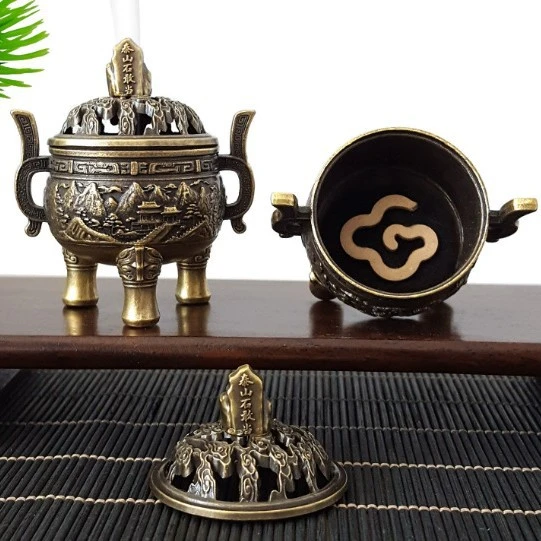
In the rush of the modern day, where the boundaries between professional obligations and personal time are increasingly blurred, the act of creating a physical boundary for rest becomes a necessity rather than a luxury. Among the most accessible ways to signal this transition is through the intentional use of scent and smoke. The zen incense holder is far more than a functional utility; it is the physical anchor for a deliberate practice of stillness. When you place a stick of botanical incense into a holder that has been designed with the principles of simplicity and harmony, you are constructing a ritualistic space that invites the mind to settle and the body to find a rhythm of calm.
The appeal of this specific type of vessel lies in its philosophy. It is designed to be understated, avoiding the clutter of ornate decoration in favor of forms that complement the natural drift of smoke. A well-designed holder does not compete with the environment; it acts as a silent servant to the ritual. By providing a stable platform that allows the incense to burn completely and safely, it removes the distractions of maintenance and movement, leaving you free to focus entirely on the sensory experience. It is the first step in a meditative practice that transforms a simple corner of your home into a personal temple of presence.
The sensory experience of an incense ritual begins the moment you touch the zen incense holder. Materials play a profound role in how these pieces interact with their environment. Artisans frequently turn to earthbound, elemental materials to capture the essence of this design philosophy. Ceramic holders, often hand-fired in kilns that use traditional techniques, offer a porous and matte finish that feels deeply grounded. These pieces often feature muted, natural palettes—grays, deep browns, or soft, stone-like whites—that draw the eye without overwhelming the senses.
Metal holders, particularly those crafted from brushed brass or blackened iron, bring a sense of weight and industrial clarity to the ritual. These materials are chosen for their resilience and their ability to age beautifully, acquiring a patina that records the passage of time and the history of use. Wood, meanwhile, provides a natural warmth that aligns perfectly with the burning botanicals. When you choose a vessel made of wood, the material itself often carries the faint memory of forests and groves, adding a subtle, underlying note to the incense being burned. Regardless of the material, the focus remains on the tactile engagement between the hand and the vessel, ensuring that the object is not just viewed, but felt.
The design of a high-quality zen incense holder is a masterclass in functional minimalism. The most effective holders are those that consider the physics of the burn. The placement of the opening, the angle of the stick, and the depth of the ash-catching basin are all carefully calculated to ensure a clean and controlled release of smoke. When the stick is held at the correct angle, the ash falls directly into the basin, keeping the surrounding area tidy and clear of debris. This is crucial for maintaining the atmosphere of a sanctuary; a cluttered or messy space inevitably leads to a cluttered mind.
Moreover, the shape of the holder influences the visual journey of the smoke. A low-profile, dish-style holder encourages the smoke to billow and flow slowly across the table, creating a low-lying haze that feels cozy and introspective. A taller or more vertical design encourages the smoke to rise in a thin, steady column, which can be an excellent focal point for concentration or seated meditation. By choosing a design that influences the trajectory of the smoke, you are essentially directing the "energy" of your space, deciding how the atmosphere should manifest around you as you settle into your practice.
Integrating the zen incense holder into your daily routine is a powerful way to demarcate the beginning or the end of your day. For those who find it difficult to leave the stresses of the workplace behind, the ritual of lighting incense can act as a psychological "boundary marker." When you enter your home, the act of selecting a scent, placing it in the holder, and lighting the tip becomes a multi-sensory prompt that tells the brain: you have arrived. The scent serves as the bridge between the external world of tasks and the internal world of home and restoration.
This ritual should be approached with a sense of deliberate pace. Do not rush to light the stick. Take the time to clear the basin of any leftover ash from the previous session. Observe the texture of the holder as you set it in its place. These micro-movements are part of the meditation itself. By engaging fully with the preparation, you are already shifting into a state of mindful attention before the smoke has even begun to drift. The vessel becomes a loyal partner in this process, waiting for you in its steady, quiet way, always ready to facilitate your return to a centered state.
Caring for your holder is a quiet act of gratitude. These objects are meant to be companions for years, and they often carry the "memory" of the scents you have burned over time. A ceramic or metal piece can be kept in pristine condition with a simple, regular wipe using a dry, lint-free cloth. This removes the fine, powdery residue of the ash and ensures the surface remains clear. It is best to avoid harsh chemical cleaners, as these can strip away the unique finish of the material and introduce synthetic odors that interfere with the purity of the incense.
If your holder is made of wood, a very occasional, light buffing with a natural oil can keep the grain looking rich and prevent it from drying out. This maintenance ritual is not about achieving perfection or factory-new shine; it is about honoring the object that holds your focus. It is a way of saying, "this space matters." When you clean the vessel, you are clearing the stage for the next session. You are acknowledging the value of the practice itself, ensuring that your tools are kept in a state of readiness and respect, which in turn reinforces the value of your own time spent in reflection.
The beauty of the zen incense holder is that it remains elegant even when it is not in use. Unlike many other pieces of home decor that demand attention or occupy a massive amount of physical space, these holders possess a quiet, unassuming presence. They fit easily onto a windowsill, a small shelf, or even tucked between books, serving as a subtle reminder of your commitment to a calmer lifestyle. They are pieces that harmonize with almost any interior style—whether your home is filled with mid-century modern furniture, minimalist lines, or a more bohemian, textured aesthetic.
By choosing a piece that feels "right" to you, you are essentially curating the visual energy of your sanctuary. A holder with smooth, fluid curves may bring a sense of softness to a room with sharp, angular architecture. A holder with a rough, raw finish might add a necessary touch of the organic to a sleek, modern office. It is the small, thoughtful selection of such objects that elevates a house into a home, turning it into a place that is not just physically comfortable, but also emotionally restorative and intellectually aligned with your personal values.
There is a philosophical weight to the use of a vessel specifically designed for meditation and focus. In an age characterized by the rapid cycle of digital consumption, the decision to engage with a slow, analog ritual is a significant choice. The zen incense holder acts as a physical witness to this choice. It is a tool that requires you to show up, to wait, and to breathe. It is not an object that gives you immediate results; it is an object that gives you the space to generate those results yourself through your own patience and presence.
By centering your practice around such a vessel, you are signaling to yourself that you are capable of stillness. You are asserting that your internal world is just as worthy of investment as your external achievements. This realization is the cornerstone of a meaningful life. The vessel does not hold the power; it holds the stick that helps you hold the power over your own mind. As you continue to use it, the holder will become a deeply personal object, a quiet, reliable mentor that helps you return, time and again, to the simplicity of the present moment.
Choosing a zen incense holder is a beautiful commitment to the practice of stillness and the art of intentional living. By selecting a piece that resonates with your personal aesthetic and dedicating yourself to the quiet ritual of scenting your space, you create a reliable, sensory-rich sanctuary that you can access at any time. Let this vessel serve as a steady anchor for your mind, a reminder to pause, and a functional work of art that grounds your daily environment in grace and focus. As you move forward, may your holder be a constant, elegant companion, supporting your ongoing journey toward a life that is balanced, centered, and deeply, meaningfully present.