English
 Arabic
 French
 Spanish
 Portuguese
 Deutsch
 Turkish
 Dutch
Dutch
 Italiano
 Russian
 Romaian
 Portuguese (Brazil)
 Greek
Greek
Vaser 4D Liposuction in Riyadh: A Complete Guide
Health |
2026-06-26 12:49:20
 Advertise With Us
 About Us
 Terms And Conditions
 Datenschutzbestimmungen
Alle anzeigen
Datenschutzbestimmungen
Alle anzeigen

Upgrade auf Pro
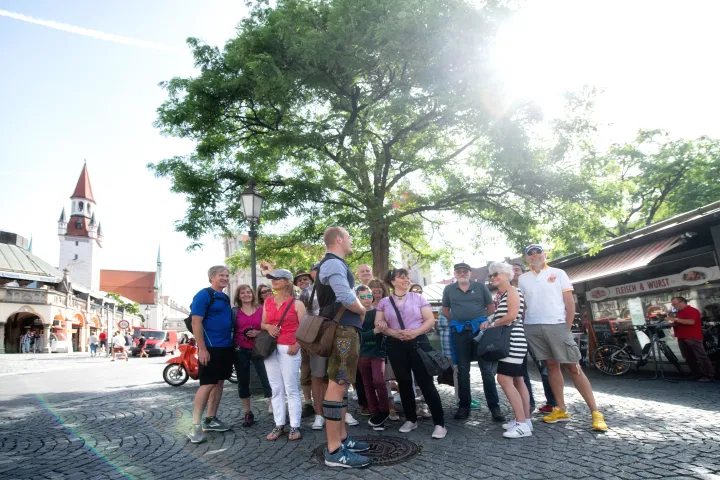
To understand Bavaria — its culture, its traditions, its distinctive identity within the German-speaking world — you must understand Munich, and to understand Munich you must walk its streets and squares with someone who can explain what you are seeing in its historical and cultural context. A Munich Walking Tour with Radius Tours goes beyond sightseeing to provide genuine cultural insight into what makes this city the proud capital of Bavaria and one of the most distinctive regional capitals in Europe. Munich is not merely a German city — it is emphatically a Bavarian city, with its own dialect, traditions, architectural heritage, and civic identity that have remained distinct and deeply felt across centuries of political change.
The architecture of Munich's historic center tells the story of Bavarian identity through stone, brick, and plaster in ways that become apparent when you walk the streets with contextual knowledge of why each building was built and what it was meant to express. The Residenz was built to declare the power and sophistication of the Wittelsbach court at a time when Munich was competing for cultural prestige with Vienna, Paris, and Rome. The Theatinerkirche was commissioned by Henriette Adelaide of Savoy to give thanks for the birth of a male heir, importing Italian Baroque architecture to demonstrate Bavarian cosmopolitan ambition. The Feldherrnhalle was designed to celebrate Bavarian military heritage at a moment of nineteenth-century nation-building.
No guide to Munich as the heart of Bavaria would be complete without substantive engagement with beer culture — not as a clichéd tourist attraction but as a genuine and historically significant cultural institution with deep roots in Bavarian history. The Reinheitsgebot, the famous Bavarian purity law that limited beer ingredients to water, barley, and hops, was enacted in Munich in 1516 and remains one of the longest-standing food regulations in history, reflecting the seriousness with which Bavarians have always taken the production and quality of their regional beverage. Munich's beer halls, beer gardens, and the annual Oktoberfest represent the social institutions through which Bavarian beer culture has been practiced, celebrated, and transmitted across generations.
The outdoor markets of Munich provide some of the most vivid windows into Bavarian cultural life and regional food traditions. The Viktualienmarkt, operating daily except Sundays, sells the regional produce, dairy products, meats, and prepared foods that define the Bavarian culinary tradition — white asparagus in spring, wild mushrooms in autumn, radishes, pretzels, and Obatzda cheese year-round. The Christmas markets that occupy Marienplatz and surrounding squares in December are among the most celebrated in Europe, with handcrafted wooden decorations, mulled wine, and the specific sensory atmosphere that Munich's Advent season creates. Walking these markets is as culturally illuminating as visiting any museum.
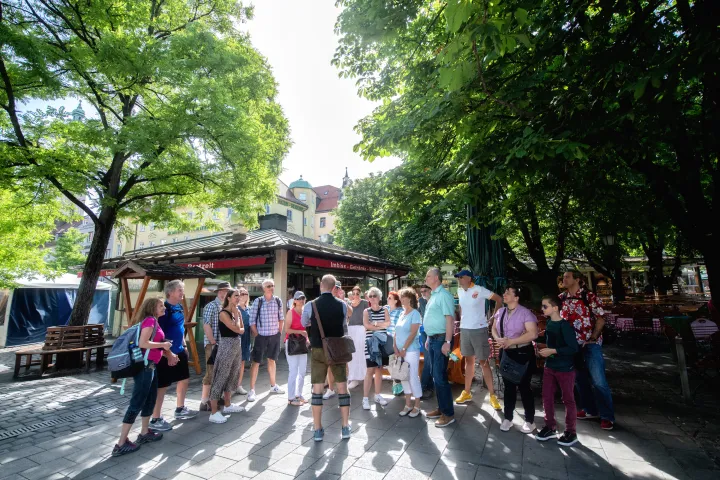
The Englischer Garten in Munich reveals something important about Bavarian leisure culture — the seriousness with which recreation, particularly outdoor recreation, is pursued as an essential component of a well-lived life. Created in 1789 as one of the world's first public parks accessible to all citizens rather than reserved for aristocratic use, the Englischer Garten has been the primary outdoor recreation space for Munich citizens for over two centuries. The Chinese Tower beer garden within the park, established in 1791, is one of the largest beer gardens in the world and a quintessentially Bavarian institution where people of every social background share long communal tables for the enjoyment of food, drink, and conversation.
Walking slightly beyond the concentrated tourist zone of the Altstadt reveals the Munich that local residents inhabit — the handsome nineteenth-century apartment buildings of Schwabing, the independent shops and cafes of the Glockenbach district, the riverside parks along the Isar where Munich citizens sunbathe, barbecue, and swim in warm weather. These neighborhood walks provide essential context for understanding Munich as a living, contemporary city rather than merely a preserved historical monument. Radius Tours guides bring local neighborhood knowledge to walking experiences that extend beyond the standard tourist highlights into the authentic urban fabric that defines Munich as a genuinely livable and beloved city.
Munich's extraordinary concentration of historic churches reflects the depth of Bavarian Catholic identity and the role that religious institutions played in shaping the city's architectural and cultural development. The Frauenkirche, St. Peter's, the Theatinerkirche, the Asamkirche, St. Michael's Church, and the Bürgersaalkirche are among the most significant religious buildings within easy walking distance of the city center, each representing a different period of church architecture and a different chapter in Munich's religious history. Walking between these buildings with a knowledgeable guide provides a remarkable survey of European religious architecture from Romanesque foundations through Gothic height to Baroque excess and neoclassical restraint.
Discovering Munich as the heart of Bavaria requires the kind of contextual guidance that transforms architectural observation and landmark visits into genuine cultural understanding. Radius Tours provides experienced, English-speaking walking tour guides who bring both scholarly knowledge and genuine passion for Munich's history and culture to every tour they lead. Book your Munich walking tour today and experience Bavaria's capital city through the lens of expert local knowledge.