English
 Arabic
 French
 Spanish
 Portuguese
 Deutsch
 Turkish
 Dutch
Dutch
 Italiano
 Russian
 Romaian
 Portuguese (Brazil)
 Greek
Greek
Commercial Vehicles Market Outlook Improves with Green Manufacturing Material Integration Worldwide
Other |
2026-08-03 16:10:25
 Advertise With Us
 About Us
 Terms And Conditions
 Privacy Policy
Mostra tutti i risultati
Privacy Policy
Mostra tutti i risultati

Passa a Pro
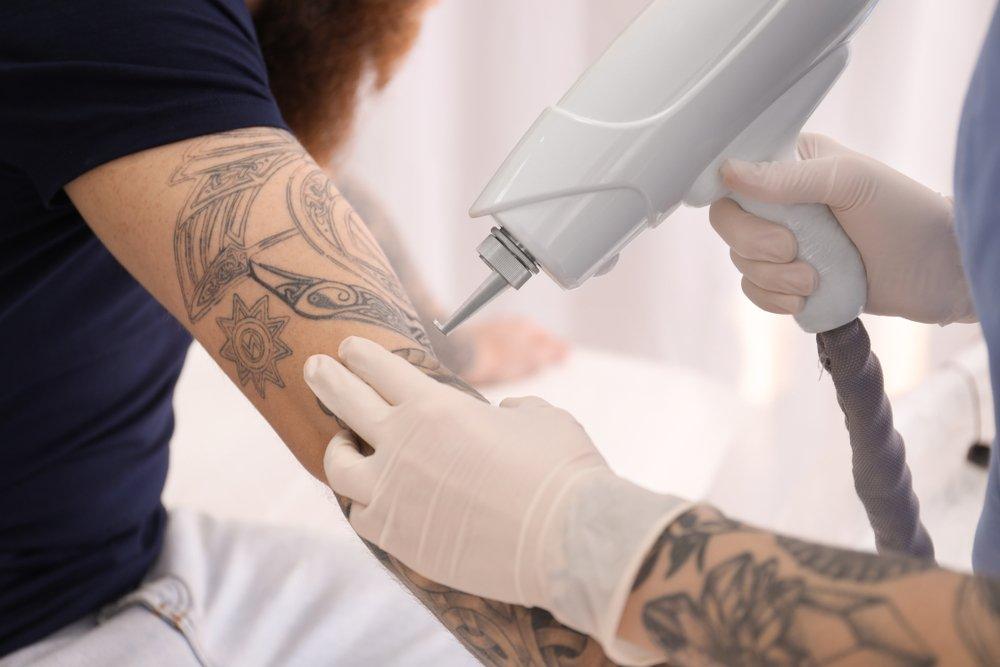
Tattoos are deeply personal forms of self-expression, but as time passes, tastes, careers, and personal identities evolve. For those seeking a clean slate, laser tattoo removal has become highly accessible, safe, and effective. Tattoo removal in Riyadh is becoming an increasingly popular option for individuals looking to fade or completely remove unwanted tattoos through modern aesthetic treatments.
However, individuals with multicolored tattoos—featuring a vibrant palette of reds, blues, greens, yellows, and oranges—often face a more complex journey. Unlike monochromatic black ink, which absorbs almost all laser light wavelengths, a multicolored tattoo requires a highly specialized, sophisticated approach.
Riyadh has rapidly transformed into a premier regional hub for advanced dermatological and aesthetic medicine. If you are looking to erase a multicolored tattoo in Saudi Arabia's capital, understanding the underlying science, the latest laser technologies, what to expect during the process, and how to choose the right clinic in Riyadh is essential.
To understand why multicolored tattoos are uniquely challenging, it helps to understand how laser tattoo removal works.
When you get a tattoo, the ink particles are injected into the dermis (the second layer of your skin). These particles are too large for your body’s white blood cells to carry away, so they remain permanently trapped. Lasers solve this by emitting extremely fast, concentrated pulses of light energy. This energy is absorbed by the ink, causing it to shatter into tiny, dust-like fragments. Your body’s lymphatic system can then safely flush these micro-particles out over the following weeks.
However, ink colors are highly selective about the light they absorb. Just as a red shirt reflects red light and absorbs other colors, tattoo pigments only absorb specific wavelengths of light:
Black and Dark Blue: These are the easiest to treat because they absorb almost all light wavelengths, particularly the deep-penetrating 1064 nm wavelength.
Red, Orange, and Pink: These warm tones absorb green light. They are highly responsive to a 532 nm wavelength.
Green and Teal: Green is highly reflective and notorious for resisting standard lasers. It requires a specialized 755 nm (Alexandrite) or 694 nm (Ruby) wavelength to break down.
Yellow and Light Blue: These are among the most difficult pigments to clear. They require precise, targeted wavelengths (such as 730 nm or 785 nm) and significant patience, as they often take the longest to fade.
Attempting to treat a multicolored tattoo with a single-wavelength laser will only result in partial fading, leaving stubborn patches of red, green, or yellow behind. Successful removal requires a multi-wavelength approach.
Riyadh's top-tier aesthetic clinics house some of the world's most advanced laser platforms. When seeking treatment for a multicolored design, you should look for clinics offering these two primary classes of technology:
Picosecond lasers represent a monumental leap forward from older technologies. While traditional lasers deliver light energy in nanoseconds (billionths of a second), picosecond lasers deliver energy in trillionths of a second.
This ultra-fast speed creates a photomechanical effect rather than a photothermal one. Instead of relying on heat to cook and break down the ink, the picosecond laser creates a rapid pressure shockwave that literally shatters the ink into microscopic dust.
Benefits: Fewer sessions are required, clearance rates are much higher (even for stubborn greens and yellows), and because it generates very little heat, there is a significantly lower risk of burning, scarring, or pigment changes—especially crucial for darker skin types common in the Gulf region.
Common Platforms in Riyadh: Look for devices like the PicoWay or PicoSure. Many PicoWay systems feature multiple handpieces (1064 nm, 532 nm, 785 nm, 730 nm), making them exceptionally versatile for multi-colored designs.
Q-switched Nd:YAG, Alexandrite, and Ruby lasers are the reliable workhorses of the industry. Modern Q-switched platforms, like the Fotona QX Max, can utilize up to four different wavelengths (532 nm, 585 nm, 650 nm, and 1064 nm). This allows practitioners to meticulously switch settings mid-session to target different colors across your tattoo.
Tattoo removal is not a one-time procedure; it is a gradual journey of skin recovery and pigment elimination. A typical multicolored removal protocol involves several distinct phases.
Your journey will begin with an in-depth consultation with a licensed dermatologist or certified laser specialist in Riyadh. They will assess:
The age and depth of the tattoo.
The specific colors used and the density of the ink.
Your skin type according to the Fitzpatrick scale (which is vital for selecting safe energy parameters to avoid hyperpigmentation).
A patch test is often performed on a small, discreet part of the tattoo to observe how your skin and the target pigments react to the laser.
Before the procedure begins, a topical numbing cream is usually applied to the skin for 30 to 45 minutes to minimize discomfort. Many Riyadh clinics also utilize powerful skin-chilling machines (like a Zimmer cooler) that blow freezing air onto the treatment area during the session, significantly numbing the nerve endings.
The specialist will trace the laser over your tattoo. Because it is multicolored, you may hear the laser pitch change as the practitioner switches handpieces or wavelengths to target different ink zones. Most patients describe the sensation as similar to the rapid, hot snap of a rubber band against the skin.
Immediately after the laser passes over the ink, you will notice a temporary phenomenon called "frosting"—a white, chalky appearance caused by microscopic carbon dioxide bubbles rising to the skin's surface. This fades within a few hours.
Over the next few days, you may experience:
Mild swelling, redness, and a sensation similar to a sunburn.
Minor blistering or pinpoint bleeding (which is a normal part of the healing process).
Proper aftercare in Riyadh's hot, sunny climate is absolutely critical. You must keep the area clean and hydrated with a healing ointment (like Bepanthen) and strictly avoid direct sun exposure. Apply a broad-spectrum SPF 50+ sunscreen daily to protect the healing skin from UV-induced hyperpigmentation.
| Color Palette | Typical Number of Sessions | Relative Difficulty |
| Primarily Black & Dark Blue | 5 to 8 sessions | Easiest |
| Reds, Oranges & Browns | 6 to 10 sessions | Moderate |
| Purples, Greens & Light Blues | 8 to 12 sessions | Harder |
| Yellows, Teals & Pastel/Neon Shades | 12 to 15+ sessions | Hardest (Complete removal not guaranteed) |
Note on Spacing: Sessions must be spaced 6 to 8 weeks apart. This gap is not just for your skin surface to heal; it gives your immune system's macrophages sufficient time to clear away the shattered ink particles before the next round of laser treatment.
Because laser tattoo removal is a medical procedure, selecting a reputable, licensed clinic in Riyadh is paramount to ensuring safe results without scarring. When researching clinics in districts like Olaya, Al Sulaimaniyah, or Al Muhammadiyah, keep the following checklist in mind:
Medical Supervision: Ensure the clinic is staffed by certified dermatologists licensed by the Saudi Commission for Health Specialties (SCFHS). Avoid non-medical salons offering laser services.
Technology Transparency: Do not hesitate to ask exactly which laser systems they use. Ensure they have dedicated, multi-wavelength picosecond or high-end Q-switched platforms rather than generic, single-wavelength hair removal lasers.
Before & After Portfolio: Ask to see clinical portfolios of previous tattoo removals, specifically focusing on patients with similar skin tones and multicolored tattoos.
Realistic Expectations: A professional practitioner will never promise "100% removal in 3 sessions". They will give you a realistic assessment based on your ink colors, skin type, and overall health.
By utilizing Riyadh's cutting-edge medical infrastructure and committing to a structured treatment plan, you can safely and effectively fade or completely erase even the most stubborn, multicolored artwork.