English
 Arabic
 French
 Spanish
 Portuguese
 Deutsch
 Turkish
 Dutch
Dutch
 Italiano
 Russian
 Romaian
 Portuguese (Brazil)
 Greek
Greek
JJ55 Com Download: A Simple Guide to Getting Started
Games |
2026-08-22 11:52:07
 Advertise With Us
 About Us
 Terms And Conditions
 Política de Privacidade
Ver Todos
Política de Privacidade
Ver Todos

Atualize para o Pro
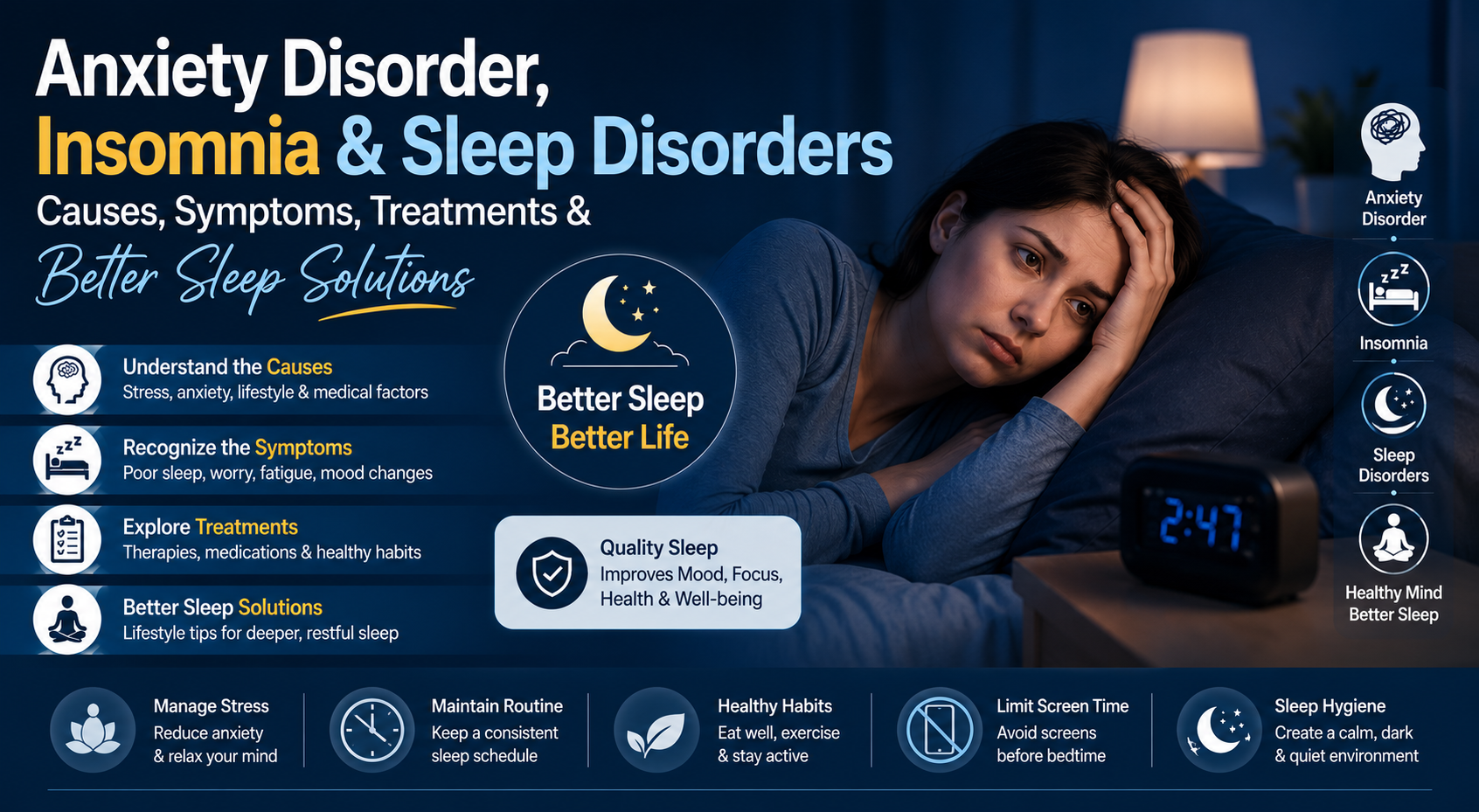
Mental health and quality sleep are closely connected. Millions of people worldwide experience anxiety disorder, insomnia, or other sleep disorders that affect daily life, work, relationships, and overall well-being. In 2026, growing awareness, better diagnostic tools, and improved treatment approaches are helping more people manage these conditions effectively.
This guide explains the causes, symptoms, treatment options, and practical lifestyle strategies that can help improve both mental health and sleep quality.
An anxiety disorder is more than occasional stress or worry. It involves persistent fear or anxiety that interferes with everyday activities.
Common types include:
Many people first notice anxiety because they begin having trouble sleeping.
Insomnia is one of the most common sleep disorders worldwide. It may involve:
Usually lasts a few days or weeks and is often triggered by stress.
Occurs at least three nights per week for three months or longer and often requires medical evaluation.
Sleep disorders include many conditions besides insomnia.
Repeated pauses in breathing during sleep.
An uncomfortable urge to move the legs while resting.
Problems caused by irregular sleep schedules or shift work.
A neurological disorder that causes excessive daytime sleepiness.
Recognizing the specific sleep disorder is important because treatment varies depending on the diagnosis.
Anxiety and sleep have a two-way relationship.
Anxiety can make it difficult to relax at bedtime, while poor sleep can increase stress, emotional sensitivity, and anxious thoughts the following day.
This cycle may lead to:
Breaking this cycle often requires addressing both anxiety and sleep habits together.
Several factors increase the likelihood of developing anxiety disorder or sleep disorders.
Understanding these risk factors can help people make healthier lifestyle choices.
Healthcare professionals usually begin with:
Depending on symptoms, additional tests such as sleep studies or laboratory testing may be recommended to identify underlying causes.
Treatment depends on the individual's symptoms, medical history, and diagnosis.
Cognitive Behavioral Therapy (CBT), including CBT for insomnia (CBT-I), is often recommended as a first-line treatment.
It helps people identify and change thoughts and behaviors that contribute to anxiety and poor sleep.
Simple habits can make a meaningful difference.
Healthcare professionals may prescribe medication when appropriate.
For example:
These medications are not suitable for everyone. They should only be taken as prescribed by a qualified healthcare professional after a proper medical evaluation.
Improving sleep often starts with daily habits.
Go to bed and wake up at the same time every day.
Blue light can interfere with the body's natural sleep cycle.
Regular physical activity supports better sleep and overall mental health.
Deep breathing, meditation, gentle stretching, or mindfulness can help reduce bedtime anxiety.
Keep your bedroom cool, dark, and quiet for optimal rest.
If you're looking for reliable educational resources about mental health, sleep wellness, and prescription medications, Genericshub offers articles that explain common health conditions, treatment approaches, medication safety, and healthy lifestyle practices. Whether you're in the UK, the United States, Australia, Canada, or elsewhere, it's important to consult a licensed healthcare professional before starting, stopping, or changing any prescription medicine, and to ensure that any medicines you obtain comply with the laws and prescribing requirements in your country.
Seek medical advice if:
Early diagnosis often leads to better long-term outcomes.
Anxiety disorder, insomnia, and other sleep disorders are common but treatable conditions. Understanding the connection between mental health and sleep is the first step toward better well-being. Healthy lifestyle habits, evidence-based therapies, and—when appropriate—prescription medications recommended by a healthcare professional can all play a role in treatment. If symptoms persist, seek guidance from a qualified healthcare provider to receive an accurate diagnosis and personalized care.
Yes. Anxiety can make it difficult to fall asleep or stay asleep, and persistent insomnia can also worsen anxiety.
Common sleep disorders include insomnia, obstructive sleep apnea, restless legs syndrome, circadian rhythm disorders, and narcolepsy.
No. Modafinil is generally prescribed for certain conditions that cause excessive daytime sleepiness, such as narcolepsy and shift work sleep disorder. It is not a standard treatment for insomnia.
No. These are prescription medications that should only be used under the guidance of a qualified healthcare professional after an appropriate medical evaluation.
Maintaining a regular sleep schedule, limiting caffeine and screen time before bed, exercising regularly, and practicing relaxation techniques can all help improve sleep quality.