English
 Arabic
 French
 Spanish
 Portuguese
 Deutsch
 Turkish
 Dutch
Dutch
 Italiano
 Russian
 Romaian
 Portuguese (Brazil)
 Greek
Greek
OLTC Supplier Comparison: Benchmarks, Levels, and Business Impact for Transformer Buyers
Other |
2026-08-18 09:48:44
 Advertise With Us
 About Us
 Terms And Conditions
 Privacy Policy
Ver Todo
Privacy Policy
Ver Todo

Upgrade to Pro
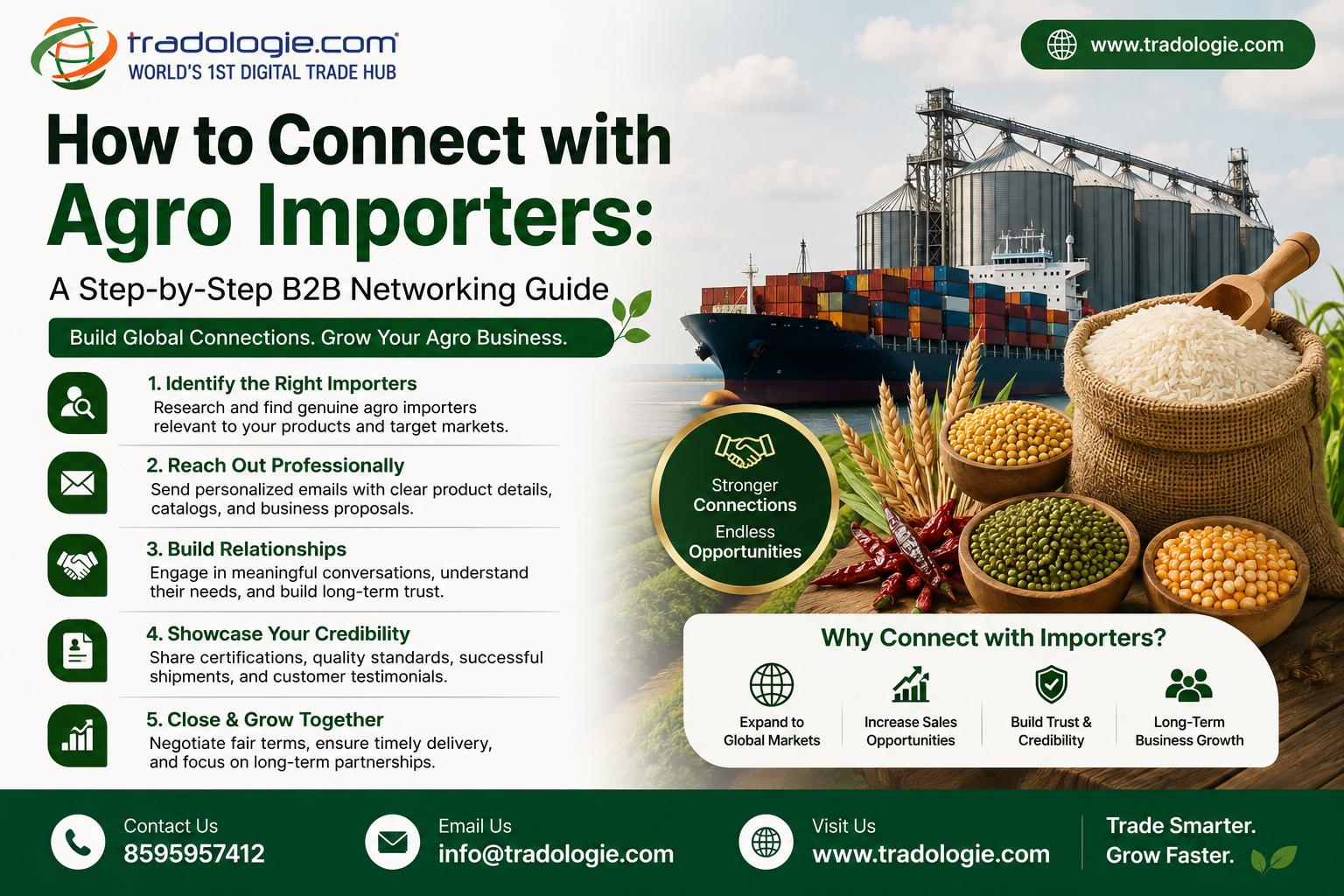
Every year, millions of tonnes of agricultural products cross international borders. Indian rice exports arrive in West Africa. Spices head to the Middle East and Europe. Sugar moves into food manufacturing centers. Pulses, oilseeds, millets, cereals, edible oils, and dry fruits are among the world’s largest trading ecosystems.
Yet for every successful shipment, every exporter faces a challenge.
Locating the buyer.
For decades exporters have poured tremendous resources into productive capacity, processing facilities, certifications, and logistics. Ironically, a lot of them still struggle with the single most important aspect of international trade: to find real agricultural importers with real procurement needs.
The question is no longer whether there is demand. Food consumption continues to grow worldwide, urban populations continue to grow, and food security has become a strategic priority for governments worldwide.
The real question is how exporters can efficiently connect with those buyers without wasting months chasing leads that never turn into business.
The Traditional Method of Finding Importers
Historically, international trade was built on relationships.
Say a rice exporter wishing to get into a new rice import market will start by examining trade statistics and finding countries with large imports.
The next step was to purchase importer directories, go to international exhibitions, approach embassies, contact export promotion councils, work through commission agents, and rely heavily on referrals.
Once potential buyers were identified, the exporter would begin to send product catalogs, quotations, samples, certifications, and company profiles. It would take weeks or months before substantive commercial discussions happened.
All this effort didn't guarantee that the buyer was actively looking, financially capable, or even interested. It worked because there was no other way. But it was expensive and time-consuming and highly fragmented.
Why the Old Networking Model is No Longer Viable
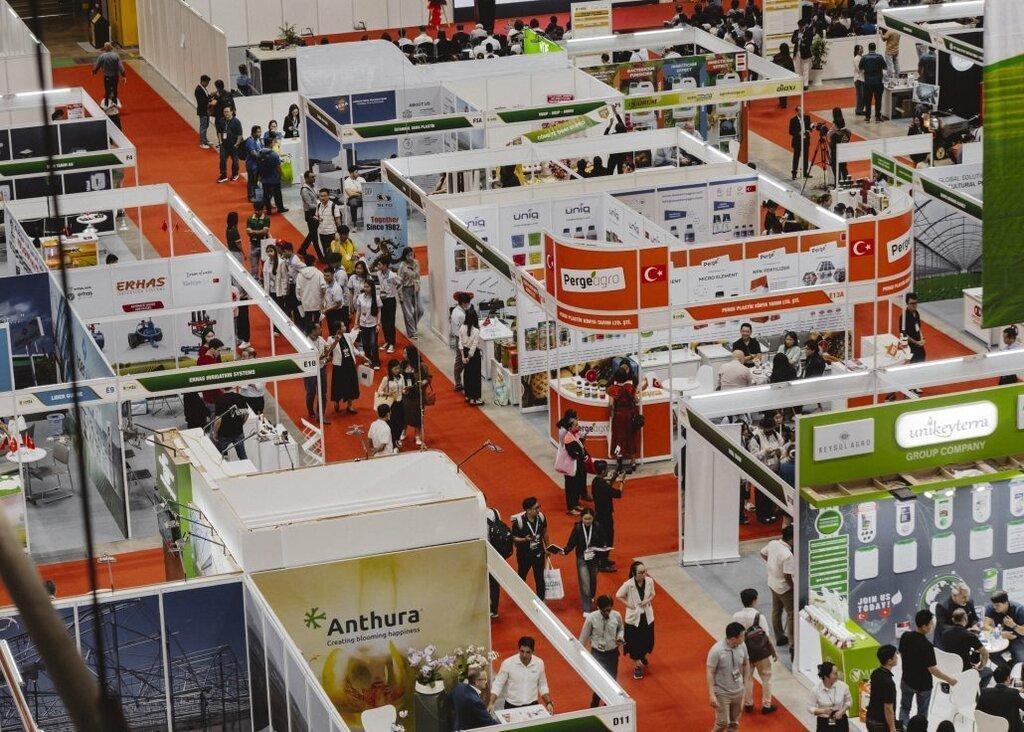
The pattern of world agricultural trade has changed dramatically in the past decade.
Today’s buyers want faster quotes, open negotiations, standard documents, and quicker execution.
Procurement teams are frequently comparing suppliers across multiple countries simultaneously, and exporters are experiencing heightened competition from companies that operate in digitally connected ecosystems.
But the traditional networking model is still mostly the same.
Exporters spend a lot of time to identify buyers even before they can start talking business. Travel costs keep increasing, trade exhibitions are expensive, and the lists of importers you buy often contain outdated information.
Economically, these activities are associated with transaction costs that have little added value to the movement of goods.
This leads to a system where spotting opportunities is often more difficult than executing them.
Step One: Know Where Demand Exists
Successful exporters don't start by looking for buyers. They start by understanding demand. The demand geography of each agricultural commodity is not the same.
Rice exporters naturally eye Africa, the Middle East, and Southeast Asia. Spice exporters are targeting food processing industries, retail distributors, and nutraceutical manufacturers. Pulse exporters seek markets where domestic production is not sufficient to meet consumption. Sugar exporters watch for industrial demand from food makers and institutional buyers.
Exporters can network far more strategically once they know the regions that regularly import their products.
They can aim at markets that already have a lot of procurement activity, rather than cold-calling hundreds of companies.
Step Two: Establish Credibility
In international trade credibility is often the deciding factor in whether a buyer even responds.
When importers look for new suppliers, they want to be confident that the exporter can consistently supply quality goods, conform to international standards, and professionally handle large-volume orders.
A well-prepared exporter gives much more than a price quotation. Buyer confidence is built on company credentials, export experience, certifications, processing capabilities, packaging standards, inspection procedures, and logistics capacity.
Trust is built long before the first shipment leaves the port.
Step Three: Shift from Finding Buyers to Finding Procurement
One of the most significant changes happening in global B2B commerce is the transition from buyer discovery to demand discovery.
Exporters traditionally asked: “Who imports my product?”
Modern exporters ask, “Who is actively buying today?”
That is a big difference. A database of importers could tell you who bought turmeric last year. It doesn't tell you if that company has an active procurement requirement today.
But procurement ecosystems link exporters directly to buyers that are already sourcing products. This removes uncertainty and dramatically improves conversion rates.
Step Four: Build Relationships, Not Transactions
The best agricultural exporters seldom depend on one-time shipments. Rather, they are focused on developing long-term procurement relationships.
Global buyers appreciate consistency. They want suppliers who can deliver to quality standards, on time; respond quickly; and respond to changing market conditions.
Every successful shipment becomes a chance to secure the next one.
Therefore, networking should not stop after signing a contract. It should grow with every successful transaction.
Reliability builds long-term business, not constant prospecting.
Step Five: Use Technology to Eliminate Friction
Technology is transforming virtually every part of global commerce. Agricultural trade is no different.
Structured procurement platforms, digital documentation, buyer verification, standardized negotiations, and artificial intelligence are replacing many of the manual processes that have historically bottlenecked international trade.
For exporters it means fewer intermediaries, more transparency, faster communication, and much lower buyer acquisition costs.
Technology does not replace relationships, but it enhances them by removing inefficiencies from the agricultural import process.
How Organized Procurement is Replacing Traditional Networking
The development of agricultural trade is like the development of many other industries.
Banking went from paper transactions to digital payments. Travel shifted from real-life booking offices to the web. Retail has evolved from a fragmented marketplace to integrated e-commerce. Agricultural procurement is heading the same way.
Exporters are moving away from relying solely on exhibitions, brokers, and cold outreach and are instead opting for structured procurement ecosystems with verified buyers, structured negotiations, and transparent workflows already in place.
The goal is not just to connect businesses. It is to build an environment where trade can take place more efficiently.
How Tradologie.com Makes Global Buyer Networking Easy
This very challenge is what Tradologie.com was built around.
The platform provides access to one of the world’s largest AI-powered B2B procurement ecosystems for agricultural commodities, instead of exporters spending months searching for importers in different countries.
Verified buyers from over 100 countries are actively sourcing products from rice and sugar to spices, pulses, edible oils, cereals, dry fruits, and other bulk commodities.
The real difference with the platform is that the process does not end when a buyer is found. To find buyers for agricultural commodities, exporters can register as a seller.
Every exporter is assigned a dedicated trade manager on Tradologie.com who helps them end-to-end through the transaction life cycle. Trade Manager makes the procurement journey smooth and organized, from understanding the buyer requirements and facilitating negotiations to coordinating documentation, inspections, logistics, and transaction execution.
In addition to this human expertise, Tradologie.com’s AI algorithms intelligently match buyers and suppliers on the basis of product specifications, quantity requirements, destination markets, procurement intent, and prevailing market conditions. Instead of spending months trying to find the right buyer, exporters are presented with opportunities that are already a good fit for their business.
The outcome is a procurement system that is faster, more transparent, and significantly more efficient than traditional networking methods.
Digital procurement ecosystems, AI-driven buyer matching, verified trade networks, and dedicated transaction support are transforming the movement of agricultural commodities across borders.
Tradologie.com embodies this evolution, blending smart technology with dedicated trade managers who offer end-to-end trade assistance throughout the export journey. Instead of just helping exporters to find buyers, the platform helps to build structured, transparent, and long-term international business relationships.