English
 Arabic
 French
 Spanish
 Portuguese
 Deutsch
 Turkish
 Dutch
Dutch
 Italiano
 Russian
 Romaian
 Portuguese (Brazil)
 Greek
Greek
Free IPTV Trial vs Paid IPTV: Which One Is Better?
Film |
2026-07-30 11:41:50
 Advertise With Us
 About Us
 Terms And Conditions
 سياسة الخصوصية
عرض كل النتائج
سياسة الخصوصية
عرض كل النتائج

ترقية الحساب
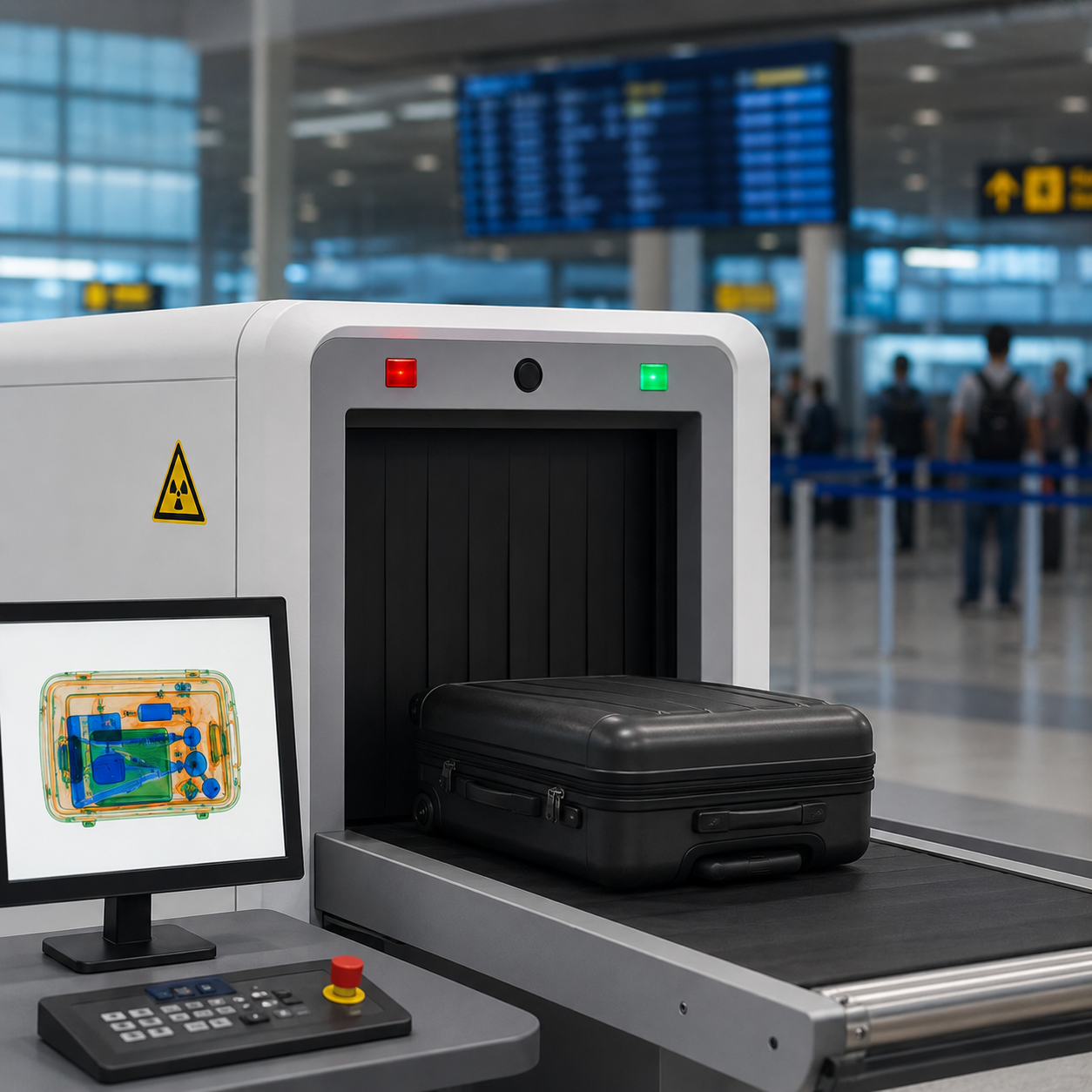
Security threats today are more complex and unpredictable than they were even a decade ago. Airports, metro stations, government buildings, and commercial facilities all face growing pressure to screen higher volumes of visitors without compromising safety or speed. This is why X-Ray Baggage Scanners have become a core part of modern security infrastructure — they allow organizations to inspect bags and packages quickly, accurately, and without physically opening every item.
Every day, airports handle thousands of travelers, shopping centers see constant foot traffic, and government institutions need to screen guests without forming huge lines.
Security risks have also become more complex at the same time. Because concealed goods are more difficult to find by visual inspection alone, regulatory agencies are putting more and more pressure on facilities to adhere to stringent screening requirements. When taken as a whole, these demands turn speedier and more dependable inspection equipment from an optional upgrade into an operational requirement.
The device records internal imagery based on how various materials absorb X-rays when luggage moves past the scanner on a conveyor belt.
Metals, organic compounds, and other substances usually show up on the scan as different hues or densities, which enables skilled operators to distinguish between commonplace objects and possible dangers. The procedure is completely non-invasive, and instead of depending on physical searches for each bag, contemporary solutions are made to facilitate rapid operator-assisted decision-making.
Missed threats might result from fatigue, distraction, and uneven training, particularly during busy times.
Additionally, it takes time to physically inspect each bag, which causes bottlenecks that irritate guests and impede operations. Relying only on manual inspections raises operational risk and liability for the entity in charge of security as attacks become more sneaky and inventive.
| Factor | Manual Inspection | X-Ray Baggage Scanners |
| Speed | Slow, one bag at a time | Fast, continuous screening |
| Accuracy | Dependent on inspector alertness | Consistent, image-based detection |
| Threat Detection | Limited to visible items | Detects concealed and layered items |
| Throughput | Low during peak hours | High-volume capable |
| Human Dependency | Very high | Reduced, supports operator decisions |
| Operational Efficiency | Prone to bottlenecks | Streamlined and scalable |
When compared to human checks, automated imaging enables security officers to process a lot more bags per hour, cutting down on wait times at access points.
Concealed objects that could otherwise go undetected during a visual or physical search are revealed via detailed imaging.
Security personnel can concentrate on higher-priority duties since continuous screening eliminates the need for sizable manual inspection teams.
The likelihood that a threat may go unnoticed because of weariness or irregular inspection procedures is decreased by consistent imaging.
In addition to making public areas safer, quicker and more accurate screening also lessens the possibility of security issues.
X-ray systems assist facilities in adhering to regulatory requirements, which are necessary for many businesses to meet security screening criteria.
It is possible to add more scanning lanes as visitor demand increases without increasing manual staffing proportionately.
The speed and accuracy of baggage screening choices are being altered by artificial intelligence. By automatically identifying suspicious shapes or densities, AI-assisted solutions relieve human operators of the load of manually evaluating each image.
While pattern recognition assists in identifying dangers based on learned data rather than only operator expertise, image enhancement methods improve clarity for cluttered or overlapping elements. This speeds up decision-making without sacrificing accuracy and lessens operator fatigue during extended shifts. Additionally, AI X-Ray baggage scanners typically generate fewer false alarms, which contributes to more seamless security operations during busy times.
Before selecting a system, security decision-makers should evaluate:
Just as important as choosing the technology itself is picking the best manufacturer for X-ray baggage scanners. A manufacturer's track record with comparable installations, product certifications, and industry experience should all be considered by buyers.
Because scanning systems need constant calibration, maintenance, and operator training to operate dependably, after-sales service is especially crucial. The selection should also take into account the availability of dependable spare parts and adherence to pertinent safety regulations. One such firm, Krystalvision, focuses on offering institutional purchasers solid screening technology supported by organized technical assistance.
Consistent maintenance keeps scanning systems accurate and reliable over time:
Technology for security screening is still developing. A greater portion of threat detection is anticipated to be handled by AI-driven automation, while cloud connectivity enables centralized monitoring across several sites.
Predictive maintenance technologies are lowering unplanned equipment downtime, and smart analytics are assisting security teams in spotting trends over time. All of these advancements hint to security environments that are becoming more integrated and data-driven.
Q: What do X-Ray Baggage Scanners detect?
Answer: Without physically opening bags, they may identify a variety of substances, such as metal objects, biological materials, electronics, and odd forms or densities that might point to hidden dangers.
Q: Are X-Ray Baggage Scanners safe?
Answer: Yes, these systems use controlled radiation levels intended to be safe for both operators and the surrounding environment when used in accordance with manufacturer specifications and regulatory regulations.
Q: Can they detect explosives?
Answer: Although suspect density patterns and forms linked to explosive materials can be flagged by modern scanners, further detection technologies or a qualified operator's evaluation are usually needed for final confirmation.
Q: How accurate are they?
Answer: Modern dual-energy scanners often give far higher detection accuracy than manual inspection alone, albeit accuracy is dependent on the image technology and operator training of the machine.
Q: Which industries need them?
Answer: Baggage scanners are frequently used as part of security procedures in airports, train and metro stations, government buildings, hospitals, hotels, shopping centers, educational institutions, and business facilities.
Instead than depending just on manual inspections, modern security requires a proactive approach to screening. Advanced luggage scanning systems assist businesses in maintaining public safety at scale, lowering risk, and increasing operational efficiency. Purchasing the appropriate screening equipment is about more than just compliance; it's about creating a long-term security architecture that can change as threats and visitor numbers do. Krystalvision continues to assist organizations in making well-informed choices on this crucial security layer.
Understanding your unique security needs and operational limitations is the first step in assessing baggage screening options for your company. You can make a better, long-term choice by investigating cutting-edge screening methods under the direction of knowledgeable experts. To determine which screening option best suits the requirements of your facility, speak with the Krystalvision team.