Introduction
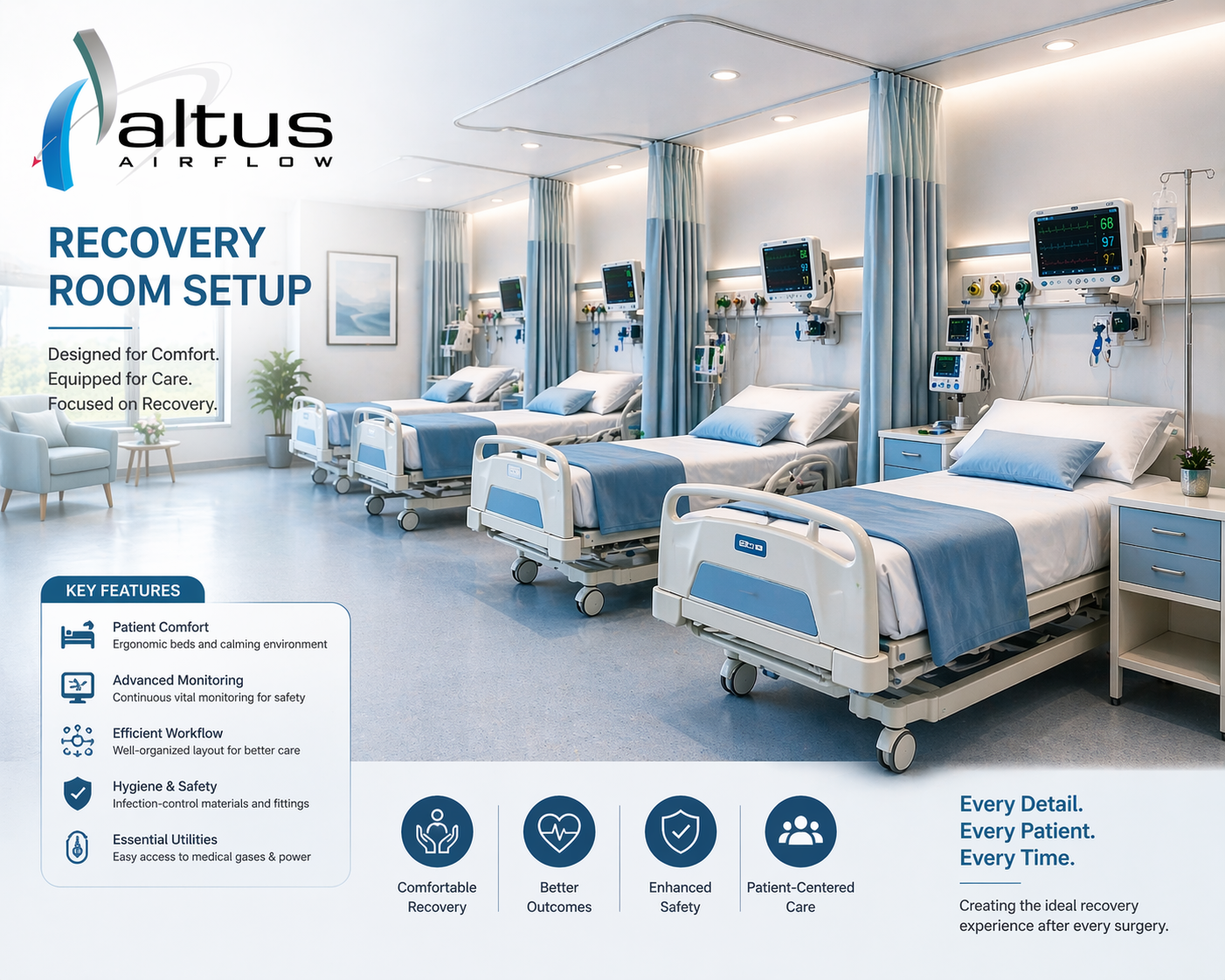
A Recovery Room Setup is designed to provide a safe and efficient environment where patients receive immediate care after surgery, anesthesia, or other medical procedures. A properly equipped recovery room enables healthcare professionals to monitor patients continuously, manage post-operative treatment, and respond quickly to emergencies. The right combination of medical equipment and infrastructure supports high-quality patient care and promotes a smooth recovery.
Multi-Parameter Patient Monitors
Continuous monitoring is essential in every recovery room.
Multi-parameter patient monitors measure heart rate, blood pressure, oxygen saturation, respiratory rate, ECG, and body temperature. These devices provide real-time information that helps healthcare professionals identify changes in a patient's condition quickly.
Continuous monitoring enhances patient safety.
Recovery Beds
Specialized recovery beds provide comfort and clinical support.
Modern recovery beds feature adjustable positioning, side rails, locking wheels, and ergonomic controls that improve patient safety while allowing healthcare professionals easy access during treatment.
Comfortable beds support effective recovery.
Oxygen Delivery Systems
Many patients require oxygen support after surgery.
Recovery rooms should include oxygen outlets, flow meters, oxygen masks, nasal cannulas, and humidifiers to help maintain adequate oxygen levels during the recovery period.
Reliable oxygen therapy supports respiratory care.
Medical Gas Pipeline Systems
Medical gas infrastructure is a key part of recovery room operations.
These systems include oxygen pipelines, vacuum systems, compressed air outlets, and alarm systems that provide uninterrupted support during routine care and emergency situations.
Dependable medical gas systems improve treatment readiness.
Suction Units
Suction equipment is essential for airway management.
These devices remove fluids and secretions when necessary, helping maintain clear airways and reducing the risk of respiratory complications.
Immediate access improves emergency preparedness.
Infusion Pumps and Syringe Pumps
Accurate medication delivery is important during recovery.
Infusion pumps and syringe pumps administer intravenous fluids, pain medications, antibiotics, and other treatments with controlled precision to ensure safe and effective patient care.
Precise delivery improves treatment outcomes.
Defibrillators
Recovery rooms should be equipped for cardiac emergencies.
Defibrillators provide immediate treatment for life-threatening heart rhythm disturbances and are an essential part of emergency preparedness.
Rapid intervention enhances patient safety.
Emergency Crash Carts
Crash carts contain life-saving equipment and medications.
These carts typically include airway management devices, emergency drugs, resuscitation equipment, intravenous supplies, and other essential medical tools needed during critical situations.
Preparedness supports rapid emergency response.
Central Monitoring Systems
Larger recovery areas often require centralized patient observation.
Central monitoring stations allow healthcare professionals to monitor multiple patients simultaneously, improving workflow and clinical supervision.
Nurse Call Systems
Patients should have immediate access to healthcare assistance.
Nurse call systems allow patients to communicate quickly with healthcare professionals whenever support is required.
Backup Power and Safety Systems
Critical medical equipment must remain operational during emergencies.
Recovery rooms should include backup generators, uninterrupted power supplies, emergency lighting, and alarm systems to ensure continuous patient care even during power outages.
Reliable utility systems improve operational safety.
Conclusion
A modern recovery room setup should include multi-parameter patient monitors, recovery beds, oxygen delivery systems, medical gas pipeline systems, suction units, infusion pumps, syringe pumps, defibrillators, emergency crash carts, central monitoring stations, nurse call systems, and dependable backup power. Together, these components create a safe, efficient, and reliable environment for post-operative patient recovery.
FAQs
1. What equipment is required for a Recovery Room Setup?
A Recovery Room Setup should include patient monitors, recovery beds, oxygen delivery systems, medical gas pipeline systems, suction units, infusion pumps, defibrillators, emergency crash carts, central monitoring systems, and nurse call systems.
2. Why are patient monitors important in a recovery room?
They continuously monitor vital signs and help healthcare professionals identify complications early.
3. What is the purpose of medical gas systems?
They provide oxygen, vacuum, and compressed air required for routine patient care and emergency treatment.
4. Why are infusion pumps used in recovery rooms?
They ensure accurate administration of medications and intravenous fluids during post-operative care.
5. What emergency equipment should every recovery room have?
Recovery rooms should include defibrillators, emergency crash carts, airway management devices, suction units, oxygen systems, and other resuscitation equipment for immediate medical response.
 English
 Arabic
 French
 Spanish
 Portuguese
 Deutsch
 Turkish
 Dutch
Dutch
 Italiano
 Russian
 Romaian
 Portuguese (Brazil)
 Greek
Greek
 Advertise With Us
 About Us
 Terms And Conditions
 Политика конфиденциальности
Смотреть все
Политика конфиденциальности
Смотреть все