English
 Arabic
 French
 Spanish
 Portuguese
 Deutsch
 Turkish
 Dutch
Dutch
 Italiano
 Russian
 Romaian
 Portuguese (Brazil)
 Greek
Greek
Casino Online Non AAMS e Tecnologia Avanzata
Crafts |
2026-05-28 21:11:23
 Advertise With Us
 About Us
 Terms And Conditions
 Политика конфиденциальности
Смотреть все
Политика конфиденциальности
Смотреть все

Обновить до Про
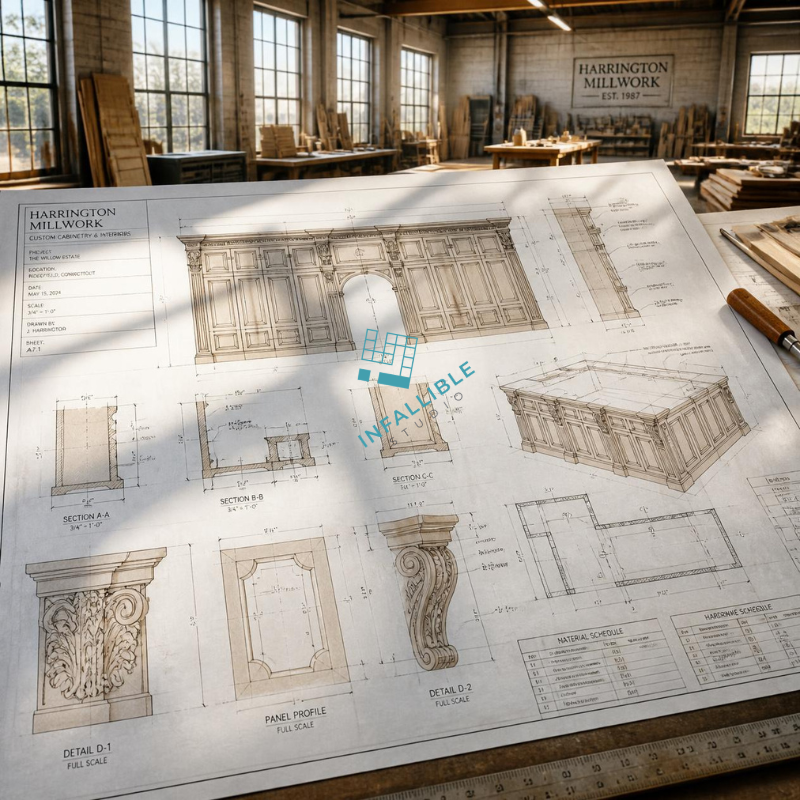
Millwork shop drawings are one of the most important deliverables in custom woodworking, commercial interiors, hospitality projects, retail fit-outs, healthcare facilities, and residential construction. They transform architectural concepts into detailed fabrication and installation documents that manufacturers, CNC operators, and installers rely on throughout the project.
Before hiring a drafting company, one of the first questions clients ask is:
"How much do millwork shop drawings cost?"
The answer isn't straightforward. Pricing varies depending on several technical and project-related factors. A small residential cabinetry project may cost only a few hundred dollars, while a large commercial millwork package can require thousands of detailed drawings, revisions, and coordination efforts.
In this guide, we'll explain what influences millwork shop drawing costs, how drafting companies estimate pricing, and how you can reduce expenses without compromising quality.
Millwork shop drawings are highly detailed technical drawings prepared before fabrication begins. Unlike architectural drawings, shop drawings focus on how each component will actually be manufactured, assembled, finished, and installed.
They typically include:
Floor plans
Elevations
Sections
Detailed joinery
Material specifications
Hardware schedules
Dimensions
Edge treatments
Finish information
Assembly details
Installation notes
CNC-ready information (when required)
Bill of Materials (BOM)
These drawings minimize fabrication errors, speed production, and ensure every component fits perfectly on-site.
Knowing what affects pricing helps clients:
Create realistic project budgets
Compare drafting companies fairly
Avoid hidden costs
Reduce unnecessary revisions
Improve project planning
Select the right outsourcing partner
Rather than focusing only on the lowest price, it's important to evaluate the value delivered through accuracy, experience, and coordination.
Project size is the biggest pricing factor.
A project containing:
10 cabinets
5 reception desks
2 display units
requires far less drafting than a project containing:
400 custom cabinets
Hotel guestrooms
Retail shelving systems
Commercial kitchens
Wall panel systems
More millwork components require:
More drawing sheets
More dimensions
More detailing
More coordination
Larger projects naturally require more drafting hours.
Not all shop drawings are created equally.
Basic drawings may include:
Plan
Elevation
Standard dimensions
Advanced shop drawing packages often include:
Exploded views
Joinery details
Hardware positioning
Section details
Material thickness
Edge banding
CNC machining information
Assembly sequences
Installation instructions
The more detail required, the greater the drafting effort.
Different millwork products require different levels of complexity.
Common examples include:
Kitchen cabinetry
Bathroom vanities
Reception counters
Office furniture
Retail fixtures
Hotel casework
Libraries
Wall paneling
Closets
Display cabinets
Commercial millwork
Institutional millwork
Simple rectangular cabinets require less drafting than curved reception desks or custom retail displays.
Complex custom designs require significantly more drafting time.
Examples include:
Curved cabinets
Radius counters
Angled joinery
Floating furniture
Hidden hardware
Decorative panels
Custom moldings
Feature walls
Unique joinery systems
Every non-standard element requires additional detailing and quality checks.
Revisions directly impact project costs.
Typical revisions include:
Architectural changes
Interior designer updates
Client requests
Material substitutions
Hardware changes
Site adjustments
Most drafting firms include a limited number of revisions in their pricing. Additional revisions are usually billed separately.
Providing finalized design information before drafting begins can significantly reduce costs.
Different clients follow different drafting standards.
Examples include:
AWI Standards
AWMAC Standards
Company-specific drafting templates
Contractor standards
Manufacturer standards
Following strict industry standards requires additional checking and documentation, which increases drafting effort.
Pricing also depends on the software required for the project.
Common software includes:
AutoCAD
Microvellum
Cabinet Vision
Autodesk Inventor
SolidWorks
SketchUp
Revit
Projects requiring CNC integration, 3D modeling, or automated manufacturing workflows often involve additional setup and validation.
Some clients require:
2D shop drawings only
Others require:
Full 3D models
Rendered views
Assembly models
Clash detection
BIM coordination
Creating detailed 3D models takes additional time, increasing the overall project cost.
Projects using multiple materials require more documentation.
Examples include:
MDF
Plywood
Solid wood
Veneer
Laminate
Quartz
Stone
Glass
Acrylic
Metal
Each material may require unique construction details, edge treatments, and fabrication notes.
Modern cabinetry contains numerous hardware components.
These may include:
Hinges
Drawer slides
Handles
Locks
Lift systems
Soft-close mechanisms
Shelf supports
Adjustable legs
Proper hardware positioning and installation details require additional drafting time.
Urgent projects generally cost more.
Rush drafting often requires:
Extended work hours
Dedicated drafting resources
Faster quality checks
Priority scheduling
Standard delivery schedules are usually the most cost-effective option.
Many commercial projects require coordination with multiple disciplines, including:
Architects
Interior designers
Structural engineers
MEP consultants
General contractors
Fabricators
Coordinating drawing updates across teams adds time and complexity to the drafting process.
Most millwork drafting companies use one of the following pricing structures:
Suitable for smaller projects with a predictable number of drawing sheets.
Ideal for projects with changing scopes, frequent revisions, or ongoing drafting support.
A fixed-price approach based on the complete scope of work, commonly used for commercial projects.
Best for fabricators, manufacturers, or contractors who need continuous drafting support over an extended period.
The lowest quote isn't always the best value. Ask whether the proposal includes:
Design revisions
Coordination meetings
Site markups
Redline updates
CNC file generation
Bill of Materials (BOM)
PDF deliverables
DWG files
3D models
As-built revisions
Clarifying deliverables upfront helps avoid unexpected charges later.
You can keep drafting costs under control by:
Finalizing designs before drafting begins
Providing complete architectural drawings
Sharing finish schedules early
Using standardized hardware
Minimizing late-stage revisions
Clearly defining project scope
Responding quickly to RFIs and review comments
Working with an experienced drafting partner
Efficient communication often reduces project time and overall cost.
Outsourcing has become a preferred solution for contractors, millwork manufacturers, and design firms looking to scale efficiently.
Key advantages include:
Lower operational costs
Access to experienced drafters
Faster turnaround times
Flexible project capacity
High-quality documentation
Reduced in-house workload
Improved production accuracy
Support for multiple software platforms
Consistent drawing standards
By outsourcing, businesses can focus on fabrication, project management, and client relationships while experienced drafting teams handle the technical documentation.
Price should never be the only deciding factor. Consider:
Industry experience
Portfolio quality
Knowledge of fabrication processes
Software expertise
Quality assurance process
Turnaround time
Communication
Revision policy
Ability to meet industry standards
Long-term reliability
A skilled drafting partner can help prevent costly manufacturing errors, reduce delays, and improve overall project efficiency.
Millwork shop drawing costs depend on far more than the number of drawings produced. Project size, design complexity, level of detailing, revisions, coordination, software requirements, materials, and delivery timelines all influence the final price.
Instead of choosing the lowest quote, focus on the overall value a drafting partner provides. Accurate shop drawings reduce fabrication mistakes, streamline installation, and contribute to successful project delivery.
If your business regularly handles custom millwork projects, investing in professional millwork shop drawing services can save significant time and money over the course of a project.
Whether you're a millwork manufacturer, architect, interior designer, contractor, or furniture fabricator, Infallible Studio provides precise, production-ready millwork shop drawings tailored to your workflow. Our team delivers detailed documentation, 3D models, BOMs, and CNC-ready drawings with quick turnaround times and a strong focus on accuracy, helping you move confidently from design to fabrication.