English
 Arabic
 French
 Spanish
 Portuguese
 Deutsch
 Turkish
 Dutch
Dutch
 Italiano
 Russian
 Romaian
 Portuguese (Brazil)
 Greek
Greek
Top Reasons to Try Lymphatic Massage in Riyadh for Better Circulation
Health |
2026-06-24 10:02:17
 Advertise With Us
 About Us
 Terms And Conditions
 Privacy Policy
See All
Privacy Policy
See All

Upgrade to Pro
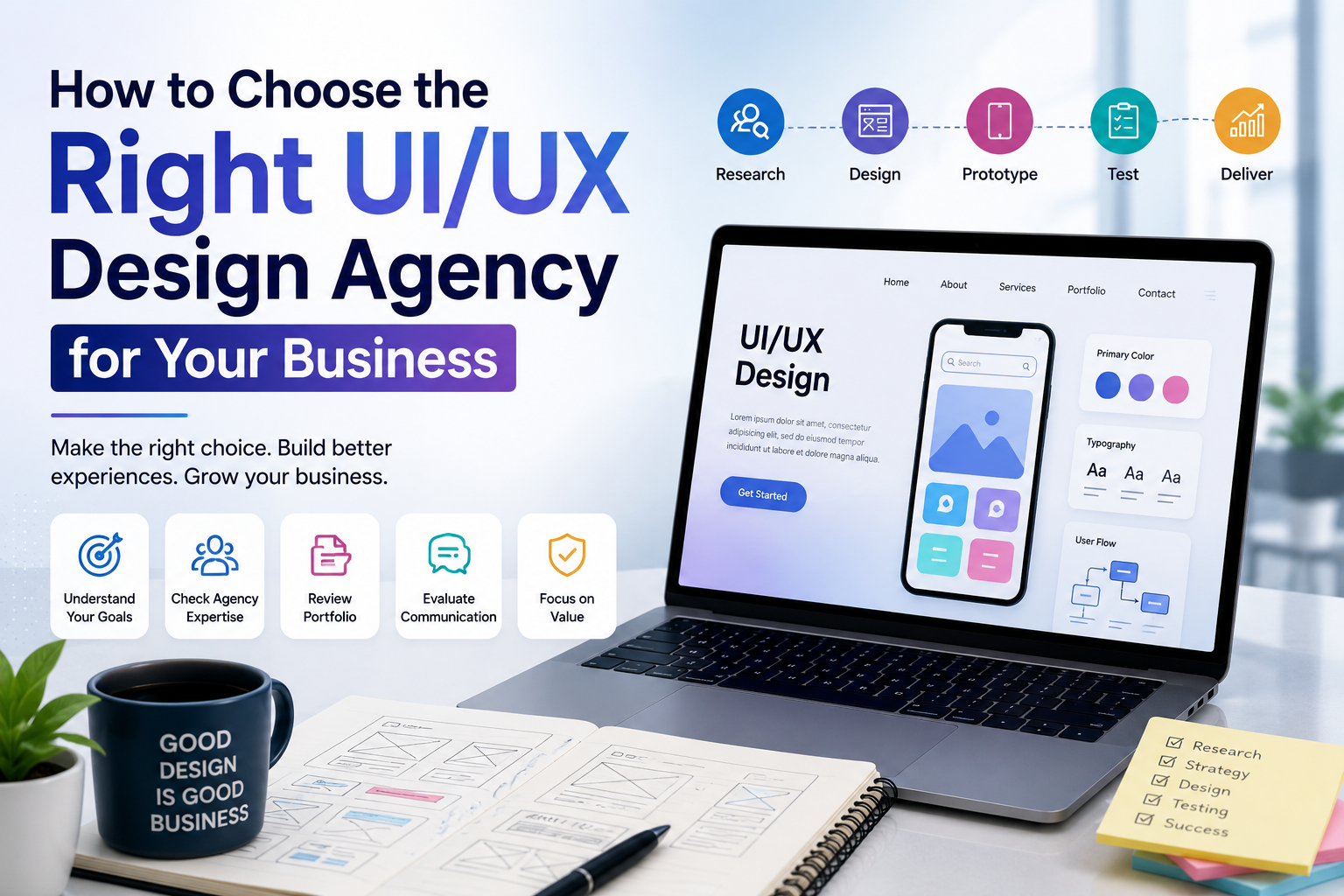
In today's digital-first marketplace, user experience can make or break a business. Whether you're launching a new website, developing a mobile application, building a SaaS platform, or redesigning an existing product, the quality of your user experience directly impacts customer satisfaction, engagement, and conversions. As a result, choosing the right UI/UX design agency has become one of the most important decisions organizations can make when investing in digital products.
A professional UI/UX design agency does more than create attractive interfaces. It helps businesses understand their users, identify pain points, improve usability, and develop intuitive experiences that align with both customer expectations and business objectives. However, with countless agencies offering similar services, finding the right partner can be challenging.
This guide explores the key factors businesses should consider when selecting a UI/UX design agency and explains how the right partnership can contribute to long-term digital success.
Before evaluating agencies, it is important to understand what UI and UX design actually involve.
User Interface (UI) design focuses on the visual aspects of a digital product, including layouts, colors, typography, buttons, icons, and interactive elements. The goal is to create visually appealing and consistent interfaces that enhance usability.
User Experience (UX) design focuses on how users interact with a product. UX designers research user behavior, identify challenges, map customer journeys, and create experiences that are intuitive and efficient.
A comprehensive UI/UX design agency typically provides services such as:
UX Research
User Interviews
Competitor Analysis
Information Architecture
User Journey Mapping
Wireframing
Interactive Prototyping
UI Design
Mobile App Design
Website Design
Design Systems
Accessibility Optimization
Usability Testing
UX Audits
Conversion Rate Optimization
These services work together to create digital products that are both functional and enjoyable to use.
Many businesses focus heavily on marketing and product development while overlooking the user experience. However, even the most innovative product can struggle if users find it confusing or difficult to navigate.
Effective UI/UX design helps organizations:
Improve customer satisfaction
Increase website engagement
Boost conversion rates
Reduce bounce rates
Strengthen brand credibility
Enhance customer loyalty
Lower development costs through early testing
Improve product adoption rates
Support long-term business growth
When users can easily accomplish their goals, they are more likely to return, recommend the product, and remain loyal customers.
One of the first steps in selecting a UI/UX design agency is reviewing its portfolio. A portfolio provides insight into the agency's design style, problem-solving abilities, and industry experience.
When reviewing projects, look beyond visual aesthetics. Consider whether the designs appear intuitive, user-focused, and aligned with business goals. Strong agencies demonstrate how their design decisions improve user experiences rather than simply creating attractive interfaces.
Pay attention to the variety of industries represented in the portfolio. Experience across different sectors often indicates adaptability and a broad understanding of user needs.
Research forms the foundation of effective user experience design. Agencies that invest in understanding user behavior are better equipped to create solutions that address real-world challenges.
Ask potential agencies about their research methodologies, including:
User interviews
Stakeholder workshops
Customer surveys
Analytics reviews
Competitor analysis
Usability testing
Persona development
An agency that prioritizes research is more likely to deliver designs based on evidence rather than assumptions.
Every successful UI/UX project follows a structured process. While methodologies may vary, most reputable agencies include several key stages:
This phase focuses on understanding business goals, user needs, project requirements, and competitive landscapes.
The agency gathers qualitative and quantitative insights to inform design decisions.
Content and functionality are organized to create logical navigation structures.
Low-fidelity layouts are developed to establish page structures and user flows.
Interactive prototypes allow stakeholders and users to experience workflows before development begins.
The user interface is refined using branding, typography, colors, and visual hierarchy.
Usability testing identifies areas for improvement before final implementation.
A transparent and well-defined process typically leads to better outcomes and fewer surprises during development.
While strong UX principles apply across industries, agencies with experience in your sector may have a deeper understanding of user expectations and industry-specific challenges.
For example:
Healthcare platforms require accessibility and compliance considerations.
Financial applications demand trust, security, and clear workflows.
E-commerce websites prioritize product discovery and checkout optimization.
SaaS platforms often require complex dashboard and workflow design.
Industry experience can accelerate project timelines and improve overall results.
Usability testing is one of the most valuable components of the design process. It allows agencies to observe real users interacting with prototypes and identify potential issues before development.
Testing can reveal:
Navigation problems
Confusing workflows
Content gaps
Accessibility challenges
User frustrations
By addressing these issues early, businesses can avoid costly redesigns and improve customer satisfaction after launch.
Client testimonials and case studies offer valuable insight into an agency's performance and professionalism.
Look for evidence of:
Measurable business outcomes
Improved conversion rates
Enhanced user engagement
Increased customer retention
Positive client relationships
Case studies that include challenges, solutions, and results often provide the clearest picture of an agency's capabilities.
Successful design projects require ongoing collaboration between stakeholders, designers, developers, and business teams.
The best agencies:
Communicate clearly
Provide regular updates
Encourage stakeholder feedback
Explain design decisions
Maintain transparency throughout the project
Strong communication helps ensure alignment and reduces misunderstandings.
Digital products evolve over time. As businesses grow, they often add new features, services, and user journeys.
Agencies that create scalable design systems can support long-term growth by establishing consistent design standards and reusable components.
Benefits of design systems include:
Faster development
Improved consistency
Easier maintenance
Better collaboration between teams
Reduced design debt
Scalability should be a key consideration for businesses planning future expansion.
Although UI/UX agencies focus primarily on design, technical knowledge remains important.
Experienced agencies understand:
Responsive web design
Mobile-first design principles
Front-end development constraints
Accessibility guidelines
Performance optimization
Design-to-development handoff processes
This knowledge helps ensure designs can be implemented efficiently without compromising usability.
Budget is an important factor, but choosing the cheapest agency often leads to disappointing results.
Instead of focusing solely on cost, evaluate:
Experience
Research capabilities
Process maturity
Communication quality
Long-term value
Portfolio strength
Industry expertise
A well-executed UI/UX project can generate significant returns through improved customer experiences and increased conversions.
Many organizations make avoidable mistakes during the agency selection process.
Some of the most common include:
Low-cost services may sacrifice research, testing, or strategic thinking.
Without research, design decisions often rely on assumptions rather than user insights.
A visually appealing interface does not guarantee a positive user experience.
Testing helps identify usability issues before they impact customers.
Projects without defined goals often experience scope changes and unclear outcomes.
Avoiding these mistakes can significantly improve project success.
Before making a final decision, consider asking:
How do you conduct UX research?
Can you share relevant case studies?
What industries have you worked with?
How do you measure project success?
Do you conduct usability testing?
What collaboration tools do you use?
How do you handle revisions?
What happens after launch?
The answers can help determine whether an agency aligns with your expectations and requirements.
Businesses should take time to compare agencies based on expertise, portfolio quality, research methodologies, communication practices, and proven results.
For organizations exploring available options, reviewing various UI/UX agencies in Kuwait City can provide useful insights into local service providers, their specialties, and their approach to digital product design. Comparing multiple agencies allows businesses to identify a partner whose strengths align with project goals and user experience requirements.
The field of UI/UX design continues to evolve rapidly. Businesses should seek agencies that stay informed about emerging trends such as:
AI-powered user experiences
Personalized interfaces
Voice user interfaces
Accessibility-first design
Data-driven decision-making
Micro-interactions
Motion design
Cross-platform consistency
Advanced design systems
Continuous UX optimization
Organizations that embrace these innovations are better positioned to meet changing user expectations.
Choosing the right UI/UX design agency is a strategic investment that can significantly impact the success of digital products and customer experiences. The ideal agency combines research, creativity, usability expertise, and technical understanding to create solutions that address both user needs and business objectives.
By evaluating portfolios, understanding design processes, prioritizing research, reviewing case studies, and focusing on long-term value rather than cost alone, businesses can make informed decisions and establish productive partnerships.
As digital competition continues to grow, organizations that invest in user-centered design will be better equipped to attract customers, increase engagement, and achieve sustainable business growth. A thoughtful agency selection process today can lead to stronger products, happier users, and greater success in the future.