English
 Arabic
 French
 Spanish
 Portuguese
 Deutsch
 Turkish
 Dutch
Dutch
 Italiano
 Russian
 Romaian
 Portuguese (Brazil)
 Greek
Greek
Menstrual Cups Market Benefits from Expanding E-Commerce and Digital Retail Channels: Forecast 2025 - 2035
Other |
2026-08-17 09:04:42
 Advertise With Us
 About Us
 Terms And Conditions
 Privacy Policy
Mostra tutti i risultati
Privacy Policy
Mostra tutti i risultati

Passa a Pro
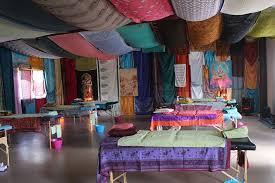
There is a particular kind of silence that exists only in certain places on earth. Not the silence of emptiness, but the silence of fullness — where the absence of urban noise is replaced by something richer: birdsong at dawn, the sound of wind moving through eucalyptus canopy, the distant rhythm of ocean. Byron Bay and the hinterland that rises behind it is one of those places. It is not an accident that this stretch of northern New South Wales has become the most significant yoga retreat destination in Australia and, by the reckoning of many practitioners who have attended retreats on multiple continents, one of the most profound in the world.
This article explores why that is, what yoga retreats in Australia — and Byron Bay specifically — offer that cannot be replicated elsewhere, and how to approach choosing an experience that genuinely delivers what most people are quietly hoping for when they book one: a real reset, not just a holiday with morning stretches.
The Geography Is Doing Real Work
To understand why Byron Bay has become the epicentre of Australia's yoga retreat culture, it helps to understand what the landscape is actually doing to the body and the nervous system before a single class begins.
The Byron Bay area sits at the convergence of several distinct ecological zones. The coastline itself — anchored by Cape Byron, the easternmost point of the Australian mainland — faces the Coral Sea with a quality of light that photographers and artists have been drawn to for decades. Behind the coast, the landscape rises quickly into the Northern Rivers hinterland, where the remnants of ancient volcanic activity have produced some of the most fertile and visually extraordinary countryside in New South Wales. Rolling green hills, patches of subtropical rainforest, organic farmland, and the kind of atmospheric stillness that is genuinely hard to describe without sounding like a brochure.
That geological and ecological diversity creates a retreat environment that works on visitors physiologically, not just aesthetically. The air quality in the Byron hinterland is measurably different from urban environments. The light shifts in ways that affect circadian rhythm within a day or two of arrival. The absence of artificial noise pollution — the background hum that urban dwellers have stopped consciously registering but that nonetheless keeps the nervous system in a state of low-level vigilance — creates conditions where the deeper relaxation that yoga and meditation are pointing toward becomes physically accessible in a way that urban practice studios, however beautifully designed, simply cannot replicate.
Retreat leaders who have facilitated programs both domestically and internationally speak about this effect consistently. The land itself does a significant portion of the nervous system regulation work before the formal program even begins, which means that the yoga and meditation practices layered on top of that baseline can go deeper, faster, than they can in environments that do not offer the same ecological conditions.
What a Yoga Retreat in Australia Actually Looks Like in 2026
The Australian yoga retreat landscape has matured considerably over the past decade, and what is available now — particularly in the Byron Bay region — is genuinely diverse in philosophy, duration, price point, and intended experience. Understanding the range matters because the right retreat for one person can be entirely wrong for another, and the difference is not always immediately visible from a booking page.
At one end of the spectrum, established residential centres like Byron Yoga Centre — founded by John Ogilvie in 1988 and operating from a 15-acre sanctuary close to the town — offer both short retreat experiences and longer immersive programs including 200-hour and 300-hour teacher training qualifications. The residential model here means that guests eat together, practice together, and live within the same community container for the duration of their stay. For people seeking genuine immersion rather than a retreat that sits alongside regular tourist activities, this kind of contained environment tends to produce the most significant shifts. The centre combines a peaceful location, nourishing organic vegetarian meals, and a team of experienced teachers — offering an environment that feels both grounding and genuinely supportive, whether a visitor has never done yoga or has practised for twenty years.
At a different price point and aesthetic register, smaller boutique retreats have proliferated across the Byron hinterland, typically running for four to six days and hosted at properties with more intimate accommodation. <cite index="14-1">BlueGreen Sanctuary, set across five lush hinterland acres with three beautifully curated houses each featuring private pools, fireplaces, and outdoor showers, represents a direction the retreat market has moved toward — sensory, high-comfort environments that hold a contained group of eight to twelve participants, offering daily yoga and meditation alongside infrared sauna, ice bath, massage, and meals prepared by a private chef.</cite> This model suits people who want genuine depth of practice without the communal living intensity of a larger residential centre.
<cite index="12-1">The Kula Yoga Byron Hinterland Retreat running in June 2026 illustrates another variation — a winter retreat specifically designed around the season's natural invitation to slow down, combining mindful vinyasa flow, yin yoga, breathwork, and full moon rituals to support what the facilitators describe as emotional clarity and renewal. Set on a purpose-built retreat property with organic farmland, infrared sauna, magnesium pool, ice bath, and nature trails, it runs at an investment between $2,300 and $3,200 per person for a six-night stay.</cite>
Further into the intersection of spiritual community and yoga practice, <cite index="15-1">Krishna Village — situated in the hinterland between Byron Bay and the Gold Coast — offers a flexible-dates model where guests can arrive on any day and stay from two nights to several weeks, eating three daily vegetarian meals, participating in yoga classes, and engaging with a Bhakti culture community that includes an organic farm, a functioning temple, and courses ranging from yoga teacher training to permaculture.</cite> This model suits people drawn to extended immersion in a value-led community rather than a time-limited retreat program.
What these different models share, despite their differences in price, duration, and philosophy, is the foundational recognition that a genuine retreat requires a change of environment that is qualitative rather than merely geographic — not just getting out of the city, but getting into conditions where the usual demands, distractions, and self-definitions fall away and something quieter has room to become audible.
The Practices That Define the Byron Bay Retreat Experience
Yoga retreats in the Byron Bay region tend to draw from a broader palette of practices than the class-based yoga most urban practitioners are accustomed to. This reflects both the depth of the teaching lineages present in the area and the retreat format itself, which allows for a daily rhythm that city studio schedules simply cannot accommodate.
Morning practice in a retreat setting typically begins before sunrise, with a meditation or pranayama session timed to use the specific quality of early light and the stillness of the hour before the natural world fully wakes. The formal asana practice that follows benefits from a nervous system that has been gently prepared rather than arriving cold from sleep. This sequencing — subtle breath and awareness work before physical movement — reflects a more traditional approach to yoga that is difficult to sustain outside a retreat context and that most practitioners report as one of the most significant shifts between studio and retreat practice.
Evening sessions in Byron Bay retreats tend to move in the opposite direction — from more physically engaged practices like yin yoga toward yoga nidra, the guided meditation technique sometimes translated as "yogic sleep," which takes the practitioner into the hypnagogic state between waking and sleep. The physiological restoration that occurs during a well-facilitated yoga nidra session is measurably distinct from ordinary relaxation, and it is one of the practices that retreat participants most consistently identify as transformative in a way they had not expected before experiencing it.
Breathwork, distinct from the pranayama embedded within yoga practice, has become a significant offering at Byron Bay retreats over the past several years. Facilitated breathwork sessions — drawing from lineages including holotropic breathing and more contemporary somatic approaches — use conscious regulation of the respiratory system to access states of nervous system release, emotional processing, and heightened self-awareness that participants describe in ways that resist easy summarisation. The presence of experienced breathwork facilitators is increasingly a marker of quality in the Byron Bay retreat ecosystem, reflecting the sophistication of what is being offered beyond the yoga mat.
Choosing the Right Retreat: What Actually Matters
The number of yoga retreats in Australia has grown to the point where choice itself can become a source of the overwhelm that people are seeking to escape. A few orienting principles help.
Duration matters more than most first-time retreat participants expect. A weekend retreat is valuable but operates within a significant constraint — the nervous system requires approximately two full days to begin genuinely downshifting from the pace of ordinary life, which means a two-night retreat is largely over by the time the deeper settling begins. Four to six nights is the minimum duration at which most participants report the quality of transformation they were looking for. Longer stays of seven to fourteen days produce proportionally deeper shifts, particularly in the residential community models that allow for a sustained change of relational context alongside the change of physical environment.
The teaching lineage and the teacher's actual experience matter more than facility aesthetics. A beautifully photographed retreat property with a spectacular pool and farm-to-table meals hosted by an inexperienced or shallow teacher will produce a pleasant holiday. The same property with a teacher who has genuine depth of practice, strong facilitation skills, and the capacity to hold space for whatever arises during the experience will produce something qualitatively different. Reading the teacher's biography with attention — where they trained, with whom, for how long, and how much genuine teaching experience they hold — is more predictive of retreat quality than property photographs.
The style of yoga being offered should match where a participant genuinely is in their practice, not where they would like to be. Retreats centred on dynamic vinyasa or advanced asana sequences are genuinely demanding physical experiences. For practitioners without a consistent recent practice, or for people whose primary intention is nervous system restoration rather than physical challenge, a retreat combining yin yoga, restorative practices, and nidra will serve significantly better. The best retreat providers are explicit about the physical demand level of their program and honest about who will and will not benefit from it.
Why People Keep Coming Back
The most consistent observation from people who attend yoga retreats in Byron Bay is that the experience does not end when the retreat does. What participants describe instead is a shift in baseline — a recalibration of what "ordinary" feels like that persists, to varying degrees, after returning to daily life. The practices learned, the quality of presence accessed, the relationships formed within the retreat container — these travel home in ways that a holiday does not.
That quality — getting to know yourself a little better — is perhaps the most honest summary of what a genuinely good yoga retreat in Australia offers. Not transformation in the dramatic sense the wellness industry sometimes promises. Something quieter and more durable: a few days or weeks of conditions in which the noise that ordinarily makes self-knowledge difficult temporarily subsides, and something more essential has room to become clear.
Byron Bay, and the remarkable retreat ecosystem that has grown up around it, has proven more consistently capable of creating those conditions than almost anywhere else on the planet. For people drawn to that possibility, the landscape, the teachings, and the teachers are waiting.